Viral Fever and Flu Prevention with Ayurveda
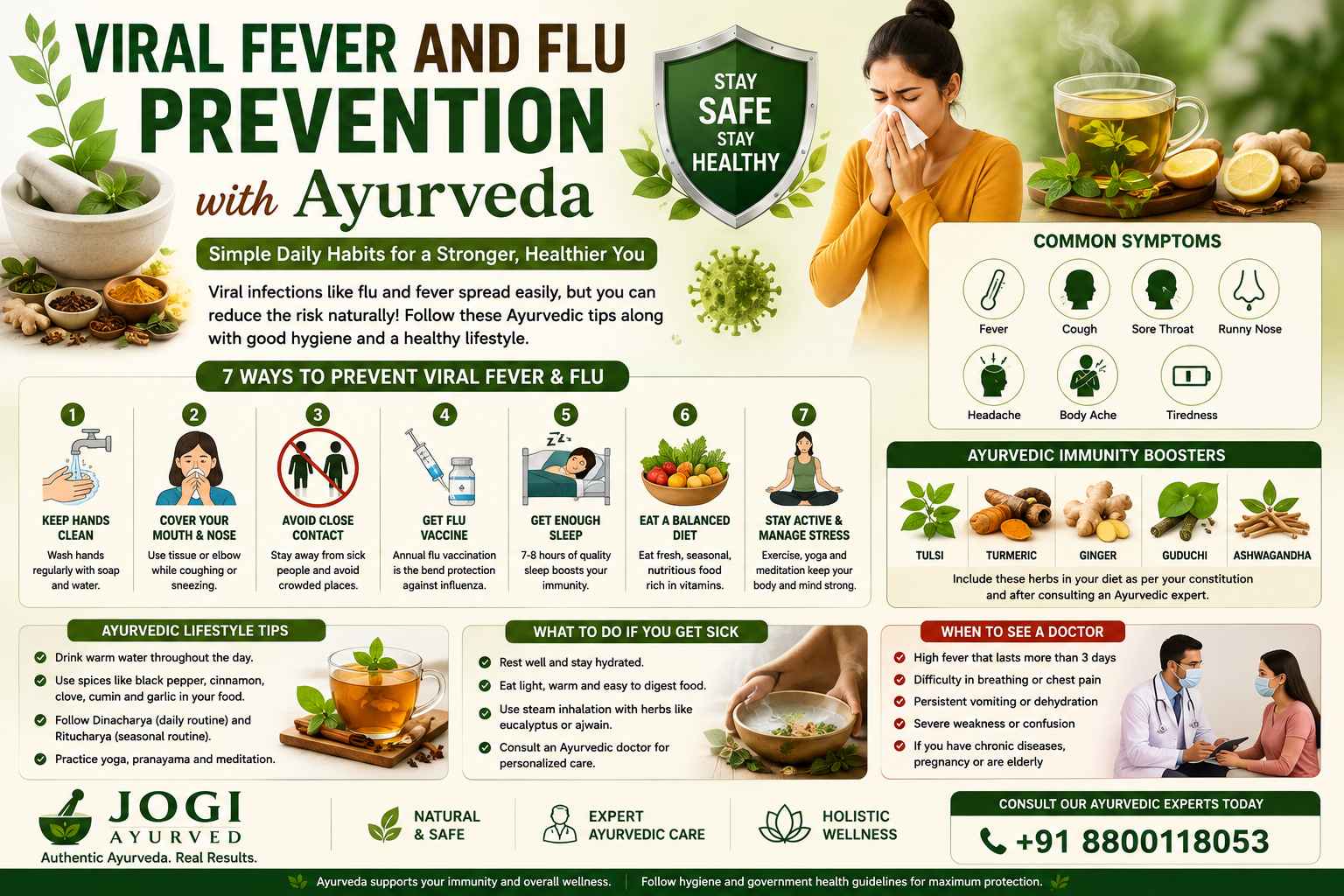
Viral infections such as influenza (flu) and other respiratory viral illnesses can spread easily from person to person. Symptoms may include fever, cough, sore throat, runny nose, body aches, tiredness, and headache.
While Ayurveda emphasizes healthy routines, balanced nutrition, adequate rest, and traditional wellness practices, it is important to understand that Ayurveda cannot guarantee prevention or cure of every viral infection.
For influenza specifically, vaccination remains the best way to prevent flu and reduce the risk of severe illness. WHO also recommends regular hand hygiene, respiratory etiquette, avoiding close contact with sick people, and staying home when unwell.
What Is Viral Fever?
“Viral fever” is a general term used to describe fever associated with a viral infection. It is not one specific disease.
Different viruses can cause different illnesses, including:
- Influenza
- Common cold
- COVID-19
- Viral gastroenteritis
- Other respiratory viral infections
Because several infections can produce similar symptoms, the exact cause cannot always be determined from symptoms alone.
Common Symptoms of Viral Infections
Depending on the virus, symptoms may include:
- Fever
- Chills
- Cough
- Sore throat
- Runny or blocked nose
- Headache
- Body aches
- Tiredness
- Reduced appetite
- Nausea or digestive symptoms
Influenza often begins suddenly and commonly causes fever, cough, body aches, headache, and fatigue.
7 Practical Ways to Reduce the Risk of Flu and Viral Infections
1. Keep Your Hands Clean
Regular handwashing is one of the simplest ways to reduce the spread of respiratory infections.
Wash your hands with soap and water, particularly:
- Before eating
- After coughing or sneezing
- After returning home
- After using public transport
- After caring for someone who is sick
Alcohol-based hand sanitizer can be used when soap and water are not available.
2. Cover Your Mouth and Nose When Coughing
Use a tissue or your elbow when coughing or sneezing.
Avoid coughing or sneezing directly into your hands.
Dispose of used tissues properly and clean your hands afterward.
Respiratory hygiene is an important part of reducing the spread of respiratory infections.
3. Avoid Close Contact When Someone Is Sick
If someone around you has fever, cough, or other respiratory symptoms, try to reduce close contact where practical.
If you become sick, staying home and avoiding close contact with others can help protect family members and the wider community.
4. Consider Seasonal Flu Vaccination
For influenza, vaccination is the most effective preventive measure.
WHO recommends annual influenza vaccination, particularly for groups at higher risk of complications, including older adults, pregnant women, young children, people with chronic medical conditions, and healthcare workers. Recommendations can vary by country and season.
Ayurvedic lifestyle practices should not be used as a substitute for recommended vaccination.
5. Get Enough Sleep
Good-quality sleep supports normal immune function and overall health.
Try to:
- Maintain a regular sleep schedule
- Get adequate nighttime sleep
- Avoid excessive screen use before bed
- Keep your bedroom comfortable and quiet
Sleep is not a guaranteed way to prevent viral infections, but maintaining healthy sleep habits supports general well-being.
6. Eat a Balanced Diet
Good nutrition provides the body with essential nutrients needed for normal immune and metabolic functions.
Include a variety of:
- Vegetables
- Seasonal fruits
- Whole grains
- Lentils and beans
- Nuts and seeds
- Adequate protein
- Healthy fats
Drink enough fluids according to your thirst and health needs.
There is no single “immunity food” that can prevent flu or viral fever.
7. Stay Physically Active
Regular physical activity supports cardiovascular health, metabolic health, and overall well-being.
Suitable activities may include:
- Walking
- Yoga
- Stretching
- Cycling
- Strength exercises
If you currently have fever or an acute infection, rest and follow appropriate medical advice rather than exercising intensely.
Ayurvedic Approach to Viral Illness Prevention
Ayurveda traditionally emphasizes maintaining balance through Ahara (diet), Vihara (lifestyle), sleep, daily routines, and appropriate traditional therapies.
From an Ayurvedic wellness perspective, maintaining good digestion, adequate rest, and healthy daily habits may support overall resilience.
However, Ayurvedic herbs or therapies should not be promoted as guaranteed protection against influenza or other viral infections.
Ayurvedic Lifestyle Tips for Wellness
Start Your Day with a Healthy Routine
A consistent morning routine may include:
- Personal hygiene
- Adequate hydration
- Gentle stretching
- Yoga or breathing exercises
- A balanced breakfast when appropriate
Choose Fresh, Balanced Meals
Prefer freshly prepared meals containing a variety of nutrients.
Limit excessive:
- Fried foods
- Highly processed foods
- Added sugars
- Very heavy meals
Use Spices as Part of Your Diet
Common culinary spices such as:
- Ginger
- Turmeric
- Cumin
- Black pepper
- Garlic
can be included in normal cooking if you tolerate them.
They should be considered foods and culinary ingredients, not guaranteed antiviral treatments.
What About Ayurvedic Herbs for Immunity?
Ayurveda uses a number of traditional herbs and formulations for general wellness.
Examples may include:
- Tulsi
- Ashwagandha
- Guduchi
- Turmeric
- Ginger
However, evidence and safety vary by herb, preparation, dose, and individual health status.
Do not start concentrated herbal products simply because you have a viral infection.
Some herbal products can interact with medicines or may not be appropriate for people with certain medical conditions.
Always consult a qualified Ayurvedic practitioner or healthcare professional before using medicinal herbal preparations.
What Should You Do If You Develop Fever?
If you develop fever and flu-like symptoms:
Rest
Give your body time to recover.
Drink Fluids
Maintain adequate hydration unless your doctor has advised fluid restriction.
Eat Light, Nutritious Food
Choose foods that you can tolerate comfortably.
Monitor Your Symptoms
Pay attention to worsening fever, breathing difficulties, dehydration, or other concerning symptoms.
Avoid Spreading the Infection
Stay home when unwell and reduce close contact with others.
People at higher risk of severe influenza may benefit from early medical assessment and antiviral treatment when appropriate. WHO notes that high-risk groups and people with severe symptoms may need prompt medical care.
When Should You See a Doctor?
Seek medical attention if you experience:
- Difficulty breathing
- Chest pain
- Confusion
- Severe weakness
- Persistent vomiting
- Signs of dehydration
- Severe or worsening symptoms
- Fever that persists or returns
- Symptoms in a very young child or older adult
- Symptoms during pregnancy
- Symptoms if you have a significant chronic disease or weakened immune system
Do not delay urgent medical care in an emergency.
Ayurveda and Modern Medicine Can Work Together
Ayurveda and modern medicine do not have to be viewed as competing approaches.
A safe approach may combine:
Modern medical care
- Diagnosis
- Vaccination
- Antiviral treatment when appropriate
- Emergency care
with
Healthy Ayurvedic lifestyle principles
- Balanced diet
- Daily routine
- Yoga
- Stress management
- Adequate sleep
- Traditional wellness practices
The goal is to use each approach appropriately and safely.
WHO’s 2026 influenza guidance emphasizes evidence-based public-health measures alongside vaccination and other medical interventions.
Ayurvedic Support at JOGI Ayurved
At JOGI Ayurved, Ayurvedic care can focus on personalized wellness and healthy lifestyle habits.
Depending on individual needs, guidance may include:
- Ayurvedic dietary recommendations
- Lifestyle guidance
- Sleep and stress management
- Yoga and breathing practices
- Traditional herbal support when appropriate
- General wellness consultation
Get personalized consultation for any health-related concern from our certified JOGI Ayurvedic doctors. Call us: +91 8800118053.
Ayurvedic treatment should be individualized according to health history and current medicines.
Frequently Asked Questions
Can Ayurveda prevent viral fever?
No Ayurvedic treatment can guarantee prevention of viral fever. Healthy diet, sleep, hygiene, and lifestyle practices may support general health, while infection-specific prevention measures should also be followed.
Can Ayurveda cure flu?
Ayurveda should not be promoted as a guaranteed cure for influenza. Most uncomplicated flu cases recover with supportive care, while people at high risk or with severe illness may require medical assessment and antiviral treatment.
Is turmeric good for immunity?
Turmeric is a nutritious culinary spice and contains compounds that have been studied for various biological effects. However, eating turmeric does not guarantee protection against flu or other viral infections.
Can I take Ayurvedic medicine with flu medicine?
It depends on the specific medicines and your health condition. Some herbal products can interact with conventional medicines. Always tell your doctor or Ayurvedic practitioner about everything you are taking.
Should I get a flu vaccine if I follow Ayurveda?
Yes, following Ayurvedic lifestyle practices does not replace recommended influenza vaccination. WHO identifies vaccination as the best way to prevent influenza.
How can I protect my family from flu?
Encourage vaccination where recommended, regular hand hygiene, respiratory etiquette, good ventilation, avoiding close contact when someone is sick, and staying home when unwell.
Conclusion
Preventing viral infections requires more than one approach.
Good hygiene, vaccination against influenza, healthy nutrition, adequate sleep, physical activity, and staying home when sick are important practical steps.
Ayurveda can complement these habits through personalized diet and lifestyle guidance, yoga, stress management, and appropriate traditional wellness practices. However, it should not replace vaccination, medical diagnosis, antiviral treatment when indicated, or urgent medical care.
At JOGI Ayurved, the focus should be on responsible, personalized Ayurvedic wellness support that works alongside appropriate modern healthcare.
Important Links
- Viral Fever Prevention Ayurveda
- Flu Prevention Ayurveda
- Ayurvedic Prevention for Viral Fever
- Viral Fever Ayurvedic Treatment
- Flu Prevention Tips
- How to Prevent Viral Fever
- Ayurvedic Immunity Tips
- Ayurveda for Flu
- Natural Flu Prevention
- Viral Infection Prevention
- Ayurvedic Wellness
- Ayurvedic Immunity Support
- Seasonal Flu Prevention
- JOGI Ayurved
- Online Ayurvedic Consultation
Our Important Services
- Ayurvedic Ways to Strengthen Digestive Fire
- Shirodhara Therapy Benefits for Stress Relief
- Ayurvedic Treatment for Acidity
- Can Ayurveda Cure Every Illness
- Online Ayurvedic Consultation
- Panchakarma Therapy