What to Eat for Lunch to Help Reduce Visceral Fat Naturally?
What is Visceral Fat?
Visceral fat is the deep abdominal fat stored around internal organs such as the liver, pancreas, and intestines. Unlike the fat just beneath the skin, excess visceral fat is associated with a higher risk of type 2 diabetes, heart disease, fatty liver disease, and metabolic syndrome. Reducing visceral fat requires a combination of healthy eating, regular physical activity, good sleep, and sustainable lifestyle habits. Diets rich in fiber, legumes, vegetables, and healthy fats may support visceral fat reduction as part of an overall healthy lifestyle.
Symptoms
Visceral fat itself usually does not cause symptoms, but it may be associated with:
- Increased waist circumference
- Protruding abdomen
- Fatigue
- Reduced stamina
- Elevated blood sugar
- High blood pressure
- High cholesterol
- Insulin resistance
- Snoring or sleep disturbances
- Difficulty losing weight
Causes
Common contributors include:
- Excess calorie intake
- Frequent consumption of processed foods
- Sugary beverages
- Physical inactivity
- Poor sleep
- Chronic stress
- Hormonal imbalance
- Smoking
- Excess alcohol consumption
- Genetic predisposition
Risk Factors
The risk of excess visceral fat is higher in:
- Adults over 40 years
- People with obesity
- Individuals with diabetes or prediabetes
- Sedentary workers
- Women after menopause
- People with chronic stress
- Individuals with poor dietary habits
- Those with a family history of metabolic disease
Diagnosis
Your healthcare provider may assess visceral fat using:
- Waist circumference
- Waist-to-height ratio
- Body Mass Index (BMI)
- Body composition analysis
- CT or MRI scans (when clinically indicated)
- Blood tests for glucose and lipid profile
Ayurvedic Perspective
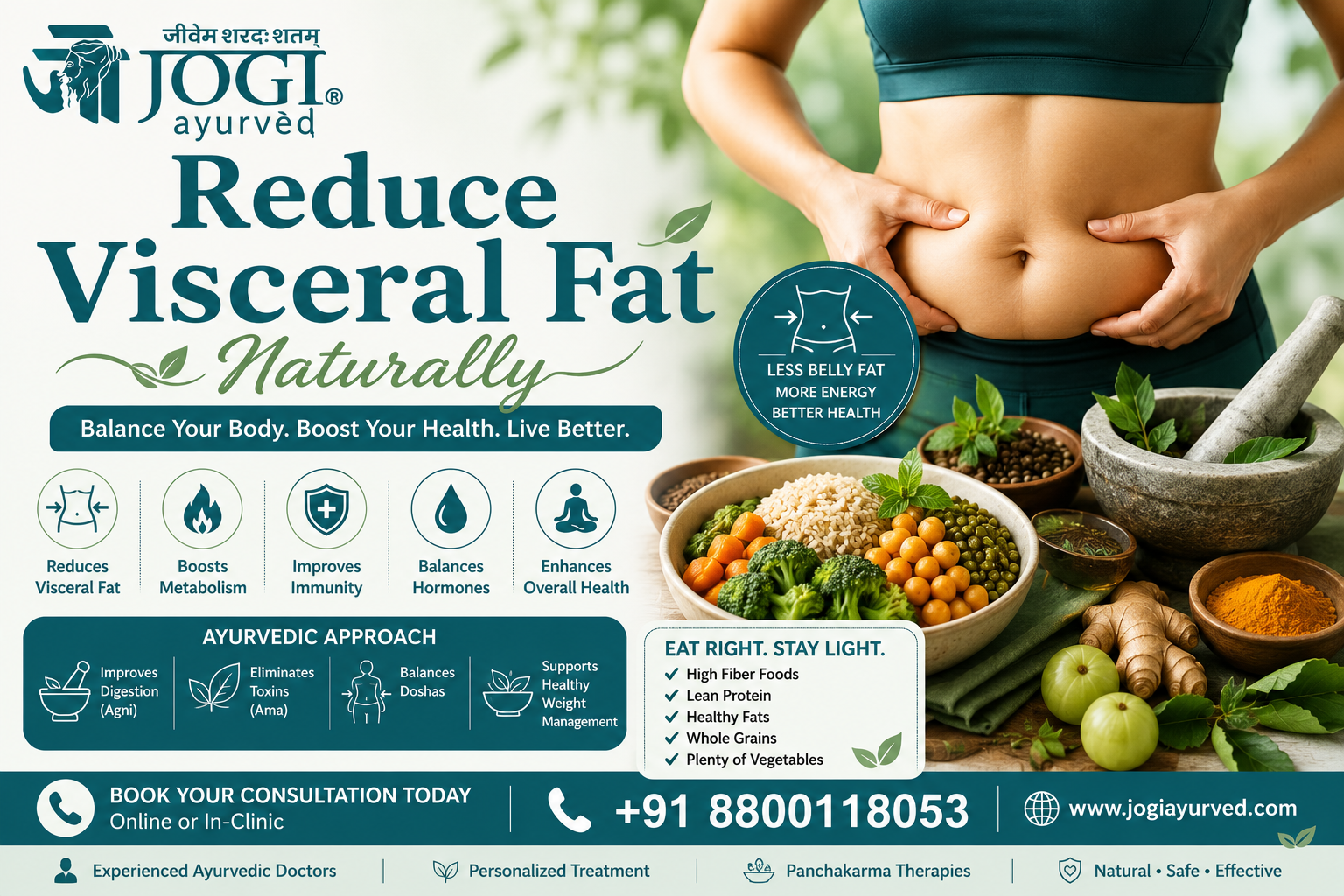
In Ayurveda, excess abdominal fat is often linked to an imbalance of Kapha Dosha, weakened Agni (digestive fire), and accumulation of Ama (metabolic toxins). JOGI Ayurved emphasizes strengthening digestion, improving metabolism, and following individualized dietary and lifestyle recommendations rather than relying on restrictive diets alone.
Treatment Approach
At JOGI Ayurved, treatment is personalized based on:
- Prakriti (Body Constitution)
- Dosha imbalance
- Digestive strength (Agni)
- Medical history
- Lifestyle
- Dietary habits
- Existing medical conditions
A comprehensive plan may include:
- Personalized Ayurvedic medicines
- Nutrition counseling
- Exercise guidance
- Stress management
- Lifestyle modifications
- Regular follow-up
Panchakarma (If Appropriate)
Depending on individual assessment, Panchakarma therapies may include:
- Udvartana
- Abhyanga
- Swedana
- Virechana
- Basti
These therapies are recommended only after evaluation by a qualified Ayurvedic physician.
Herbal Medicines (General Information)
Your doctor may recommend Ayurvedic herbs such as:
- Triphala
- Guduchi (Giloy)
- Guggulu
- Turmeric
- Ginger
- Cinnamon
- Fenugreek
- Black Pepper
- Amla
Herbal medicines should always be taken under professional supervision.
What to Eat for Lunch to Help Reduce Visceral Fat Naturally
A balanced lunch should be filling, rich in protein and fiber, and based on minimally processed foods. Dietitians commonly recommend combining legumes, vegetables, healthy fats, and whole grains because these foods improve satiety and support healthy blood sugar levels.
Excellent Lunch Choices
- Moong Dal Khichdi with mixed vegetables
- Mixed Dal with one or two whole wheat rotis
- Brown rice with dal and sautéed vegetables
- Bajra or Jowar roti with seasonal vegetables
- Chickpea (Chana) salad with cucumber, tomato, onion, and lemon
- Rajma with brown rice and salad
- Vegetable soup with paneer or tofu
- Grilled fish with vegetables (for non-vegetarians)
- Grilled chicken with vegetables and millet
- Paneer with stir-fried vegetables
Foods That Support Visceral Fat Reduction
Include:
- Lentils
- Chickpeas
- Kidney beans
- Green leafy vegetables
- Broccoli
- Carrots
- Cucumber
- Tomato
- Bottle gourd
- Pumpkin
- Oats
- Millets
- Brown rice
- Whole wheat
- Flaxseeds
- Chia seeds
- Walnuts
- Almonds
- Low-fat curd
- Buttermilk (if suitable)
Foods to Avoid
Limit:
- Sugary drinks
- White bread
- Refined flour products
- Fried snacks
- Fast food
- Processed meat
- Packaged foods
- Bakery products
- Excess sweets
- Excess salt
- Alcohol
- Large portions of high-fat foods
Diet Recommendations
Follow these habits:
- Eat lunch between 12 PM and 2 PM.
- Make lunch your largest meal of the day if it suits your routine.
- Fill half your plate with vegetables.
- Include a good source of protein.
- Choose whole grains over refined grains.
- Eat slowly and mindfully.
- Drink water throughout the day.
- Avoid overeating.
- Finish eating before you feel overly full.
Lifestyle Modifications
Healthy habits include:
- Walk for 10–20 minutes after lunch.
- Perform strength training 2–3 times per week.
- Stay physically active.
- Sleep 7–9 hours each night.
- Manage stress through relaxation techniques.
- Avoid prolonged sitting.
- Maintain consistent meal timings.
Yoga & Exercise
Support healthy weight management with:
- Surya Namaskar
- Trikonasana
- Bhujangasana
- Naukasana
- Pawanmuktasana
- Vajrasana (after meals)
- Anulom Vilom
- Kapalabhati (if appropriate)
- Brisk walking
- Resistance training
Prevention Tips
- Maintain a healthy body weight.
- Eat balanced meals.
- Reduce ultra-processed foods.
- Increase fiber intake.
- Include protein in every meal.
- Stay hydrated.
- Exercise regularly.
- Get adequate sleep.
- Manage stress.
- Have regular health check-ups.
Frequently Asked Questions
Which lunch is best for reducing visceral fat?
A balanced meal containing vegetables, legumes or lean protein, whole grains, and healthy fats is generally recommended. Meals rich in fiber and protein help improve fullness and support healthy weight management.
Can Ayurveda help reduce belly fat?
Ayurveda emphasizes improving digestion, balancing doshas, healthy eating, physical activity, and lifestyle modifications. Treatment should always be individualized.
Should I skip lunch to lose weight?
Skipping meals is not generally recommended. A balanced lunch may help regulate appetite and reduce overeating later in the day.
Are millets better than refined grains?
Whole grains and millets are generally higher in fiber than refined grains and can be part of a balanced diet.
How long does it take to reduce visceral fat?
Results vary depending on diet, exercise, sleep, stress, and overall health. Sustainable lifestyle changes are more effective than rapid weight-loss approaches.
Why Choose JOGI Ayurved?
At JOGI Ayurved, we believe healthy weight management begins with understanding your unique body constitution.
We provide:
- Personalized Ayurvedic consultations
- Individualized nutrition guidance
- Root-cause-focused treatment
- Authentic Ayurvedic medicines
- Panchakarma therapies (when appropriate)
- Lifestyle and stress management counseling
- Online and in-clinic consultations
Book an Online or In-Clinic Consultation
If you are concerned about excess belly fat, obesity, metabolic health, or digestive issues, consult the experienced Ayurvedic doctors at JOGI Ayurved.
Our team develops personalized care plans that may include:
- Ayurvedic consultation
- Customized diet plans
- Herbal medicines
- Panchakarma (when appropriate)
- Exercise and yoga guidance
- Long-term lifestyle support
Book your online or in-clinic consultation today and take the first step toward healthier weight management with JOGI Ayurved.
What to Eat for Lunch to Help Reduce Visceral Fat Naturally
Discover the best Ayurvedic lunch foods to help reduce visceral fat naturally. Learn what to eat, what to avoid, healthy meal ideas, herbs, diet tips, and lifestyle recommendations from JOGI Ayurved.
Consult Our Ayurvedic Specialist:
Dr. Darshan upadhyay
B.A.M.S. (Ayurveda) Senior Ayurvedic Panchakarma Physician | JOGI Ayurved Hospital, Surat
Book Your Personal Consultation
Skip the waiting room or connect with us from the comfort of your home anywhere in India.
📞 Call / WhatsApp Direct: +91 8800118053
🌐 Online Video Consultation Available Across India
📱 Book Online Consultation Now 🏥 Visit Surat Clinic
Top Ayurveda Doctors