Does the Perfect Ayurvedic Meal Really Exist?
Have you ever wondered what the perfect Ayurvedic meal looks like?
Should it always include rice and dal? Should you avoid certain foods? Is there one meal that is perfect for everyone?
The answer is no.
Ayurveda traditionally emphasizes that food choices should be considered according to an individual’s constitution, digestion, lifestyle, season, age, and overall health. At the same time, modern nutrition emphasizes adequate nutrients, balance, variety, moderation, and food safety. WHO also states that the exact composition of a healthy diet varies according to individual characteristics, culture, food availability, and dietary preferences.
So rather than searching for one perfect meal, it is more useful to build a balanced meal that suits your individual needs.
What Does Ayurveda Say About Food?
Food is an important part of Ayurvedic lifestyle and wellness.
Ayurveda traditionally considers factors such as:
- Digestive capacity
- Body constitution or Prakriti
- Food quality
- Meal timing
- Season
- Age
- Lifestyle
- Individual health condition
The idea is that the same food may not suit every person in exactly the same way.
For example, a meal that feels comfortable for one person may feel too heavy or difficult to digest for another.
So, What Is a “Perfect” Ayurvedic Meal?
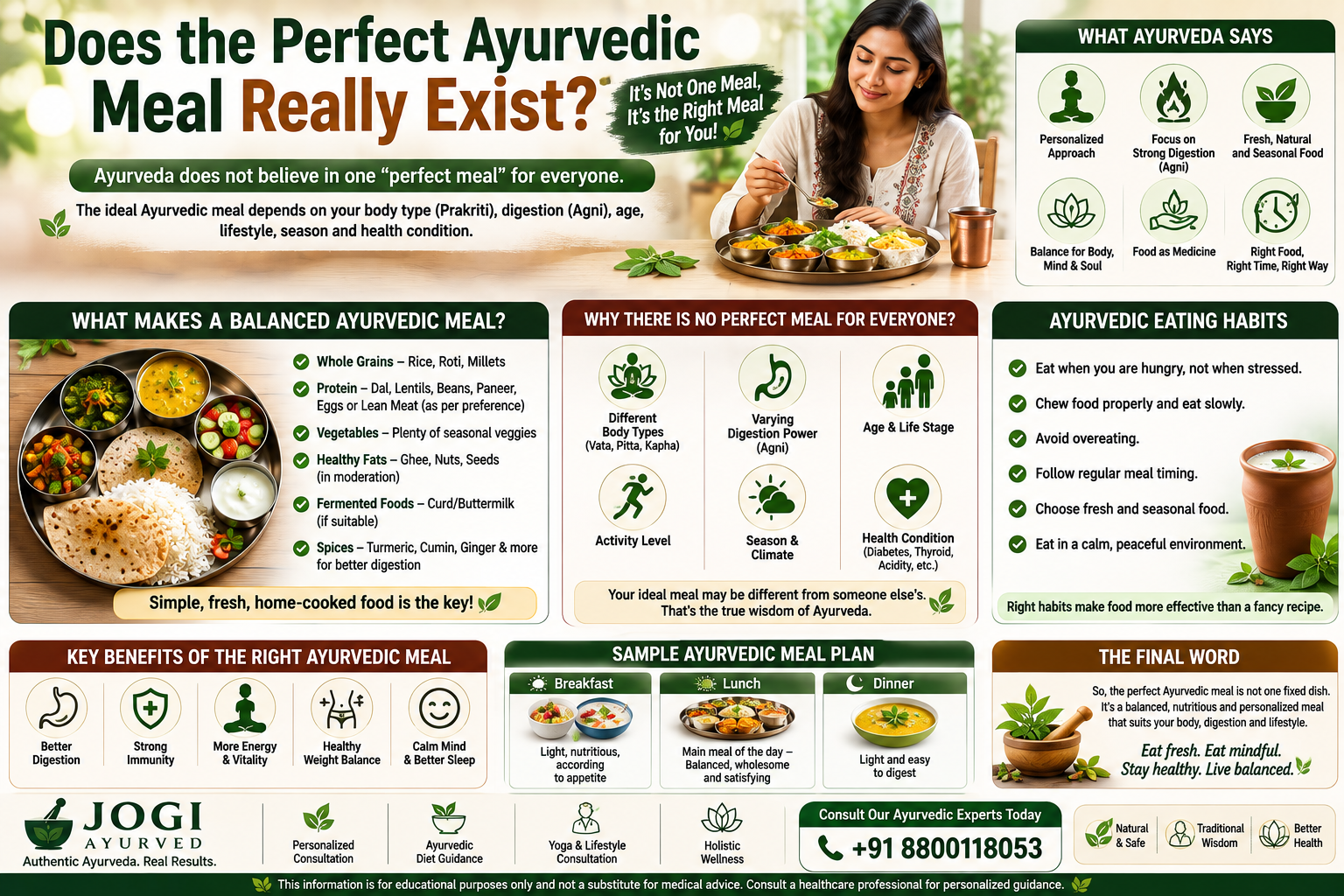
Instead of thinking about a perfect recipe, think about a well-balanced plate.
A practical Ayurvedic-inspired meal may contain:
1. A Staple Food
Examples include:
- Rice
- Roti
- Millet
- Oats
- Other whole grains
Choose according to your nutritional needs and tolerance.
2. Protein
Examples include:
- Dal
- Lentils
- Beans
- Chickpeas
- Paneer
- Eggs
- Fish
- Lean meat
Protein is important for maintaining muscles and supporting normal body functions.
3. Vegetables
Include a variety of seasonal vegetables such as:
- Carrots
- Spinach
- Pumpkin
- Beans
- Bottle gourd
- Cauliflower
- Other locally available vegetables
WHO recommends a diverse diet containing vegetables, fruits, pulses, whole grains, nuts, seeds, and appropriate protein sources.
4. Healthy Fats
Small amounts of suitable fats can be part of a balanced diet.
Examples include:
- Nuts
- Seeds
- Vegetable oils
- Other appropriate sources of unsaturated fats
The quantity matters. More fat does not automatically make a meal healthier.
Why There Is No Single Ayurvedic Meal for Everyone
One of the interesting aspects of Ayurveda is its emphasis on individualization.
Your ideal food choices may depend on:
Your Digestion
Some people may feel comfortable after a light meal, while others may prefer a more substantial meal.
Your Activity Level
Someone who exercises regularly may have different energy needs from someone with a sedentary lifestyle.
Your Age
Nutritional needs change throughout life.
Your Health
People with diabetes, kidney disease, liver disease, thyroid disorders, food allergies, or other conditions may need specific dietary recommendations.
Your Food Preferences
A healthy diet can be vegetarian, non-vegetarian, or follow other dietary patterns, provided nutritional needs are met.
What Does a Balanced Ayurvedic-Inspired Meal Look Like?
Here is a simple example of an Indian-style balanced meal:
Lunch
- 1–2 rotis or an appropriate portion of rice
- Dal
- One or two vegetable dishes
- Salad or suitable fresh vegetables
- Curd/yogurt if tolerated
- A small amount of healthy fat
This is not a universal prescription. Portions should be adjusted according to individual energy requirements, health conditions, and dietary preferences.
Does Ayurveda Focus Only on What You Eat?
No.
Ayurvedic dietary principles traditionally consider how, when, and in what circumstances you eat, not just the ingredients.
Healthy eating habits can include:
- Eating slowly
- Chewing food properly
- Avoiding overeating
- Eating when appropriately hungry
- Maintaining regular meal patterns
- Choosing fresh and properly prepared foods
- Paying attention to how foods affect your digestion
These habits can also fit comfortably within modern healthy-eating principles.
Meal Timing Matters
Many people focus heavily on what they eat but ignore when they eat.
A practical routine may involve:
Breakfast
Eat according to your appetite and daily schedule.
Lunch
For many people, lunch can be a substantial balanced meal.
Dinner
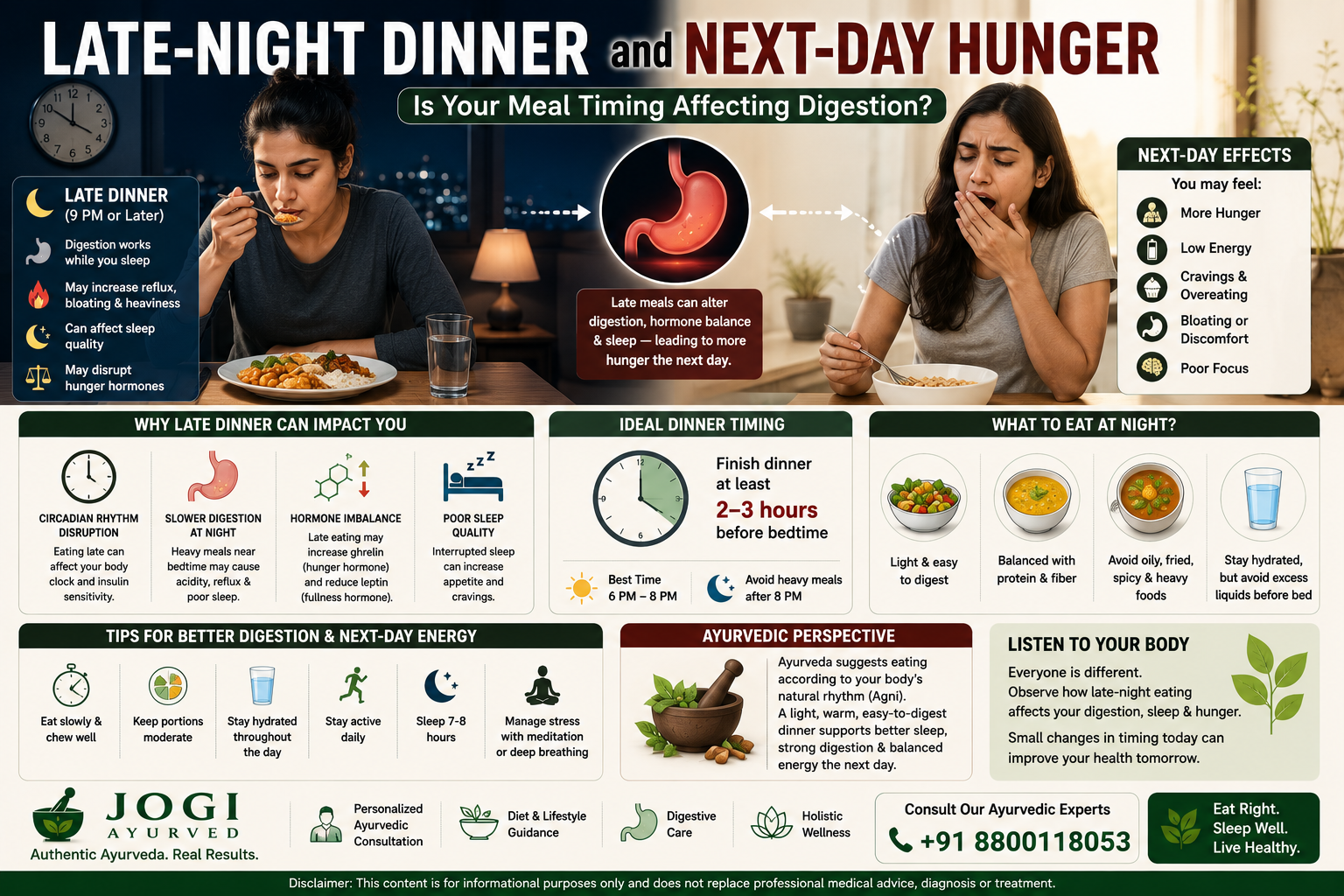
A lighter dinner may be comfortable for some people, particularly if they experience heaviness after late meals.
There is no need to follow an identical meal schedule every day if your work, health, or lifestyle requires flexibility.
Should You Eat Only “Ayurvedic Foods”?
Not necessarily.
There is no universally defined list of foods that every person must eat to follow Ayurveda.
A healthy diet should provide adequate:
- Protein
- Fibre
- Vitamins
- Minerals
- Healthy fats
- Carbohydrates
- Energy
WHO recommends that healthy diets be based on adequacy, balance, moderation, and diversity.
This means an Ayurvedic-inspired diet can also be nutritionally balanced.
Fresh Food vs Highly Processed Food
Ayurvedic traditions generally place importance on fresh, properly prepared food.
Modern nutrition also recommends limiting highly processed foods that are high in:
- Added sugars
- Excess sodium
- Unhealthy fats
- Calories
WHO recommends a varied diet based largely on minimally processed and unprocessed foods.
Good everyday choices can include:
- Vegetables
- Fruits
- Whole grains
- Pulses
- Nuts
- Seeds
- Appropriate protein sources
What About Spices?
Indian cooking uses many spices that can make healthy food more enjoyable.
Common examples include:
- Turmeric
- Cumin
- Coriander
- Ginger
- Fennel
- Cardamom
- Black pepper
Spices can be used as part of normal cooking.
However, spices should not be presented as magic medicines that can cure diseases.
Can an Ayurvedic Meal Help Digestion?
A balanced meal and appropriate eating habits can support digestive comfort.
Some practical habits include:
- Avoiding overeating
- Eating slowly
- Choosing foods you tolerate well
- Limiting excessive fried foods
- Drinking adequate fluids
- Maintaining regular physical activity
- Getting sufficient sleep
If you regularly experience acidity, bloating, constipation, diarrhea, or abdominal pain, do not assume that changing your diet alone will solve the problem. Persistent symptoms should be evaluated by a healthcare professional.
Example of a Simple Ayurvedic-Inspired Daily Meal Plan
Morning
- Water according to thirst
- Balanced breakfast
- Fruit if appropriate
Lunch
- Rice or roti
- Dal or another protein source
- Seasonal vegetables
- Curd/yogurt if tolerated
Evening
- Fruit
- Nuts or another nutritious snack if hungry
Dinner
- Vegetable soup, dal, roti, or another balanced meal
- Appropriate protein
- Cooked vegetables
This is an example, not a personalized medical diet plan.
What Foods Should You Limit?
There is no need to label every food as “bad.”
Instead, limit frequent consumption of foods that are high in:
- Added sugars
- Excess salt
- Unhealthy fats
- Refined carbohydrates
- Calories without much nutritional value
- Highly processed ingredients
WHO recommends limiting free sugars, sodium, saturated fats, and trans fats while emphasizing diverse, nutrient-rich foods.
Ayurvedic Meal and Modern Nutrition Can Work Together
You do not necessarily have to choose between Ayurveda and modern nutrition.
A practical approach can combine:
Ayurvedic Principles
- Individualized food choices
- Attention to digestion
- Seasonal foods
- Fresh preparation
- Mindful eating
- Regular routines
Modern Nutrition
- Adequate protein
- Fibre
- Vitamins and minerals
- Balanced energy intake
- Food safety
- Limiting excess sugar, salt, and unhealthy fats
This combination can create a practical and sustainable approach to healthy eating.
Can Ayurveda Create a Personalized Meal Plan?
Yes, an Ayurvedic practitioner may develop dietary recommendations based on an individual’s:
- Prakriti
- Digestion
- Lifestyle
- Age
- Food habits
- Health concerns
- Activity level
However, personalized dietary advice should also account for medically diagnosed conditions and nutritional requirements.
WHO notes that healthy diets should be adapted to individual characteristics, cultural context, food availability, and dietary customs.
Ayurvedic Diet at JOGI Ayurved
At JOGI Ayurved, personalized Ayurvedic dietary guidance may focus on creating practical eating habits rather than following an unnecessarily restrictive diet.
A consultation may consider:
- Your eating routine
- Digestive concerns
- Lifestyle
- Food preferences
- Sleep
- Physical activity
- Existing health conditions
Depending on your needs, guidance may include:
- Meal planning
- Healthy food choices
- Lifestyle recommendations
- Traditional Ayurvedic wellness practices
- Yoga and stress-management techniques
Any Ayurvedic medicines or concentrated herbal products should be used under appropriate professional guidance. NCCIH notes that evidence for Ayurvedic treatments varies and that some Ayurvedic products may contain potentially toxic metals, making product quality and professional guidance important.
5 Simple Rules for a Better Ayurvedic Meal
Rule 1: Keep It Balanced
Include appropriate carbohydrates, protein, vegetables, and healthy fats.
Rule 2: Keep It Diverse
Eat a variety of foods instead of depending on one “superfood.”
Rule 3: Avoid Overeating
Portion size matters as much as food selection.
Rule 4: Choose Fresh and Nutritious Foods
Make minimally processed foods the foundation of your diet.
Rule 5: Personalize Your Diet
Your meal should fit your health, lifestyle, nutritional requirements, and food preferences.
Frequently Asked Questions
Is there one perfect Ayurvedic meal for everyone?
No. Ayurveda traditionally emphasizes individualized food choices, while modern nutrition also recognizes that healthy diets vary according to individual needs and circumstances.
What is the best Ayurvedic food?
There is no single “best” Ayurvedic food. A balanced combination of nutritious foods that suits your individual needs is more useful than relying on one particular ingredient.
Can an Ayurvedic diet help with digestion?
A balanced diet and healthy eating habits may support digestive comfort. Persistent digestive symptoms should be evaluated medically.
Should I avoid all processed foods?
Not necessarily. It is generally better to make minimally processed and unprocessed foods the foundation of your diet and limit highly processed foods high in sugar, salt, and unhealthy fats.
Can Ayurveda help with weight management?
Ayurvedic lifestyle guidance may support healthy eating and daily routines, but successful weight management depends on overall energy balance, nutrition, physical activity, sleep, and individual health factors.
Is an Ayurvedic diet safe for people with medical conditions?
Not every dietary recommendation is appropriate for every medical condition. People with diabetes, kidney disease, liver disease, thyroid disorders, food allergies, or other conditions should obtain individualized advice from qualified healthcare professionals.
Conclusion
There is no single perfect Ayurvedic meal for everyone.
The better goal is to create a balanced, nutritious, enjoyable, and sustainable meal that suits your individual needs.
Ayurvedic principles such as mindful eating, fresh food, appropriate meal routines, and attention to digestion can be combined with modern nutrition principles such as dietary diversity, adequate nutrients, moderation, and food safety.
The “perfect Ayurvedic meal” is therefore not one fixed recipe.
It is a meal that is balanced, nourishing, appropriate for you, and sustainable in your daily life.
Important Links
- Does the Perfect Ayurvedic Meal Really Exist
- Perfect Ayurvedic Meal
- Ayurvedic Meal Plan
- Ayurvedic Diet
- Ayurvedic Food
- Ayurveda Diet for Digestion
- Ayurvedic Healthy Eating
- Ayurvedic Nutrition
- Best Ayurvedic Foods
- Ayurvedic Meal for Good Digestion
- Ayurvedic Diet Plan
- Healthy Ayurvedic Diet
- Ayurvedic Food Habits
- JOGI Ayurved
- Ayurvedic Consultation
Our Important Services
- 3 Ayurvedic Ways to Strengthen Digestive Fire
- Acidity Root Causes: Stress, Sleep & Food Triggers
- Reusing Heated Cooking Oil: Health Risks
- Can Ayurveda Cure Every Illness?
- Online Ayurvedic Consultation
- Panchakarma Therapy