Can Ayurveda Cure Every Illness?
Ayurveda is one of India’s traditional systems of medicine and has been practiced for thousands of years. It focuses on diet, lifestyle, herbs, therapies, and individualized care to support health and well-being.
But an important question is often asked:
Can Ayurveda cure every illness?
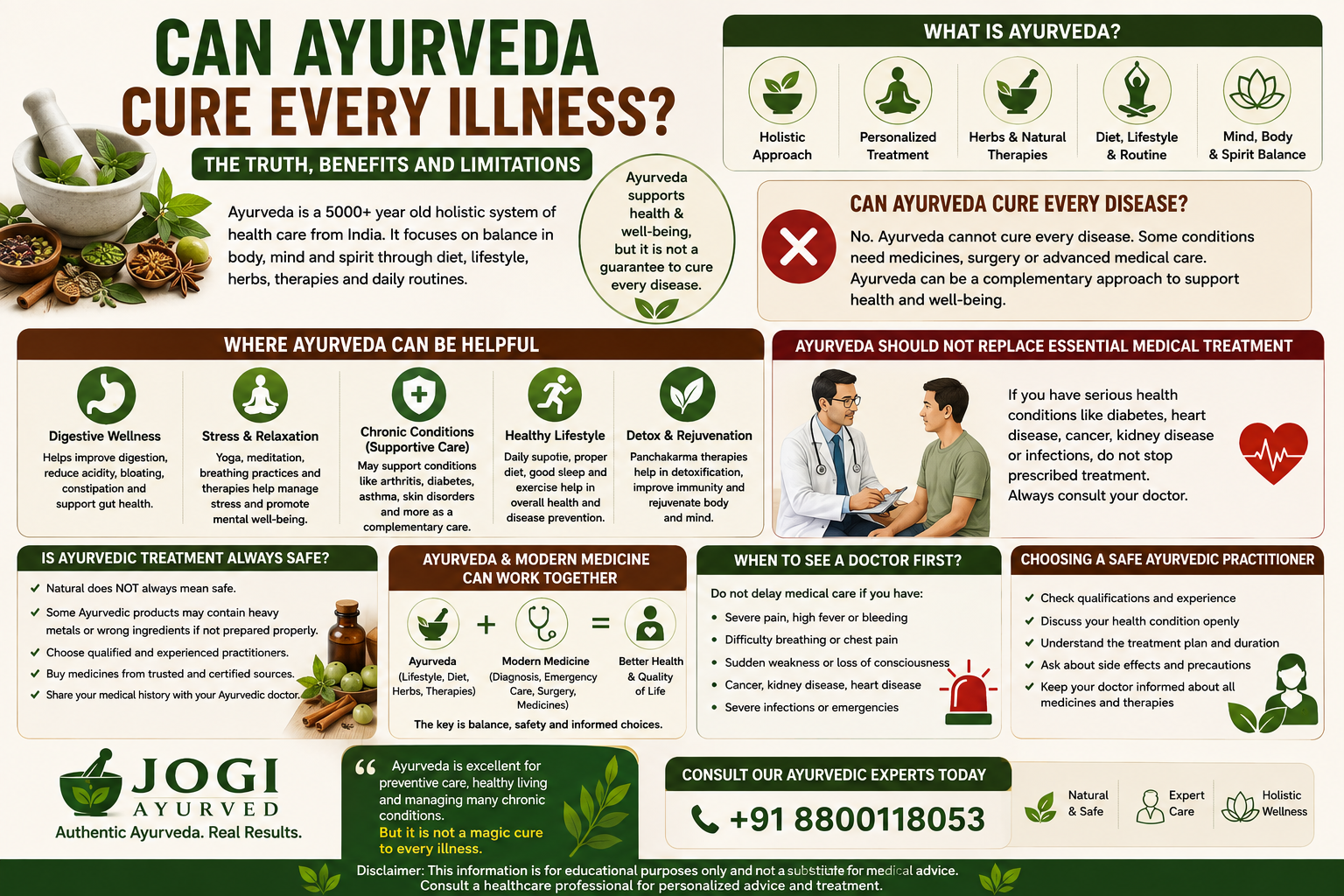
The honest answer is no medical system can guarantee a cure for every illness, and Ayurveda should not be presented as a universal cure.
Some Ayurvedic approaches may help support certain health conditions or improve quality of life, but scientific evidence varies considerably depending on the treatment and condition. The U.S. National Center for Complementary and Integrative Health (NCCIH) notes that some studies suggest benefits for conditions such as osteoarthritis pain and certain type 2 diabetes symptoms, while evidence for many other health conditions remains limited.
What Is Ayurveda?
Ayurveda is a traditional Indian system of health care that takes a holistic approach to the individual.
It commonly considers:
- Diet
- Lifestyle
- Digestion
- Sleep
- Exercise
- Stress
- Body constitution
- Herbal preparations
- Traditional therapies
Ayurvedic treatment is often personalized rather than using exactly the same approach for every person.
The World Health Organization recognizes Ayurveda as a traditional medicine system and has published benchmarks addressing the quality, safety, training, and practice of Ayurveda.
Can Ayurveda Cure Every Disease?
No.
It would be medically inaccurate to claim that Ayurveda can cure every disease.
Different illnesses have different causes, stages, and treatment requirements. Some conditions require emergency treatment, surgery, antibiotics, hormone replacement, chemotherapy, insulin, or other conventional medical interventions.
Ayurvedic care may sometimes be used as a complementary approach, but it should not replace necessary medical treatment.
The WHO’s current traditional medicine strategy emphasizes evidence, safety, quality, regulation, and appropriate integration with health systems.
Where Can Ayurveda Be Helpful?
Ayurveda may provide useful support in areas such as:
1. Healthy Lifestyle
Ayurveda emphasizes daily routines, balanced nutrition, physical activity, adequate sleep, and stress management.
These habits can contribute to general health regardless of whether someone uses Ayurvedic treatment.
2. Digestive Wellness
Ayurvedic approaches often focus strongly on digestion and food habits.
Personalized dietary guidance may help some people manage digestive discomfort, although persistent symptoms should be medically evaluated.
3. Stress and Relaxation
Practices such as yoga, meditation, breathing exercises, and selected Ayurvedic therapies may support relaxation and overall well-being.
They should not be considered a replacement for professional treatment of serious mental health conditions.
4. Supportive Care for Chronic Conditions
Some people use Ayurveda alongside conventional medical care for chronic health problems.
Research into Ayurveda is ongoing. NCCIH reports that some small studies have shown potential benefits for conditions such as osteoarthritis and type 2 diabetes, but the evidence is not strong enough to conclude that Ayurveda is a cure for these diseases.
5. General Wellness
Ayurvedic lifestyle practices may help people develop healthier routines around:
- Food
- Sleep
- Exercise
- Stress management
- Daily habits
These practices can be part of a broader healthy lifestyle.
Ayurveda Should Not Replace Essential Medical Treatment
This is one of the most important points.
If you have a serious medical condition, do not stop prescribed treatment simply because you want to try Ayurveda.
For example, someone with:
- Diabetes
- High blood pressure
- Thyroid disease
- Asthma
- Heart disease
- Cancer
- Kidney disease
- Serious infection
may require ongoing medical monitoring and treatment.
The NHS advises people not to stop prescribed medicines without speaking with their doctor and recommends telling healthcare professionals about herbal medicines or complementary therapies being used.
Are Ayurvedic Medicines Always Safe?
Natural does not automatically mean safe.
Some Ayurvedic preparations can contain herbs, minerals, metals, or other substances. Quality and preparation are important.
NCCIH reports that some Ayurvedic preparations have been found to contain potentially toxic amounts of lead, mercury, or arsenic.
WHO’s Ayurveda practice benchmarks also emphasize quality control, appropriate preparation, practitioner competence, contraindications, and management of adverse effects.
Therefore:
- Buy medicines from reliable sources.
- Avoid unknown products sold online.
- Do not self-prescribe strong herbal preparations.
- Tell your doctor about all supplements and herbal medicines.
- Follow the dosage recommended by a qualified practitioner.
Ayurveda and Modern Medicine Can Work Together
The choice does not always have to be Ayurveda versus modern medicine.
In appropriate situations, complementary approaches can be integrated with conventional healthcare.
For example, a person may use:
- Medical treatment for a diagnosed condition
- Ayurvedic dietary guidance
- Yoga
- Meditation
- Lifestyle changes
- Appropriate Ayurvedic therapies
The important principle is safety and evidence-based decision-making.
WHO states that traditional medicine should be integrated appropriately and safely, based on the latest scientific evidence.
When Should You See a Doctor First?
Do not delay medical evaluation if you have symptoms such as:
- Severe chest pain
- Difficulty breathing
- Sudden weakness or paralysis
- Loss of consciousness
- Severe abdominal pain
- Heavy uncontrolled bleeding
- High fever with serious symptoms
- Blood in vomit or stool
- Sudden vision loss
- Severe allergic reaction
These situations may require urgent medical care.
How to Choose a Safe Ayurvedic Practitioner
Before beginning Ayurvedic treatment, consider:
Check Qualifications
Choose a properly trained and qualified Ayurvedic practitioner.
Share Your Medical History
Tell the practitioner about:
- Existing conditions
- Current medicines
- Allergies
- Previous treatments
- Pregnancy, if applicable
Ask About the Treatment
Understand:
- What treatment is being recommended
- Why it is being recommended
- Expected benefits
- Possible side effects
- How long treatment may take
Keep Your Doctor Informed
If you are already receiving conventional treatment, tell your doctor about any Ayurvedic medicines or therapies you plan to use.
What Does a Responsible Ayurvedic Approach Look Like?
A responsible Ayurvedic healthcare approach should not promise:
❌ “We cure every disease.”
❌ “You will never need conventional medicine.”
❌ “Our herbs can cure cancer.”
❌ “Stop your prescribed medicine.”
Instead, responsible care should focus on:
✅ Individual assessment
✅ Appropriate diagnosis
✅ Safe treatment
✅ Lifestyle improvement
✅ Evidence-informed practice
✅ Coordination with other healthcare professionals when needed
Ayurveda at JOGI Ayurved
At JOGI Ayurved, the goal should be to provide personalized Ayurvedic guidance rather than promising a cure for every disease.
Depending on the individual’s needs, Ayurvedic care may include:
- Personalized diet guidance
- Lifestyle recommendations
- Ayurvedic consultation
- Traditional herbal support
- Yoga and relaxation practices
- Panchakarma therapies when appropriate
Treatment should be selected after considering the person’s health condition, medical history, and individual needs.
Frequently Asked Questions
Can Ayurveda cure all diseases?
No. Ayurveda cannot be scientifically or medically described as a cure for every disease. Evidence varies significantly between different Ayurvedic treatments and health conditions.
Is Ayurveda completely natural?
Ayurveda includes many plant-based preparations, but some traditional products may also contain minerals or metals. Product quality and safety therefore matter.
Can Ayurveda be used with modern medicine?
In some situations, Ayurvedic approaches may be used as complementary care alongside conventional treatment. Always tell your healthcare providers about the therapies and supplements you are using.
Can I stop my medicine and use Ayurveda instead?
No. Do not stop prescribed medication without discussing it with your doctor.
Is Ayurvedic treatment safe?
Safety depends on the practitioner, treatment, product quality, preparation, dosage, and the person’s medical condition. WHO emphasizes safety, quality, appropriate practice, and regulation in Ayurveda.
Does Ayurveda have scientific evidence?
Some Ayurvedic treatments have been studied, but the amount and quality of evidence varies widely. NCCIH notes that relatively few well-designed clinical trials are available for many Ayurvedic approaches.
Conclusion
Ayurveda can be a valuable traditional approach to health and wellness, but it should not be promoted as a cure for every illness.
Its strengths include personalized lifestyle guidance, dietary practices, traditional therapies, and a holistic approach to well-being. However, evidence varies by condition and treatment, and some Ayurvedic products may carry safety risks.
The safest approach is to combine appropriate medical diagnosis, evidence-based treatment, healthy lifestyle habits, and qualified Ayurvedic guidance when appropriate.
At JOGI Ayurved, the focus should be on responsible, individualized care—not unrealistic promises of curing every disease.
Important Links
- Can Ayurveda Cure Every Illness
- Can Ayurveda Cure All Diseases
- Ayurveda Cure
- Ayurveda Treatment
- Ayurvedic Medicine Benefits
- Ayurveda and Modern Medicine
- Is Ayurveda Effective
- Is Ayurvedic Medicine Safe
- Ayurvedic Treatment for Chronic Disease
- Ayurveda Scientific Evidence
- Ayurveda Health Benefits
- Ayurvedic Wellness
- JOGI Ayurved
- Ayurvedic Consultation
- Panchakarma Therapy
References:
- Ayurveda | Directorate of AYUSH
- Ayurvedic research and methodology: Present status and future strategies – PMC
- A glimpse of Ayurveda – The forgotten history and principles of Indian traditional medicine – PMC
- Ayurveda and the battle against chronic disease: An opportunity for Ayurveda to go mainstream? – PMC
- View of Diabetes Care with Reversal Therapy: A Case Study on Remission of Type II Diabetes with Resolution of Grade II Fatty Liver | Journal of Ayurveda and Integrated Medical Sciences
- Reversal of type 2 diabetes mellitus through integrated Ayurveda dietary protocol – A case report – ScienceDirect