Drinking Water During Meals: Does It Affect Digestion?
Have you ever been told “Don’t drink water while eating because it weakens digestion”?
This is a common belief, especially in traditional health discussions.
But does drinking water during a meal really interfere with digestion?
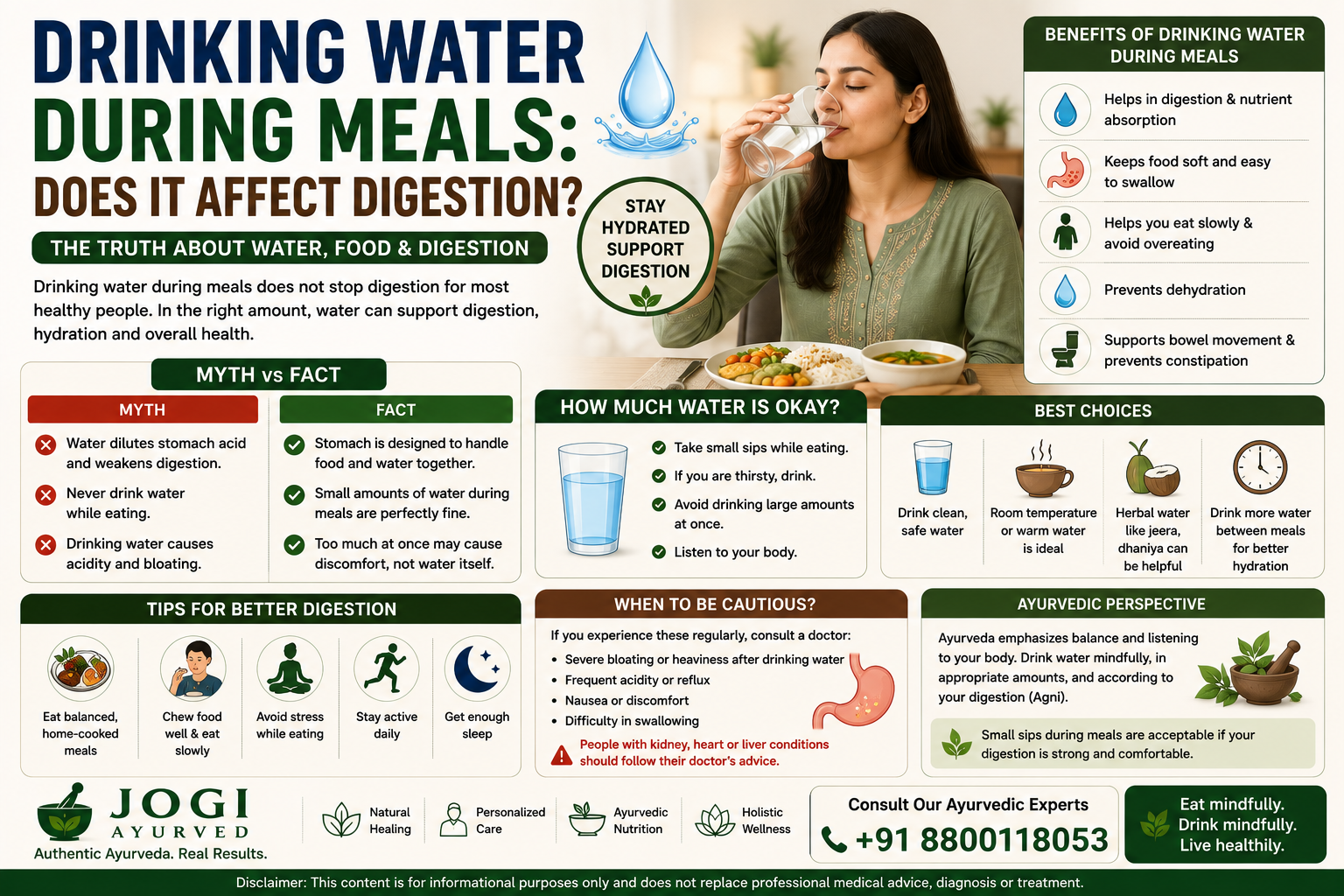
For most healthy people, drinking water with meals does not appear to stop or significantly impair digestion. In fact, staying adequately hydrated is important for normal body functions, and water can support digestion and help prevent constipation.
The important thing is how much you drink, your individual comfort, and your overall eating habits.
Does Drinking Water During Meals Dilute Stomach Acid?
One of the most common claims is that drinking water during meals “dilutes stomach acid” and therefore prevents proper digestion.
This is an oversimplification.
Your digestive system is designed to handle both food and fluids. The stomach continuously regulates its digestive environment rather than simply becoming unable to digest food because you drink water.
So, for most healthy people:
A glass of water with a meal does not mean your food will stop digesting.
Can Water Actually Help Digestion?
Yes, adequate hydration is important for normal digestive function.
Water can help:
- Keep stool softer
- Support regular bowel movements
- Prevent dehydration
- Support normal digestive processes
- Make eating slower and more comfortable for some people
Cleveland Clinic notes that adequate water intake supports digestion and can help prevent constipation.
Drinking Water While Eating: The Real Effects
1. It Can Help You Stay Hydrated
If you feel thirsty while eating, there is generally no reason to avoid water simply because you are having a meal.
Your body needs adequate fluid throughout the day.
The amount you need varies depending on factors such as:
- Weather
- Physical activity
- Age
- Body size
- Diet
- Pregnancy
- Medical conditions
- Medication use
There is no universal requirement that everyone must drink exactly the same amount of water every day.
2. It May Help You Eat More Slowly
Taking small sips of water during a meal can encourage pauses between bites.
Eating slowly may help you become more aware of fullness and eating behavior.
Cleveland Clinic specifically recommends sipping water while eating as one strategy that can encourage slower eating.
3. It May Help With Dry or Difficult Foods
Some foods can feel dry or difficult to swallow.
Small sips of water can make eating more comfortable and help with swallowing.
However, if you regularly have difficulty swallowing food or liquids, this should be medically evaluated rather than simply treated by drinking more water.
4. Too Much Water Can Make Some People Feel Uncomfortable
While moderate water consumption during meals is generally fine, drinking a very large volume quickly can make some people feel:
- Bloated
- Full
- Uncomfortable
- Nauseated
If you experience these symptoms, try taking small sips rather than large amounts.
Does Water Slow Down Digestion?
For most healthy people, there is no good reason to believe that normal amounts of water consumed with food significantly slow digestion.
The digestive system is designed to process food and fluids together.
The bigger factors affecting digestive comfort are often:
- Portion size
- Eating too quickly
- High-fat meals
- Very spicy foods
- Excessive processed foods
- Individual food intolerance
- Stress
- Poor sleep
- Low physical activity
What About Ayurveda and Drinking Water During Meals?
Ayurveda traditionally places significant importance on Agni, often described as digestive fire.
Traditional Ayurvedic dietary advice may emphasize appropriate meal quantity, eating according to digestive capacity, and avoiding excessive fluid intake around meals.
However, this does not mean that everyone must completely avoid water during meals.
A practical approach is to consider your individual digestive comfort.
If small amounts of water with food feel comfortable, there is generally no need to force yourself to avoid it.
How Much Water Should You Drink With a Meal?
There is no scientifically established universal “correct” quantity of water that everyone should drink during meals.
A practical approach is:
If You Are Thirsty
Take a few sips.
If Food Feels Dry
Drink enough water to make eating comfortable.
If You Feel Bloated
Try smaller sips and avoid drinking a very large quantity at once.
If You Are Not Thirsty
You do not need to force yourself to drink a large glass simply because you are eating.
The goal is adequate hydration throughout the day, rather than following a rigid rule about water timing.
Cold Water vs Warm Water During Meals
Another common question is whether you should drink only warm water with food.
There is limited evidence that water temperature has a major effect on digestion.
Cleveland Clinic notes that although people commonly claim hot water has special digestive benefits, scientific evidence supporting specific benefits of hot water over room-temperature or cold water is limited.
Therefore, choose a temperature that you find comfortable.
Can Drinking Water During Meals Cause Acidity?
Water itself does not automatically cause acidity.
However, some people may experience discomfort when consuming a very large quantity of fluid along with a heavy meal.
If you regularly experience:
- Heartburn
- Acid reflux
- Burning in the chest
- Sour taste
- Frequent belching
the issue may be related to reflux or another digestive condition rather than simply drinking water with meals.
Persistent symptoms should be evaluated by a healthcare professional.
What If You Have Acid Reflux?
If you have reflux, pay attention to your individual triggers.
Helpful habits may include:
- Eating smaller meals
- Eating slowly
- Avoiding overeating
- Limiting foods that personally trigger reflux
- Avoiding lying down immediately after eating
- Maintaining a healthy weight if appropriate
- Staying adequately hydrated
If symptoms are frequent or severe, consult a healthcare professional.
Drinking Water During Meals and Weight Loss
Water itself contains no calories, so replacing sugary beverages with water can reduce calorie intake.
Drinking water may also contribute to a feeling of fullness for some people.
However, water is not a magic weight-loss treatment.
For healthy weight management, focus on:
- Balanced nutrition
- Appropriate portions
- Regular physical activity
- Adequate sleep
- Sustainable eating habits
Should You Drink Water Before Meals?
Drinking water before meals is generally fine for most healthy people.
Some people find that having water before eating helps them avoid confusing thirst with hunger.
But there is no need to force yourself to drink a large amount of water immediately before every meal.
Listen to your body’s thirst signals and maintain hydration throughout the day.
7 Healthy Water Habits for Better Digestion
1. Drink Water Regularly
Don’t wait until you are extremely thirsty to start drinking.
2. Take Small Sips With Meals
If you want water while eating, moderate sipping is a simple approach.
3. Avoid Sugary Drinks
Replace sugary soft drinks and sweetened beverages with water more often.
4. Eat Slowly
Take time to chew your food properly.
5. Avoid Overeating
Very large meals can cause more digestive discomfort than moderate water consumption.
6. Stay Active
Regular physical activity supports overall health and digestive function.
7. Choose Water That Is Safe to Drink
Safe drinking water is essential for health. Avoid consuming untreated water that may contain harmful microorganisms.
Drinking Water and Ayurvedic Eating Habits
From an Ayurvedic lifestyle perspective, healthy digestion is often associated with:
- Appropriate meal portions
- Regular meal routines
- Freshly prepared food
- Eating according to individual digestive capacity
- Mindful eating
- Adequate rest
- Healthy daily routines
Instead of following rigid rules such as “never drink water during meals,” consider how your body responds.
For some people, a few sips may feel comfortable. Others may prefer drinking more water between meals.
Common Myths About Water During Meals
Myth 1: Water Completely Stops Digestion
Fact: Normal amounts of water do not stop digestion in healthy people.
Myth 2: Water Always Dilutes Stomach Acid and Causes Poor Digestion
Fact: This is an oversimplification of how the digestive system works.
Myth 3: You Must Never Drink Water While Eating
Fact: There is no universal rule requiring healthy people to avoid water during meals.
Myth 4: Warm Water Is Always Better for Digestion
Fact: There is limited evidence that warm water has major digestive advantages over other temperatures.
Myth 5: Drinking Water Automatically Causes Weight Loss
Fact: Water can support healthy hydration and may help replace calorie-containing drinks, but weight management requires an overall healthy lifestyle.
When Should You Be Careful With Fluid Intake?
Some people need individualized fluid recommendations.
This can include people with certain:
- Kidney conditions
- Heart conditions
- Liver conditions
- Electrolyte disorders
If your doctor has prescribed a specific fluid restriction, follow that advice rather than general hydration recommendations.
Frequently Asked Questions
Is it okay to drink water while eating?
Yes. For most healthy people, drinking a moderate amount of water with meals is generally fine.
Does water dilute stomach acid?
The idea that normal water intake during meals significantly “dilutes” stomach acid and stops digestion is an oversimplification.
Is warm water better for digestion?
There is limited evidence that warm water provides major digestive benefits compared with water at other temperatures.
Can drinking water during meals cause bloating?
Drinking a large amount quickly may make some people feel full or bloated. Small sips may be more comfortable.
Should I drink water before or after meals?
Either can be appropriate. The more important goal is maintaining adequate hydration throughout the day.
Can water help constipation?
Adequate fluid intake can support digestion and help prevent constipation, particularly when combined with adequate dietary fibre and physical activity.
Can Ayurveda recommend drinking water during meals?
Ayurvedic dietary practices may vary according to the individual and digestive capacity. Small amounts of water during meals may be appropriate for some people, while others may prefer more fluid between meals.
Conclusion
Drinking water during meals is not automatically bad for digestion.
For most healthy people, moderate water intake with food is perfectly reasonable. Water supports hydration and normal digestive function, and small sips during meals may even help some people eat more slowly.
Rather than worrying about a strict rule such as “never drink water while eating,” focus on the bigger picture:
Drink enough water + eat balanced meals + chew slowly + avoid overeating + stay physically active.
If drinking large amounts with meals consistently causes bloating, reflux, nausea, or other symptoms, discuss the problem with a healthcare professional.
At JOGI Ayurved, personalized dietary and lifestyle guidance can help you develop eating habits suited to your individual needs.
Important Links
- Drinking Water During Meals
- Water During Meals Digestion
- Drinking Water While Eating
- Does Water Affect Digestion
- Water and Digestion
- Drinking Water With Food
- Water During Meals Ayurveda
- Ayurvedic Water Drinking Rules
- Drinking Water Before Meals
- Drinking Water After Meals
- Warm Water and Digestion
- Water and Acidity
- Water and Bloating
- Healthy Hydration Habits
- Ayurvedic Digestion Tips
- JOGI Ayurved
Our Important Services
- Acidity Root Causes: Stress, Sleep & Food Triggers
- 3 Ayurvedic Ways to Strengthen Digestive Fire
- Does the Perfect Ayurvedic Meal Really Exist?
- Reusing Heated Cooking Oil: Health Risks
- Can Ayurveda Cure Every Illness?
- Online Ayurvedic Consultation