Monsoon and Digestive Fire: Why Your Digestion Needs Extra Care During the Rainy Season
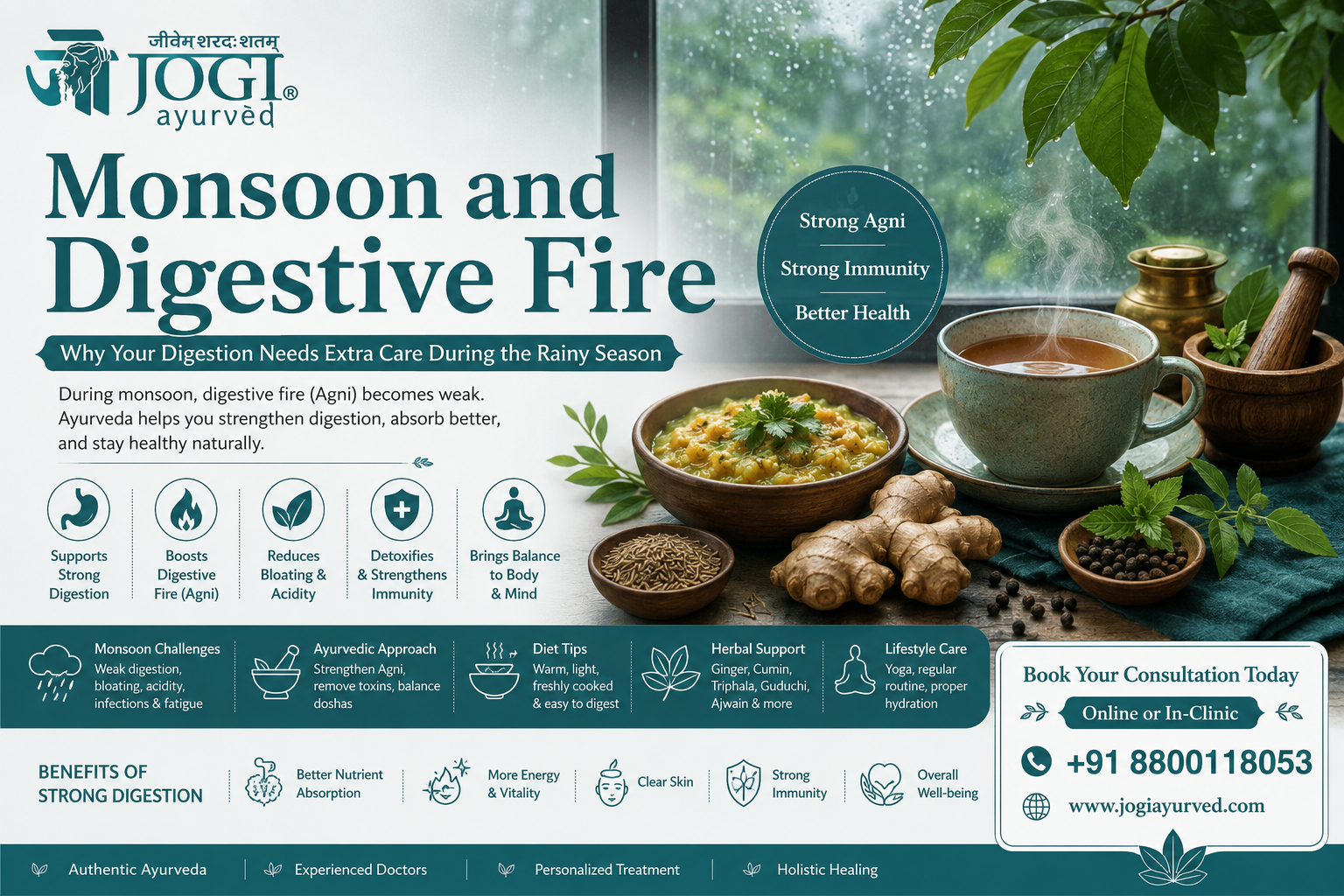
The rainy season brings welcome relief from the summer heat, but according to Ayurveda, it is also the time when our digestive fire (Agni) becomes naturally weaker. Reduced digestive strength can lead to poor digestion, bloating, acidity, indigestion, low immunity, and increased susceptibility to seasonal illnesses.
Ayurveda recommends adapting your diet, lifestyle, and daily routine during the monsoon to protect digestion and maintain overall health.
At JOGI Ayurved, we provide personalized Ayurvedic consultation to help strengthen digestion naturally through herbal medicines, dietary guidance, Panchakarma (when appropriate), and lifestyle modifications.
What is Digestive Fire (Agni)?
In Ayurveda, Agni refers to the body’s digestive and metabolic fire responsible for digesting food, absorbing nutrients, and eliminating waste.
A healthy Agni supports:
- Proper digestion
- Strong immunity
- Good metabolism
- Healthy tissues
- Balanced energy
- Disease prevention
When Agni becomes weak (Mandagni), digestion slows down, allowing toxins (Ama) to accumulate in the body.
Symptoms of Weak Digestive Fire During Monsoon
Common symptoms include:
- Loss of appetite
- Bloating
- Indigestion
- Acidity
- Gas formation
- Constipation
- Loose stools
- Heaviness after meals
- Nausea
- Fatigue
- Low energy
- Bad breath
- Coated tongue
Causes
During the rainy season, several factors can weaken digestion:
- Increased humidity
- Reduced digestive power
- Irregular eating habits
- Heavy or oily foods
- Contaminated food or water
- Poor hygiene
- Lack of physical activity
- Overeating
- Cold foods and beverages
- Stress and poor sleep
Risk Factors
People at higher risk include:
- Individuals with weak digestion
- Elderly adults
- Children
- People with IBS or acidity
- Diabetes patients
- Obese individuals
- Frequent travelers
- Those consuming outside food regularly
- Individuals with sedentary lifestyles
Diagnosis
An Ayurvedic physician evaluates:
- Digestive strength (Agni)
- Appetite
- Bowel habits
- Tongue coating
- Dosha imbalance
- Medical history
- Dietary habits
- Lifestyle
- Existing health conditions
Modern investigations may be advised if symptoms persist or suggest an underlying medical condition.
Ayurvedic Perspective
According to Ayurveda, the rainy season aggravates Vata Dosha while weakening Agni.
Weak digestion results in:
- Ama (metabolic toxins)
- Poor nutrient absorption
- Reduced immunity
- Digestive discomfort
- Seasonal illnesses
The primary goal of Ayurvedic care is to strengthen Agni and maintain dosha balance.
Ayurvedic Treatment Approach
Treatment is personalized and based on:
- Prakriti (Body Constitution)
- Vikriti (Current Imbalance)
- Digestive capacity
- Dosha assessment
- Lifestyle
- Dietary habits
- Existing medical conditions
Treatment may include:
- Digestive herbs
- Ayurvedic formulations
- Diet counseling
- Lifestyle correction
- Seasonal wellness guidance
Panchakarma (If Appropriate)
The monsoon season is traditionally considered one of the preferred times for selected Panchakarma therapies because the body’s channels are believed to be more receptive.
Depending on the individual’s condition, therapies may include:
- Abhyanga
- Swedana
- Basti
- Virechana (selected cases)
- Shirodhara (when indicated)
Potential benefits include:
- Improved digestion
- Dosha balance
- Detoxification
- Better immunity
- Overall rejuvenation
Panchakarma should only be performed under qualified Ayurvedic supervision.
Herbal Medicines (General Information)
Depending on individual assessment, Ayurvedic physicians may recommend herbs such as:
- Ginger (Shunthi)
- Trikatu
- Triphala
- Ajwain
- Jeera (Cumin)
- Fennel (Saunf)
- Guduchi (Giloy)
- Haritaki
- Pippali
- Coriander
Do not self-medicate. Herbal medicines should be taken only under professional guidance.
Diet Recommendations
During the rainy season, Ayurveda recommends:
- Warm freshly cooked meals
- Light and easily digestible foods
- Moong dal khichdi
- Vegetable soups
- Warm herbal teas
- Steamed vegetables
- Ginger
- Black pepper
- Cumin
- Turmeric
- Buttermilk (if suitable)
- Warm water
Eat meals at regular times and avoid overeating.
Foods to Avoid
Limit or avoid:
- Cold drinks
- Ice cream
- Refrigerated foods
- Raw salads (if digestion is weak)
- Deep-fried foods
- Excess dairy
- Street food
- Heavy sweets
- Processed foods
- Excess oily foods
- Alcohol
Lifestyle Modifications
Healthy monsoon habits include:
- Eat freshly prepared food.
- Drink warm water.
- Maintain proper hygiene.
- Avoid sleeping immediately after meals.
- Walk after dinner.
- Manage stress.
- Get adequate sleep.
- Avoid overeating.
- Keep the body warm and dry.
Yoga & Exercise
Gentle physical activity supports digestion.
Recommended practices include:
- Vajrasana (after meals)
- Pawanmuktasana
- Tadasana
- Bhujangasana
- Surya Namaskar (as tolerated)
- Anulom Vilom
- Kapalabhati (if suitable)
- Bhramari Pranayama
- Meditation
- Daily walking
Exercise should be appropriate to your health condition.
Prevention Tips
Protect your digestive health during monsoon by:
- Eating freshly cooked food
- Drinking boiled or filtered water
- Maintaining kitchen hygiene
- Avoiding stale food
- Eating at regular times
- Strengthening digestion naturally
- Staying physically active
- Managing stress
- Following seasonal Ayurvedic routines (Ritucharya)
Frequently Asked Questions (FAQs)
Why does digestion become weak during the rainy season?
According to Ayurveda, increased humidity and seasonal changes reduce digestive fire (Agni), making digestion slower and less efficient.
Can Ayurveda improve digestion naturally?
Ayurveda focuses on strengthening Agni through personalized diet, herbs, lifestyle modifications, and, where appropriate, Panchakarma therapies.
Which foods are best during monsoon?
Warm, freshly cooked, light, and easily digestible foods such as soups, khichdi, cooked vegetables, ginger, cumin, and herbal teas are generally recommended.
Is Panchakarma beneficial during monsoon?
The rainy season is traditionally considered suitable for selected Panchakarma therapies, but they should always be performed after proper Ayurvedic evaluation.
Should I avoid cold foods during monsoon?
If your digestion is weak, Ayurveda generally recommends limiting cold, refrigerated, and heavy foods.
When should I consult an Ayurvedic doctor?
Consult an Ayurvedic physician if you experience persistent indigestion, bloating, acidity, constipation, loss of appetite, or recurrent digestive issues.
Why Choose JOGI Ayurved?
At JOGI Ayurved, we provide personalized seasonal wellness care based on classical Ayurvedic principles.
Our strengths include:
- Experienced Ayurvedic doctors
- Personalized digestive health assessment
- Authentic Ayurvedic medicines
- Panchakarma therapies
- Seasonal diet counseling
- Lifestyle modification guidance
- Holistic wellness approach
- Online and in-clinic consultations
Book an Online or In-Clinic Consultation
If you experience indigestion, bloating, acidity, loss of appetite, or other digestive problems during the rainy season, our experienced Ayurvedic doctors are here to help.
At JOGI Ayurved, we evaluate your body constitution, digestive strength, lifestyle, and overall health before creating a personalized seasonal wellness plan. Your care may include Ayurvedic medicines, Panchakarma (where appropriate), dietary guidance, yoga recommendations, and lifestyle counseling.
Book your online or in-clinic consultation today and strengthen your digestive fire naturally this monsoon. Call +91 8800118053.
Medical Disclaimer
This article is for educational purposes only and should not replace professional medical advice, diagnosis, or treatment. Persistent digestive symptoms may require medical evaluation. Always consult a qualified healthcare professional before starting any new treatment or changing prescribed medications.