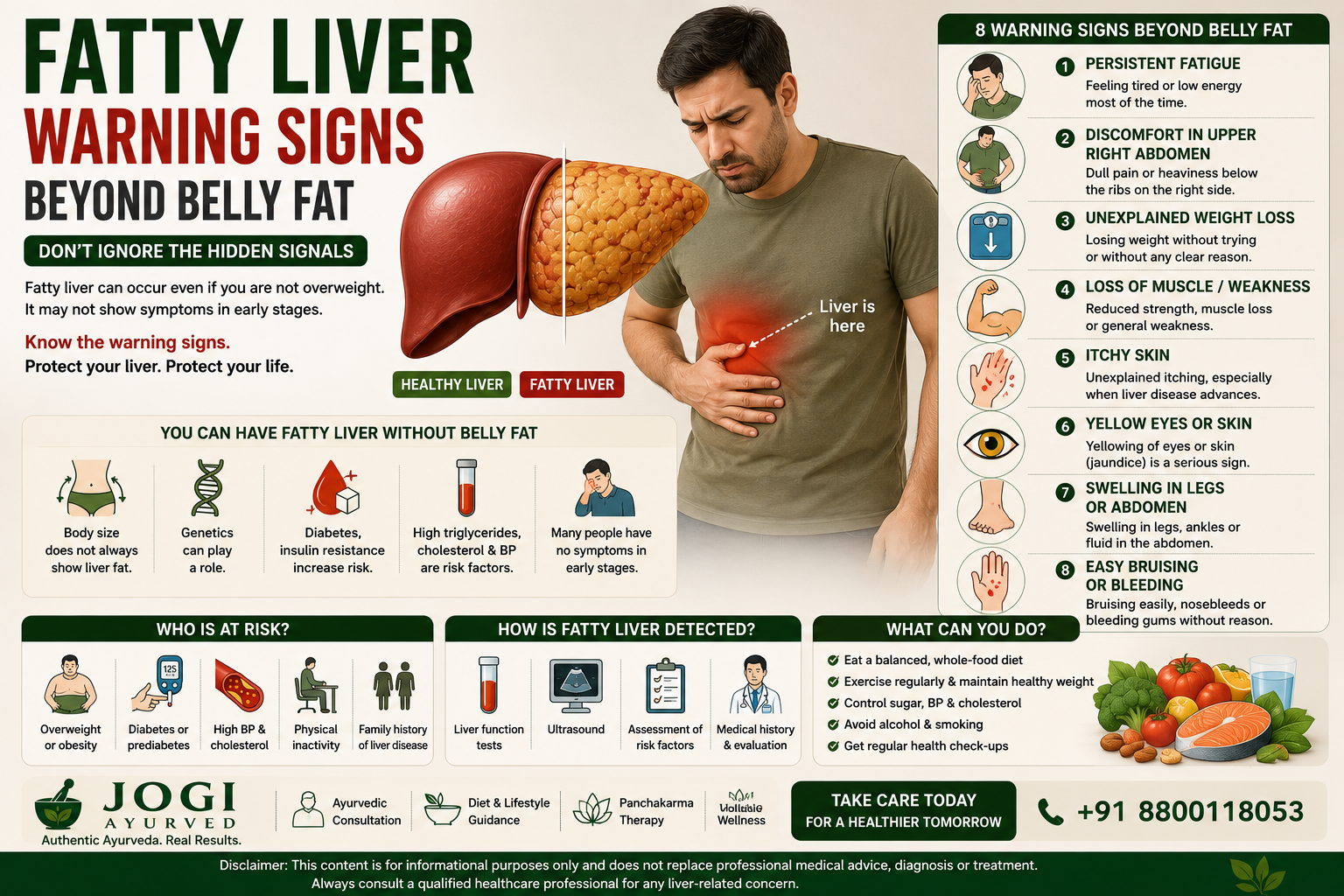
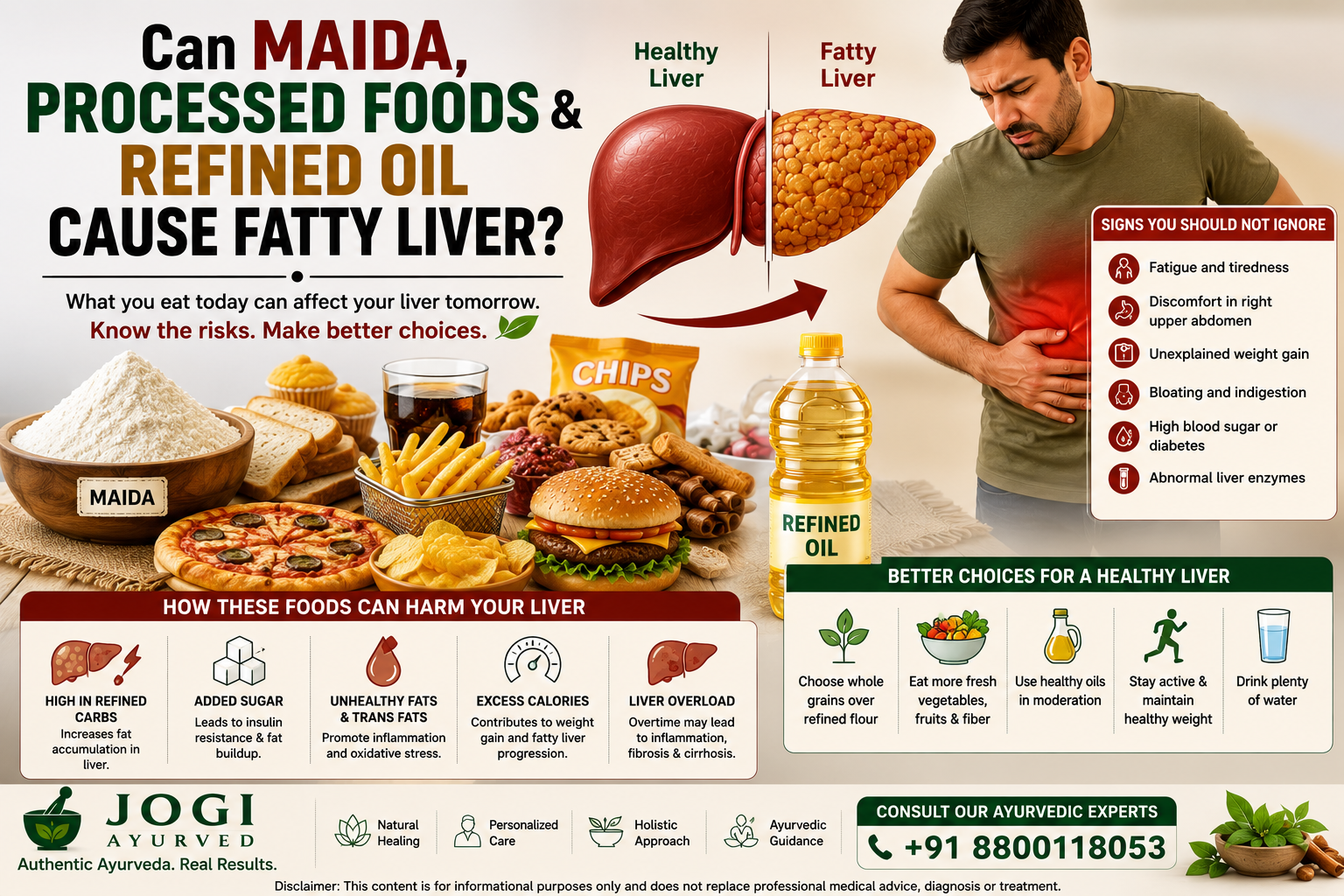
Can Maida, Processed Foods & Refined Oil Cause Fatty Liver?
Is your daily diet full of maida, packaged snacks, fried foods, biscuits, refined carbohydrates and refined cooking oils?
Many people consume these foods regularly without realizing how their overall dietary pattern may affect metabolic and liver health.
You may have heard the statement:
“Maida, processed food and refined oil are working like poison for the liver.”
But is that scientifically accurate?
Not exactly. These foods are not literally “poison.” However, regularly consuming diets high in refined carbohydrates, added sugars, highly processed foods, excess calories, saturated or trans fats can contribute to weight gain, insulin resistance and metabolic problems, which are important risk factors for metabolic dysfunction-associated steatotic liver disease (MASLD), commonly called fatty liver.
The problem is usually the overall dietary pattern, quantity and frequency, rather than one individual food.
What Is Maida?
Maida is a highly refined wheat flour commonly used in foods such as:
- White bread
- Biscuits
- Cakes
- Cookies
- Naan
- Pizza bases
- Pastries
- Samosas
- Bakery products
- Packaged snacks
Because refined flour has less fibre than whole-grain alternatives, foods made primarily from refined flour can produce a different blood-glucose response compared with higher-fibre whole grains.
NIDDK recommends choosing more lower-glycemic foods such as vegetables, fruits and whole grains and limiting foods containing large amounts of simple sugars when managing fatty liver.
Can Maida Cause Fatty Liver?
It would be incorrect to say:
“Eating maida directly causes fatty liver.”
Fatty liver has multiple causes and risk factors.
However, frequently eating large portions of refined-flour foods—especially when combined with added sugar, excess calories and low physical activity—can contribute to weight gain and metabolic problems.
Those metabolic problems can increase the risk of MASLD.
AASLD educational material on MASLD recommends choosing whole grains instead of refined carbohydrates and limiting energy-dense foods and high-fructose foods and drinks.
Why Too Many Refined Carbohydrates May Be a Problem
Refined carbohydrates are often found in foods that are:
- Low in fibre
- Easy to overeat
- Calorie-dense
- Combined with sugar or unhealthy fats
Examples include:
- White bread
- Cakes
- Biscuits
- Pastries
- Sweet bakery products
- Many packaged snacks
The issue is not that carbohydrates themselves are harmful.
The quality and quantity of carbohydrates matter.
WHO recommends that carbohydrates should primarily come from whole grains, vegetables, fruits and pulses.
What About Processed and Ultra-Processed Foods?
Processed foods are not all unhealthy.
For example, some foods are processed simply to make them safer or easier to store.
The greater concern is a diet dominated by highly processed foods containing excess sugar, unhealthy fats and sodium.
Examples can include:
- Packaged cakes
- Cookies
- Chips
- Sweetened breakfast cereals
- Sugary drinks
- Instant desserts
- Packaged fried snacks
- Fast food
- Processed bakery products
WHO states that diets containing significant amounts of highly processed foods—often high in sodium, sugar or unhealthy fats—are associated with negative health outcomes.
How Can Processed Foods Affect the Liver?
There are several possible pathways.
1. Excess Calories
Many highly processed foods are energy-dense and easy to consume in large quantities.
Regularly consuming more energy than your body needs can contribute to weight gain.
Excess body weight is an important risk factor for MASLD.
2. Added Sugar
Many processed foods contain added sugars.
High intake of simple sugars, particularly fructose-containing foods and beverages, has been studied in relation to fatty liver.
NIDDK recommends limiting foods and drinks containing large amounts of simple sugars, especially fructose.
3. Insulin Resistance
Long-term excess calorie intake, weight gain and metabolic dysfunction can contribute to insulin resistance.
Insulin resistance is strongly associated with metabolic fatty liver disease.
4. Poor Dietary Quality
A diet dominated by packaged foods may leave less room for:
- Vegetables
- Whole grains
- Pulses
- Fruits
- Nuts
- Seeds
- High-quality protein
WHO recommends a diverse diet based largely on minimally processed and unprocessed foods.
What About Refined Cooking Oil?
The term “refined oil” can be confusing.
Refining is a food-processing method and does not automatically make an oil toxic.
The more important questions are:
- How much oil are you consuming?
- What type of fat does it contain?
- How frequently are you eating fried foods?
- Is the oil being repeatedly heated?
- Are you consuming large amounts of calorie-dense fried foods?
WHO recommends limiting saturated and trans fats and choosing healthier unsaturated fats.
So it is better to avoid the blanket statement:
“All refined oils are poisonous to the liver.”
That is not scientifically accurate.
Repeatedly Heated Oil Is a Different Concern
There is an important difference between using cooking oil appropriately and repeatedly heating the same oil at high temperatures.
Repeated heating can promote oxidation and formation of degradation products.
This is particularly relevant when oil is repeatedly used for deep frying.
For healthier cooking:
- Avoid repeatedly reheating the same oil.
- Avoid overheating oil until it continuously smokes.
- Limit deep-fried foods.
- Prefer steaming, boiling, baking or other lower-oil cooking methods more often.
The Real Problem: The Combination
The biggest concern is often not maida alone or oil alone.
Consider a typical combination:
Maida + sugar + excess oil + deep frying + large portion + sugary drink + little physical activity
This type of eating pattern can provide a lot of calories while providing relatively little fibre and nutritional diversity.
Over time, this can contribute to:
Excess calories → weight gain → insulin resistance → metabolic dysfunction → increased risk of fatty liver
This is why the overall dietary pattern matters.
7 Foods to Reduce for Better Liver Health
If you are concerned about fatty liver, consider reducing frequent consumption of:
1. Sugary Soft Drinks
They can provide large amounts of free sugar without much nutritional value.
2. Sweetened Packaged Drinks
Examples include some energy drinks, sweetened teas and other sugary beverages.
3. Bakery Products
Cakes, pastries, cookies and similar foods can contain combinations of refined flour, sugar and fats.
4. Deep-Fried Snacks
Examples include:
- Samosa
- Pakora
- Puri
- Fried chips
- Fried fast food
5. Highly Processed Packaged Snacks
Check the nutrition label for high levels of sugar, sodium and unhealthy fats.
6. Excessively Large Portions of Refined Grains
Consider replacing some refined grains with higher-fibre alternatives where appropriate.
7. Foods High in Added Sugar
Frequent sweets and desserts can increase overall calorie and sugar intake.
What Should You Eat Instead?
A liver-friendly eating pattern can include:
Vegetables
Try to include a variety of seasonal vegetables.
Whole Grains
Examples include:
- Oats
- Brown rice
- Whole wheat
- Barley
- Millets
Pulses
Include:
- Dal
- Chickpeas
- Kidney beans
- Lentils
- Other pulses
Protein
Depending on your dietary preference:
- Dal
- Beans
- Eggs
- Fish
- Lean meat
- Paneer
- Other suitable protein sources
Nuts and Seeds
Moderate portions of nuts and seeds can provide healthy fats and other nutrients.
WHO recommends diets based on vegetables, fruits, pulses, nuts and whole grains while limiting foods high in unhealthy fats, free sugars and sodium.
Can You Eat Maida Occasionally?
For most people, completely banning maida is not necessary.
The key is frequency, quantity and the overall diet.
Eating a small portion of a maida-based food occasionally is very different from eating:
- Biscuits every day
- Bakery products several times a week
- Fried snacks regularly
- Sugary drinks daily
- Large portions of refined carbohydrates
If you have diabetes, fatty liver or another metabolic condition, your individual dietary needs may be different.
5 Simple Changes for Better Liver Health
1. Replace Sugary Drinks With Water
This can significantly reduce free-sugar intake.
2. Choose Whole Grains More Often
Replace some refined-grain foods with whole-grain options.
3. Eat More Vegetables
Make vegetables a regular part of lunch and dinner.
4. Reduce Deep-Fried Foods
Choose steamed, baked, grilled or lightly cooked foods more often.
5. Control Portion Size
Even healthy foods can contribute to excess calorie intake when eaten in very large quantities.
NIDDK recommends a healthy diet, appropriate portions and maintaining a healthy weight for preventing or managing fatty liver.
Can Fatty Liver Improve With Diet?
In many people with metabolic fatty liver disease, lifestyle changes can reduce liver fat and improve metabolic health.
Important measures include:
- Healthy weight management
- Regular physical activity
- Better food choices
- Reducing excess sugar
- Limiting highly processed foods
- Managing diabetes
- Managing cholesterol and blood pressure
NIDDK notes that healthy eating, portion control and gradual weight loss when appropriate can help prevent or treat fatty liver.
Ayurvedic Perspective on Processed Food
Ayurveda traditionally emphasizes freshly prepared food, appropriate quantities, regular eating habits and foods suited to an individual’s digestion and lifestyle.
An Ayurvedic approach may encourage reducing excessive:
- Fried foods
- Highly processed foods
- Heavy meals
- Excess sweets
- Irregular eating
A personalized Ayurvedic diet may also consider digestion, lifestyle, activity level and individual health concerns.
However, Ayurveda should not be presented as a guaranteed treatment or cure for fatty liver.
If you have diagnosed fatty liver, continue appropriate medical monitoring and do not stop prescribed treatment without professional advice.
Does Ayurvedic Treatment Detox the Liver?
The word “detox” is widely used in health marketing, but the liver already performs important functions involved in processing substances in the body.
There is no need to rely on extreme juice cleanses, fasting programs or unproven “liver detox” products.
A better approach is to:
- Eat a balanced diet.
- Maintain a healthy weight.
- Exercise regularly.
- Avoid excessive alcohol.
- Reduce highly processed foods.
- Manage diabetes and cholesterol.
- Follow appropriate medical advice.
When Should You Check Your Liver?
Consider discussing liver evaluation with a healthcare professional if you have:
- Fatty liver on ultrasound
- High liver enzymes
- Type 2 diabetes
- Prediabetes
- Obesity
- High triglycerides
- High cholesterol
- High blood pressure
- A strong family history of liver disease
Fatty liver can have few or no symptoms, so waiting for symptoms is not always the best strategy.
Frequently Asked Questions
Is maida poisonous for the liver?
No. Maida is not literally a poison. However, frequent consumption of refined-flour foods, particularly when combined with excess calories, sugar and unhealthy fats, can contribute to metabolic problems associated with fatty liver.
Does refined oil cause fatty liver?
Refined oil itself should not be described as a direct cause of fatty liver. The amount and type of fat, overall calorie intake, dietary pattern and repeated high-temperature heating are more important considerations.
Can I eat maida if I have fatty liver?
You may not need to completely eliminate it, but it is generally sensible to limit frequent consumption of refined-flour foods and choose more whole grains, vegetables and pulses.
What is worse for fatty liver: sugar or oil?
There is no simple “one food is worse” answer. Excess calories, added sugars, unhealthy fats, alcohol and overall dietary patterns can all contribute to metabolic and liver health. Individual circumstances matter.
Can fatty liver be reversed naturally?
Lifestyle changes can reduce liver fat and may improve metabolic health. If you have diagnosed fatty liver, discuss an appropriate plan with a healthcare professional.
Is homemade food better for fatty liver?
Homemade food can make it easier to control ingredients, portions, sugar, salt and cooking methods. However, homemade food can still be high in calories, sugar or unhealthy fats depending on the recipe.
Conclusion
Maida, processed foods and refined oils are not literally “poison” for the liver. The more accurate concern is that a diet frequently high in refined carbohydrates, added sugars, highly processed foods, excess calories and unhealthy fats can contribute to metabolic problems that increase the risk of fatty liver.
Instead of completely fearing one ingredient, focus on the overall quality of your diet.
Choose more:
Vegetables + whole grains + pulses + protein + nuts + minimally processed foods
and reduce:
Sugary drinks + excessive sweets + deep-fried foods + highly processed snacks + frequent refined-flour foods.
Small, sustainable changes in your daily diet can be more useful than extreme “detox” programs.
At JOGI Ayurved, personalized Ayurvedic diet and lifestyle guidance can be used as complementary wellness support alongside appropriate medical evaluation and treatment.
Important Links
- Maida and Fatty Liver
- Maida Liver Health
- Processed Food and Fatty Liver
- Refined Oil and Fatty Liver
- Maida Processed Food Refined Oil
- Foods That Damage Liver
- Foods Bad for Fatty Liver
- Fatty Liver Diet
- Fatty Liver Food to Avoid
- Refined Carbohydrates and Fatty Liver
- Processed Foods Liver Health
- Liver Detox Ayurveda
- Ayurvedic Diet for Fatty Liver
- Ayurvedic Liver Health
- JOGI Ayurved
Our Important Services
- Does Fatty Liver Happen Only Because of Alcohol?
- Fatty Liver Warning Signs Beyond Belly Fat
- Reusing Heated Cooking Oil: Health Risks
- 3 Ayurvedic Ways to Strengthen Digestive Fire
- Does the Perfect Ayurvedic Meal Really Exist?
- Sugar & BP Check After 40
- 5 Foods You Should Never Eat in Diabetes