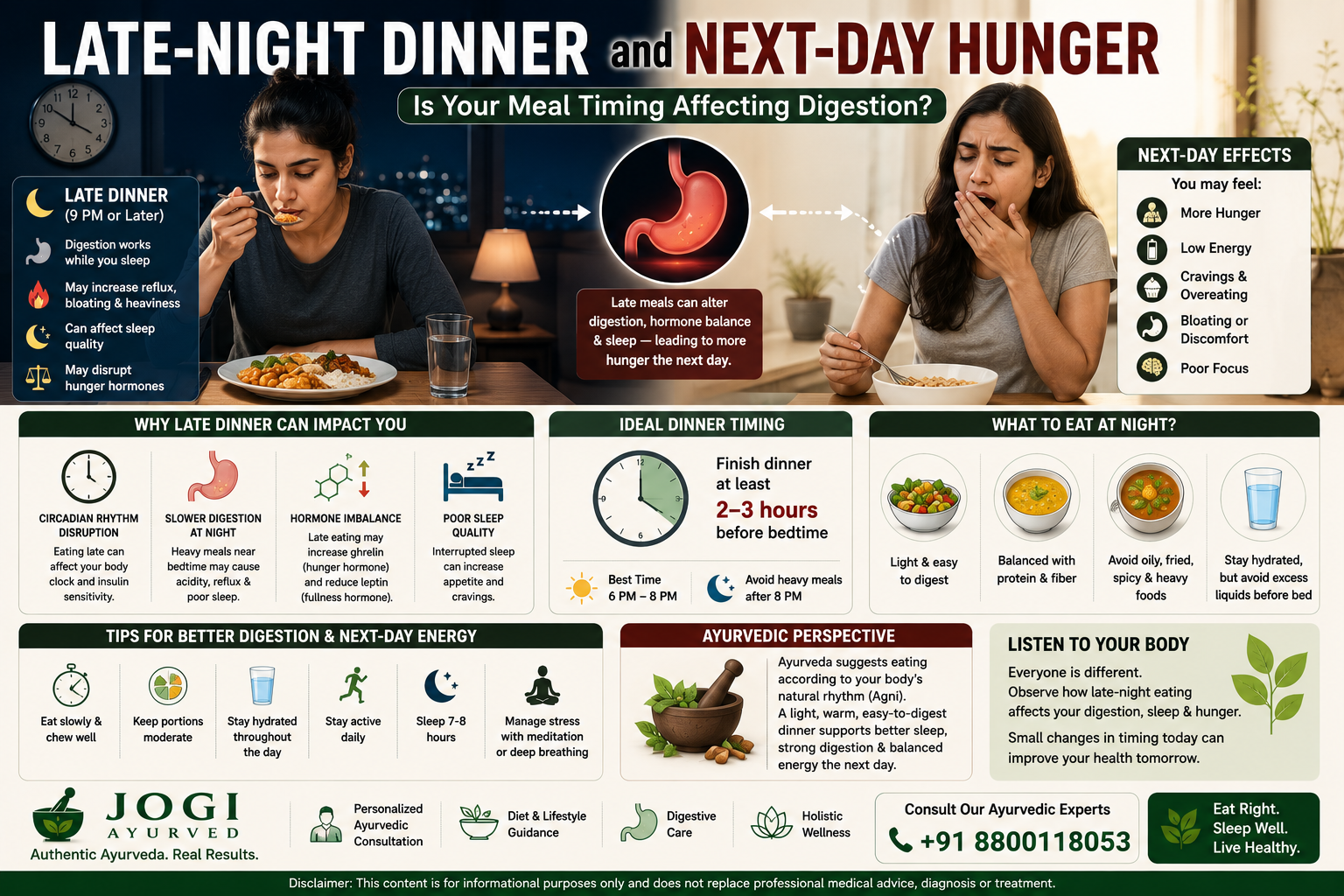
Late-Night Dinner and Next-Day Hunger: Is Your Meal Timing Affecting Digestion?
Do you eat dinner very late at night and wake up the next morning feeling unusually hungry, heavy, bloated, or uncomfortable?
Your meal timing may be one factor worth considering.
Late-night eating does not affect everyone in exactly the same way. However, research suggests that eating later in the day can influence hunger, appetite-regulating hormones, glucose metabolism, and energy expenditure. In a controlled study, late eating increased hunger and changed appetite-related hormones in adults with overweight or obesity.
Eating a large meal close to bedtime may also worsen nighttime reflux symptoms in people who are prone to GERD. The NIDDK recommends eating meals at least 3 hours before lying down or going to bed if nighttime reflux is a problem.
So, the question is not simply “Is late dinner bad?”
A better question is:
“How does eating very late, what I eat, how much I eat, and when I sleep affect my digestion and appetite?”
What Happens When You Eat Dinner Very Late?
Your digestive system continues working while you sleep, but the timing of food intake interacts with your body’s circadian rhythm.
Research has found that a late dinner can alter overnight metabolic responses. In one randomized crossover study, a dinner eaten at 10 PM rather than 6 PM produced higher nighttime glucose levels and lower fat oxidation.
This does not mean that one late dinner will damage your digestion.
The concern is more about repeated late-night eating, especially when it is combined with large portions, calorie-dense foods, poor sleep, and low physical activity.
Can Late Dinner Make You Hungry the Next Day?
It may.
A controlled human study found that late eating increased subjective hunger and changed the balance of appetite-regulating hormones, including ghrelin and leptin.
However, hunger is influenced by many factors, including:
- Sleep duration
- Meal composition
- Total calorie intake
- Protein and fibre intake
- Physical activity
- Stress
- Individual metabolism
- Meal timing
Therefore, waking up hungry does not automatically mean that your late dinner caused it.
Why Might Late Eating Affect Hunger?
1. Appetite Hormones
Your body uses hormones to regulate hunger and fullness.
Ghrelin is associated with hunger, while leptin is involved in signalling energy availability and satiety.
Research suggests that late eating can alter appetite-regulating hormones and increase hunger in some circumstances.
2. Your Circadian Rhythm Matters
Your body has an internal biological clock that influences:
- Sleep
- Hormones
- Body temperature
- Metabolism
- Digestion
- Appetite
Eating at a time when your body is preparing for sleep may produce different metabolic responses compared with eating earlier.
A controlled study found that late dinner produced changes in glucose and fat metabolism compared with an earlier dinner.
3. Late Dinner May Affect Sleep
Eating very close to bedtime may be uncomfortable for some people.
A recent controlled study in healthy young women found that dinner consumed one hour before bedtime was associated with reduced sleep continuity and efficiency. However, research on late eating and sleep remains mixed, and effects may depend on meal timing, meal composition, and the individual.
Poor sleep itself can also affect appetite.
Research has found that even one night of moderate sleep restriction can increase next-day hunger and food intake in some adults.
This creates a possible cycle:
Late dinner → uncomfortable sleep → poor sleep → increased hunger → more eating the next day
But this relationship is not the same for everyone.
4. Large Late Meals May Cause Digestive Discomfort
A very large dinner shortly before bed may leave you feeling:
- Heavy
- Bloated
- Uncomfortably full
- Gassy
- Acidic
- Reflux-prone
The problem may be meal size and food type, not simply the clock.
For example, a small balanced meal at 9 PM may affect you differently from a very large fried meal at 11 PM.
Late Dinner and Acid Reflux
If you experience heartburn or acid reflux at night, meal timing becomes particularly important.
The NIDDK recommends having meals at least 3 hours before lying down or going to bed when nighttime GERD symptoms are an issue.
Common foods that may trigger reflux in some people include:
- High-fat foods
- Spicy foods
- Chocolate
- Coffee and caffeine
- Alcohol
- Acidic foods
Triggers vary from person to person.
Does Late Dinner Slow Digestion?
It is too simplistic to say:
“Food does not digest at night.”
Your digestive system continues functioning during sleep.
However, meal timing can influence how the body processes glucose and fat, and eating very close to bedtime may be less comfortable for some people. Controlled research has found metabolic differences between earlier and later meals.
Therefore, instead of saying that late dinner completely stops digestion, it is more accurate to say that late eating may change metabolic and digestive responses, particularly when meals are large or close to bedtime.
7 Signs Your Late Dinner Routine May Not Suit You
Pay attention if you regularly experience:
1. Morning Heaviness
You wake up feeling that your previous night’s meal is still sitting heavily.
2. Nighttime Acidity
You experience burning or sour reflux after going to bed.
3. Bloating
Your abdomen feels unusually full or swollen at night or the next morning.
4. Poor Sleep
You feel uncomfortable or restless after eating a large late meal.
5. Strong Morning Hunger
You wake up unusually hungry despite eating a substantial dinner.
6. Frequent Night Snacking
A late dinner becomes part of a cycle of eating throughout the night.
7. Weight Gain
Regular late-night eating combined with excess calorie intake may make weight management more difficult.
These symptoms can have many causes, so they should not automatically be attributed to dinner timing.
What Should You Eat for Dinner?
Instead of focusing only on the clock, focus on meal quality and portion size.
A balanced dinner can include:
- Vegetables
- Dal or other pulses
- Appropriate protein
- Whole grains in suitable portions
- Curd or other suitable foods if tolerated
- Moderate amounts of healthy fats
Try to avoid making dinner your largest and heaviest meal of the day if that causes discomfort.
Foods to Limit at Late Night
If you regularly eat close to bedtime, consider reducing:
- Deep-fried foods
- Very spicy meals
- Heavy creamy foods
- Large desserts
- Sugary drinks
- Excessively large portions
- Alcohol
- Foods that you know trigger your reflux
The goal is not to create a strict “forbidden foods” list.
Instead, identify the foods that consistently make your digestion or sleep worse.
How Many Hours Before Bed Should You Eat?
There is no universal rule that everyone must follow.
However, if you experience nighttime reflux, the NIDDK recommends eating at least 3 hours before lying down or going to bed.
For general digestive comfort, you can experiment with finishing dinner earlier and allowing enough time between your meal and bedtime.
For example:
Dinner: 7:30–8:00 PM
Bedtime: 10:30–11:00 PM
The exact schedule should fit your lifestyle and sleep routine.
What If You Work Late?
Not everyone can eat dinner at 7 PM.
If your work schedule requires a late dinner:
Choose a Moderate Portion
Avoid making your late meal extremely large.
Eat Slowly
Take time to chew properly.
Choose Lighter Foods
Prefer a balanced meal rather than a heavy fried meal.
Avoid Lying Down Immediately
Remain upright after eating, especially if you are prone to reflux.
Maintain a Regular Sleep Schedule
Consistent sleep can support healthy appetite regulation.
5 Simple Tips for Better Digestion at Night
1. Finish Dinner Earlier When Possible
An earlier dinner may provide more time between eating and bedtime.
2. Keep Portions Moderate
Large meals can increase feelings of fullness and discomfort.
3. Eat Slowly
Avoid rushing through dinner.
4. Reduce Heavy Fried Foods
Especially when eating close to bedtime.
5. Protect Your Sleep
Maintain a consistent bedtime and create a relaxing nighttime routine.
Can Late Dinner Cause Weight Gain?
Late eating alone does not guarantee weight gain.
Total calorie intake, food quality, physical activity, sleep, and individual metabolic factors all matter.
However, experimental research suggests that late eating can increase hunger and reduce energy expenditure under controlled conditions, potentially creating an environment that favors positive energy balance.
Late-night eating can also make it easier to consume additional snacks and calories.
Therefore, if weight management is your goal, consider both what you eat and when you eat it.
Late Dinner and Next-Day Breakfast
If you eat a very large dinner late at night, you may wake up without much appetite.
But another person may wake up very hungry.
There is no single response that applies to everyone.
Your next-morning hunger can be influenced by:
- Dinner size
- Dinner composition
- Sleep quality
- Physical activity
- Stress
- Overall calorie intake
- Individual appetite regulation
A balanced breakfast can be based on your hunger and nutritional needs rather than forcing yourself to eat a large meal.
Ayurvedic Perspective on Late-Night Dinner
Ayurveda traditionally emphasizes regular meal timing, appropriate food quantity, digestive capacity, and eating habits that support comfortable digestion.
From an Ayurvedic lifestyle perspective, a very heavy meal late at night may be less suitable for some people, particularly when it is followed immediately by sleep.
A practical Ayurvedic-inspired routine may include:
- Eating dinner at a consistent time
- Choosing freshly prepared food
- Avoiding excessive portions
- Reducing very heavy or oily meals at night
- Eating mindfully
- Maintaining a regular sleep schedule
These principles can complement modern healthy-eating practices.
What About Warm Water After Dinner?
Some people prefer warm water or herbal drinks after meals.
A small amount of water can help maintain hydration, but there is no need to force large quantities of fluid after dinner.
If you experience reflux or nighttime urination, you may prefer to adjust the amount and timing of fluids according to your individual needs.
When Should You See a Doctor?
Do not assume that persistent digestive symptoms are simply caused by late dinner.
Consult a healthcare professional if you frequently experience:
- Persistent heartburn
- Difficulty swallowing
- Recurrent vomiting
- Severe abdominal pain
- Unexplained weight loss
- Blood in vomit or stool
- Persistent bloating
- Symptoms that repeatedly wake you at night
These symptoms may require medical evaluation.
Frequently Asked Questions
Does eating late at night cause morning hunger?
Late eating may affect appetite regulation and hunger in some people. A controlled study found increased hunger following late eating, but individual responses vary.
Is it bad to eat dinner just before sleeping?
Eating immediately before bed is not necessarily harmful for everyone, but it may worsen reflux and digestive discomfort in some people. If you have nighttime GERD symptoms, eating at least 3 hours before bed may help.
Does food digest while we sleep?
Yes. Digestion continues during sleep. However, meal timing can influence metabolic responses, and late meals may produce different glucose and fat metabolism patterns.
What is the best time to eat dinner?
There is no single perfect dinner time for everyone. A practical goal is to eat at a consistent time that allows you to finish dinner several hours before bedtime, especially if you experience reflux.
Can late-night dinner cause weight gain?
Late eating does not automatically cause weight gain. However, research suggests it may increase hunger and alter energy expenditure, potentially making weight management more difficult in some people.
What should I eat if I have to eat dinner late?
Choose a moderate, balanced meal with vegetables, protein, and an appropriate portion of whole grains or other carbohydrates. Limit very large, fried, spicy, or high-fat meals if they cause discomfort.
Conclusion
Late-night dinner is not automatically harmful, but eating large meals very close to bedtime may affect digestion, reflux, sleep, appetite, and metabolic responses in some people.
Research suggests that late eating can increase hunger and alter appetite-related hormones, while late meals may also change overnight glucose and fat metabolism.
If you frequently wake up hungry, feel heavy in the morning, experience nighttime acidity, or struggle with sleep, consider reviewing:
Dinner timing + portion size + food quality + sleep + overall eating pattern.
A simple routine can be:
Moderate dinner → finish several hours before bed → stay upright → sleep well → eat according to morning hunger.
At JOGI Ayurved, personalized Ayurvedic diet and lifestyle guidance can help you develop eating routines suited to your individual needs while complementing appropriate medical care.
Important Links
- Late Night Dinner Digestion
- Late Night Dinner Next Day Hunger
- Eating Late at Night
- Late Dinner and Digestion
- Late Night Eating Effects
- Late Dinner and Hunger
- Late Night Dinner and Weight Gain
- Dinner Before Bed
- Best Time to Eat Dinner
- Late Dinner and Acidity
- Late Dinner and Sleep
- Late Night Eating Ayurveda
- Ayurvedic Dinner Timing
- Digestion and Meal Timing
- JOGI Ayurved