
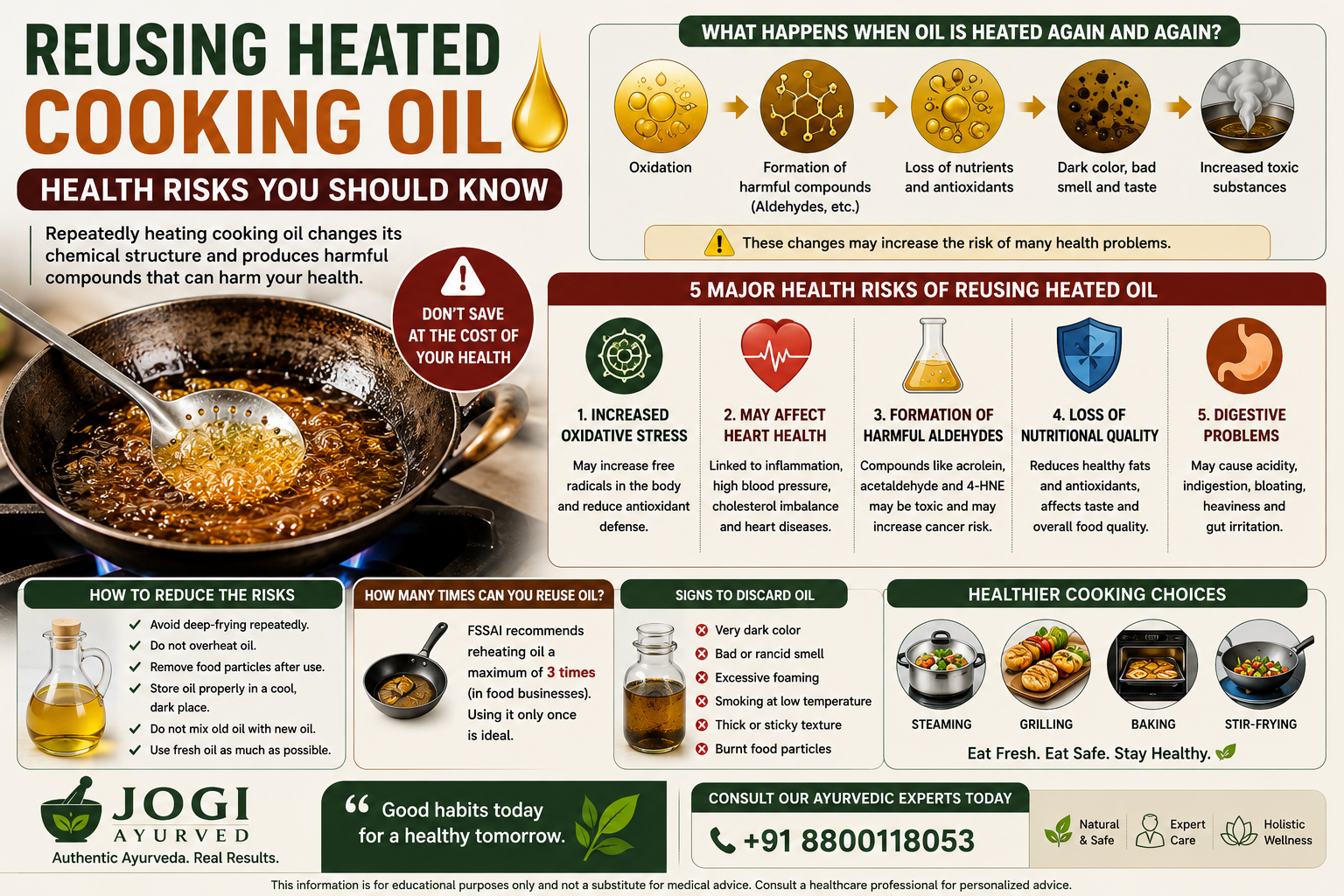
Reusing Heated Cooking Oil: Health Risks You Should Know
Reusing cooking oil may seem like a simple way to reduce food waste and save money. However, repeatedly heating the same oil, especially at high temperatures, can change its chemical structure and reduce its quality.
During repeated heating, oils can undergo oxidation and form compounds such as aldehydes and other oxidation products. Research has raised concerns about oxidative stress and potential cardiovascular and other health effects associated with consuming repeatedly heated oils.
In India, the Food Safety and Standards Authority of India (FSSAI) advises food businesses to avoid reusing cooking oil where possible. Its guidance says that if reheating is unavoidable, oil should be reheated a maximum of three times, with once being ideal, and oil with Total Polar Compounds above 25% should not be used.
What Happens When Cooking Oil Is Heated Again and Again?
When oil is exposed repeatedly to high temperatures, oxygen, moisture, and food particles, several chemical changes can occur.
Repeated heating can lead to:
- Lipid oxidation
- Formation of reactive compounds
- Loss of some antioxidants
- Changes in taste and smell
- Darkening of the oil
- Increased formation of aldehydes
- Formation of other polar compounds
Recent research shows that high-temperature cooking can generate potentially harmful aldehydes, with the amount depending on factors such as oil type, temperature, and heating time.
5 Potential Health Risks of Repeatedly Heated Oil
1. Increased Oxidative Stress
Repeated heating can increase oxidation products and reactive compounds in oil.
These compounds may contribute to oxidative stress when consumed regularly. Research has linked repeatedly heated oils with changes in antioxidant defenses and inflammatory processes, although much of the evidence comes from experimental studies.
2. May Affect Heart Health
Repeatedly heated oils can undergo lipid oxidation, producing compounds that may adversely affect cardiovascular health.
Research reviews have associated chronic consumption of repeatedly heated oils with factors such as inflammation, blood-pressure changes, cholesterol changes, and processes involved in atherosclerosis.
This does not mean that eating one food cooked in reused oil will cause heart disease. The concern is primarily with repeated and long-term exposure.
3. Formation of Harmful Aldehydes
One important concern is the formation of aldehydes during high-temperature heating.
Examples studied in heated oils include:
- Acrolein
- Acetaldehyde
- Formaldehyde
- 4-HNE
- Other lipid oxidation products
Some of these compounds have potentially toxic or carcinogenic properties, although the actual risk to humans depends on exposure level and other factors.
4. Loss of Nutritional Quality
Repeated heating can change the fatty-acid composition and reduce some naturally occurring antioxidants in oil.
The oil may also develop:
- Unpleasant smell
- Rancid taste
- Dark color
- Increased viscosity
- Foam during frying
Studies have found that prolonged heating can produce oxidation products while reducing certain beneficial components of vegetable oils.
5. May Increase Exposure to Unwanted Compounds
Repeated frying, particularly when oil is overheated or contaminated with food particles, can increase the formation of unwanted compounds.
Some research has investigated associations between repeatedly heated oils and cancer-related mechanisms, but this evidence should be interpreted carefully because much of it comes from laboratory and animal research rather than definitive human clinical evidence.
How to Know When Cooking Oil Should Be Discarded
Avoid continuing to use oil if you notice:
- Very dark color
- Strong or unpleasant smell
- Smoke appearing at unusually low temperatures
- Excessive foaming
- Thick or sticky appearance
- Burnt food particles
- Rancid taste
- Significant change in texture
However, appearance alone cannot reliably measure the chemical quality of oil.
How Many Times Can You Reuse Cooking Oil?
There is no universal number that applies to every oil and every cooking situation because degradation depends on the oil type, temperature, cooking time, food being fried, and storage conditions.
For food businesses in India, FSSAI guidance recommends avoiding reuse where possible. If reheating is unavoidable, its guidance allows a maximum of three reheating cycles, while stating that using the oil only once is ideal.
For home cooking, using fresh oil for frying is the safer choice whenever practical.
How to Reduce the Risks of Reusing Oil
1. Avoid Repeated Deep-Frying
Try to use fresh oil instead of repeatedly heating the same batch.
2. Do Not Overheat Oil
Avoid allowing oil to smoke continuously.
3. Remove Food Particles
If oil is going to be reused within an appropriate food-safety context, remove leftover crumbs and particles after cooking.
4. Store Oil Properly
Keep unused or appropriately stored oil away from excessive heat, light, and moisture.
5. Avoid Mixing Old and Fresh Oil
Adding fresh oil to degraded oil does not restore the quality of the old oil.
6. Use the Right Amount
Using smaller amounts of oil for cooking can reduce the temptation to repeatedly reuse large quantities.
Is Reusing Oil at Home Safe?
Occasional reuse of properly handled oil is different from repeatedly reheating the same oil over and over, especially at high frying temperatures.
The greater concern is repeated heating that causes significant oxidation and degradation.
If oil has been repeatedly heated, has become dark or rancid, or produces excessive smoke or foam, it is better to discard it rather than continue cooking with it.
Reusing Cooking Oil and Digestive Health
Foods prepared in degraded or repeatedly heated oil may be harder for some people to tolerate.
Some people may experience:
- Heaviness after eating
- Indigestion
- Acidity
- Bloating
- Stomach discomfort
These symptoms can have many causes and should not automatically be attributed to reused oil.
If digestive symptoms occur frequently, consult a healthcare professional.
Ayurvedic Perspective on Healthy Cooking
Ayurveda emphasizes the importance of fresh, properly prepared food and appropriate cooking methods.
From an Ayurvedic wellness perspective, regularly consuming very oily, fried, or heavily processed foods may contribute to digestive discomfort in some individuals.
A balanced routine can include:
- Freshly prepared meals
- Seasonal vegetables
- Whole grains
- Lentils and pulses
- Appropriate healthy fats
- Moderate oil consumption
- Regular meal timing
The goal is not to eliminate dietary fat completely but to use appropriate quantities and healthier cooking practices.
Healthier Cooking Habits
Instead of repeatedly deep-frying food, consider:
Steaming
Great for vegetables and many other foods.
Grilling
Can reduce the amount of added oil required.
Baking
Useful for snacks and many traditionally fried foods.
Stir-Frying
Uses a smaller amount of oil and can be suitable for vegetables and proteins.
Pressure Cooking
Can prepare many Indian dishes with relatively little added oil.
Frequently Asked Questions
Is reheated cooking oil harmful?
Repeatedly heating cooking oil can cause oxidation and formation of potentially harmful compounds. The risk depends on factors such as oil type, temperature, duration, and number of heating cycles.
Can reused oil cause cancer?
Repeatedly heated oils can generate compounds with potentially carcinogenic properties, and laboratory research has investigated possible cancer-related effects. However, this does not establish that occasional consumption of food cooked in reused oil causes cancer in humans.
How many times can I reuse frying oil?
There is no single number for every situation. FSSAI advises avoiding reuse where possible and states that, when reheating is unavoidable in food businesses, oil should be used a maximum of three times, with once being ideal.
Should I reuse oil after frying pakoras or samosas?
It is better to minimize reuse, particularly if the oil has become dark, smoky, foamy, rancid, or contains many burnt food particles.
Can reheated oil cause acidity?
Repeatedly heated oil may contribute to digestive discomfort for some people, but frequent acidity has many possible causes. Persistent acidity should be medically evaluated.
Conclusion
Repeatedly heating and reusing cooking oil is a food-safety and health concern worth taking seriously. High-temperature cooking and repeated heating can accelerate oxidation and produce unwanted compounds, including aldehydes and other degradation products.
For healthier cooking:
- Prefer fresh oil when possible.
- Avoid repeatedly reheating the same oil.
- Do not use oil that is dark, rancid, excessively foamy, or smoky.
- Avoid overheating oil.
- Choose steaming, baking, grilling, and other lower-oil cooking methods more often.
A simple change in cooking habits can help reduce unnecessary exposure to degraded cooking oil and support better overall dietary health.
Important Links
- Reusing Heated Cooking Oil
- Reused Cooking Oil Health Risks
- Reheated Cooking Oil
- Repeatedly Heated Oil
- Cooking Oil Health Risks
- Is Reused Oil Harmful
- Reusing Frying Oil
- Reheated Oil Side Effects
- Cooking Oil Oxidation
- Harmful Effects of Reused Oil
- FSSAI Cooking Oil Guidelines
- Healthy Cooking Tips
- Ayurvedic Healthy Cooking
- JOGI Ayurved
- Ayurvedic Diet
Our Important Services
- Ayurvedic Treatment for Acidity
- Acidity Root Causes Stress Sleep and Food Triggers
- 3 Ayurvedic Ways to Strengthen Digestive Fire
- Ayurvedic Digestive Health
- Online Ayurvedic Consultation