
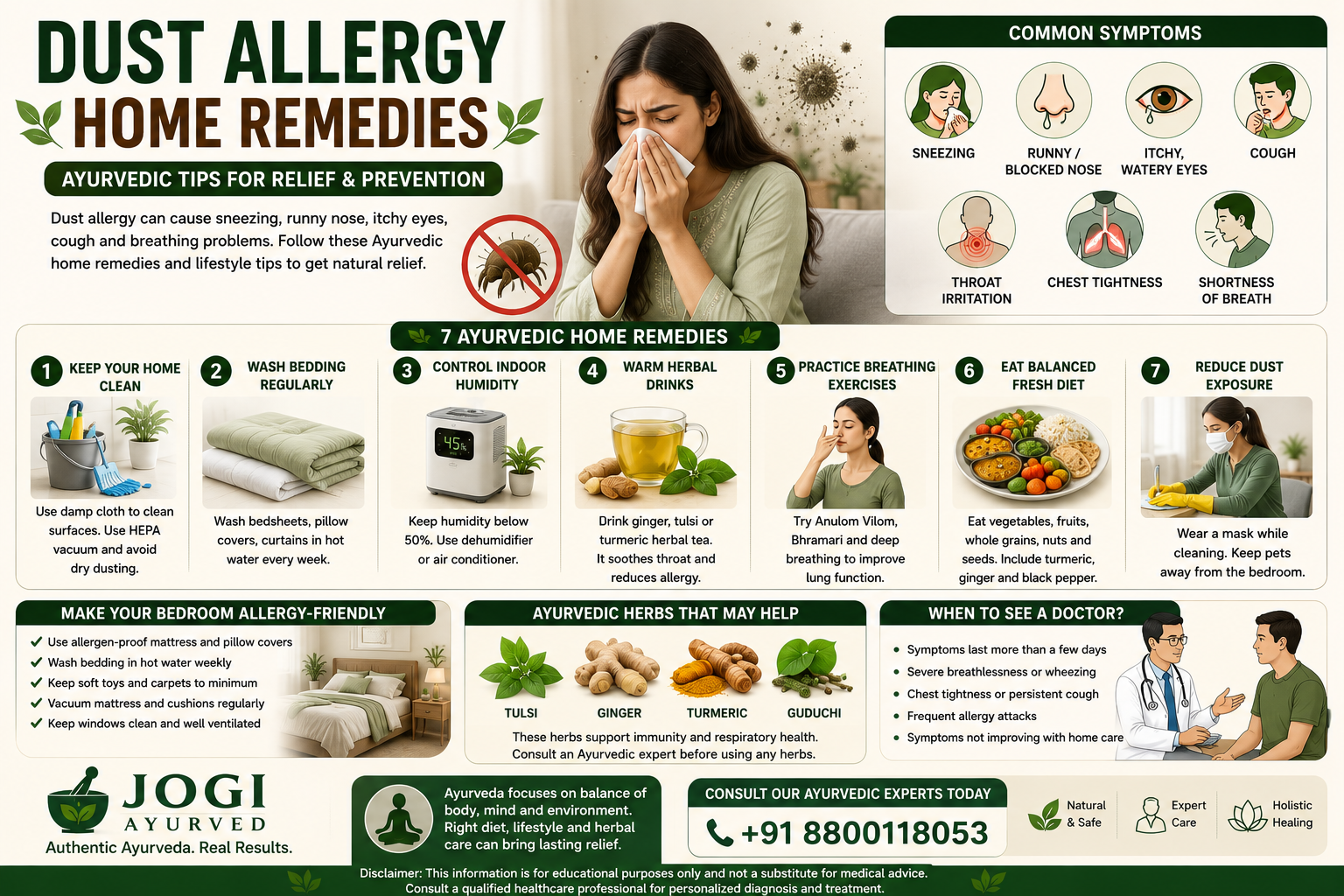
Dust Allergy Home Remedies: Ayurvedic Tips for Relief and Prevention
Do you start sneezing, coughing, or experiencing a runny or blocked nose whenever you clean your home or come into contact with dust?
Dust allergy is a common problem that can affect your nose, eyes, throat, and breathing. Household dust can contain several allergens, including dust-mite particles, mold, cockroach allergens, pollen, and pet dander.
Many people look for simple home remedies and Ayurvedic approaches to manage their symptoms. Ayurveda traditionally focuses on diet, daily routines, breathing practices, and individualized care.
However, home remedies cannot guarantee an immediate cure for dust allergy. The most effective strategy is to reduce exposure to the allergen and seek appropriate medical treatment when symptoms are persistent or severe.
What Is Dust Allergy?
Dust allergy occurs when your immune system reacts to substances found in household dust.
One of the most common indoor triggers is the house dust mite. Dust mites commonly live in mattresses, pillows, bedding, carpets, upholstered furniture, and other fabric materials.
Other possible indoor allergens include:
- Dust mites
- Mold spores
- Cockroach particles
- Pollen
- Pet dander
- Household dust particles
Common Symptoms of Dust Allergy
Dust allergy may cause symptoms such as:
- Frequent sneezing
- Runny nose
- Blocked nose
- Itchy nose
- Itchy or watery eyes
- Red eyes
- Postnasal drip
- Cough
- Throat irritation
- Wheezing
- Chest tightness
- Shortness of breath
Symptoms can vary from person to person. Wheezing, chest tightness, or breathing difficulty may indicate asthma and should not be ignored.
7 Simple Home Remedies and Ayurvedic Wellness Tips
1. Keep Your Home Clean Without Stirring Up Dust
Dry dusting can send allergens back into the air.
Instead:
- Use a damp cloth.
- Wet-mop hard floors.
- Clean surfaces regularly.
- Use a HEPA-filter vacuum when possible.
- Wear a suitable mask while cleaning if dust triggers your symptoms.
Health authorities recommend damp cleaning because it helps reduce the amount of dust and allergen particles that become airborne.
2. Wash Bedding Regularly
Your bedroom deserves special attention because dust mites commonly live in bedding and mattresses.
Try to:
- Wash sheets regularly.
- Wash blankets and pillow covers regularly.
- Use allergen-proof mattress and pillow covers.
- Keep unnecessary soft toys away from the bed.
- Clean mattresses according to the manufacturer’s instructions.
Washing bedding weekly in hot water is recommended by several allergy organizations for reducing dust-mite allergens.
3. Keep Indoor Humidity Under Control
Dust mites thrive in warm, humid environments.
Try to keep indoor relative humidity below 50% where practical.
You can use:
- An air conditioner
- A dehumidifier
- A hygrometer to monitor humidity
Reducing indoor humidity can help create an environment that is less favorable for dust mites.
4. Try Warm Herbal Drinks
Warm drinks can be soothing when your throat feels irritated.
You can include commonly used culinary ingredients such as:
- Ginger
- Tulsi
- Turmeric
- Cumin
For example, you can prepare a simple ginger or tulsi herbal drink using ingredients you normally tolerate.
These drinks may provide comfort, but they should not be considered proven treatments that eliminate dust allergy.
5. Practice Gentle Breathing Exercises
Ayurveda and yoga traditionally emphasize breathing practices such as Pranayama.
Gentle breathing exercises may help with relaxation and awareness of breathing.
Examples include:
- Slow diaphragmatic breathing
- Gentle alternate-nostril breathing
- Relaxation breathing
Important: If you have wheezing, severe breathlessness, or an asthma attack, do not rely on breathing exercises. Seek appropriate medical care.
6. Eat a Balanced, Fresh Diet
There is no single food that can cure dust allergy.
However, maintaining a balanced diet supports general health.
Include:
- Vegetables
- Seasonal fruits
- Whole grains
- Lentils and beans
- Nuts and seeds
- Adequate protein
- Healthy fats
You can use spices such as ginger, turmeric, cumin, and coriander as part of normal cooking.
Avoid making extreme dietary restrictions without professional advice.
7. Reduce Dust Exposure During Cleaning
If cleaning triggers sneezing or breathing symptoms:
- Wear a mask.
- Ask another family member to vacuum if possible.
- Use a HEPA-filter vacuum.
- Avoid dry sweeping.
- Open or ventilate the room appropriately.
- Leave the area for some time after intensive cleaning if symptoms are triggered.
NIEHS recommends using a damp mop or rag and a HEPA-filter vacuum, and advises people with allergies to use a mask while vacuuming.
Ayurvedic Perspective on Dust Allergy
Ayurveda traditionally considers respiratory and allergic symptoms in the context of an individual’s Dosha balance, digestion, lifestyle, environment, and overall constitution.
An Ayurvedic practitioner may consider:
- Prakriti
- Current symptoms
- Digestive health
- Diet
- Sleep
- Environmental exposure
- Seasonal changes
- Lifestyle
Ayurvedic care may include personalized dietary and lifestyle guidance, yoga, breathing practices, and selected traditional therapies.
However, Ayurvedic treatment should not be promoted as a guaranteed cure for dust allergy.
What About Ayurvedic Herbs for Dust Allergy?
Some herbs traditionally used in Ayurveda include:
- Tulsi
- Turmeric
- Ginger
- Guduchi
- Licorice
But the appropriate herb, preparation, dose, and duration can vary considerably.
Some herbal products can interact with medicines or may not be suitable for people with certain medical conditions.
Therefore, don’t start concentrated herbal medicines simply because you have an allergy. Consult a qualified Ayurvedic practitioner or healthcare professional first.
Should You Put Ghee or Oil Inside Your Nose?
Some traditional practices recommend putting oil or ghee inside the nostrils.
However, you should not put substances into your nose without appropriate professional guidance, particularly if you have respiratory disease, nasal problems, or a history of aspiration.
For routine dust-allergy management, focus first on proven allergen-reduction measures such as bedding control, humidity management, damp cleaning, and appropriate medical treatment.
5 Ways to Make Your Bedroom Allergy-Friendly
Your bedroom is one of the most important areas to manage.
1. Use Allergen-Proof Covers
Cover your mattress and pillows with suitable allergen-proof covers.
2. Wash Bedding Regularly
Wash sheets, pillowcases, and blankets regularly using appropriately hot water where the fabric allows.
3. Reduce Carpets
Consider hard flooring instead of wall-to-wall carpeting, particularly in bedrooms.
4. Control Humidity
Keep indoor humidity below about 50%.
5. Clean with a HEPA Vacuum
Use a HEPA-filter vacuum where practical.
What Foods Should You Avoid During Dust Allergy?
There is no universal dust-allergy diet.
You do not need to automatically eliminate dairy, wheat, rice, or other common foods unless you have a confirmed intolerance or allergy.
Instead:
- Eat a balanced diet.
- Avoid foods that you personally know trigger symptoms.
- Stay adequately hydrated.
- Avoid unnecessary restrictive diets.
A food allergy and a dust allergy are different conditions and should not be confused.
Can Steam Inhalation Help Dust Allergy?
Warm, moist air may feel soothing for some people with nasal irritation, but steam inhalation does not remove the underlying dust allergy.
If you use steam, take care to avoid burns, especially in children.
For persistent nasal allergy symptoms, evidence-based treatments such as appropriate nasal sprays and antihistamines may be recommended by a healthcare professional. Nasal corticosteroid sprays are considered among the most effective treatments for allergic rhinitis.
Medical Treatment for Dust Allergy
If environmental control and lifestyle measures are not enough, a doctor may recommend treatments such as:
Antihistamines
These can help reduce symptoms such as:
- Sneezing
- Itching
- Runny nose
Nasal Corticosteroid Sprays
These reduce inflammation inside the nose and are among the most effective treatments for allergic rhinitis.
Allergy Immunotherapy
For some people with persistent allergies, an allergist may recommend immunotherapy, such as allergy shots or tablets, to gradually modify the immune response.
Do not start or stop medication without appropriate medical advice.
How to Prevent Dust Allergy at Home
Use this simple checklist:
- Wash bedding regularly
- Use allergen-proof mattress and pillow covers
- Keep humidity below 50%
- Damp-mop floors
- Avoid dry dusting
- Use a HEPA vacuum
- Reduce bedroom carpets and heavy fabric
- Keep pets away from the bedroom if pet dander is a trigger
- Reduce unnecessary clutter
- Wear a mask while cleaning if needed
These measures can reduce exposure to common indoor allergens.
When Should You See a Doctor?
Consult a healthcare professional if:
- Symptoms occur frequently.
- Allergy symptoms interfere with sleep.
- You have persistent nasal blockage.
- Symptoms continue despite avoiding dust.
- You frequently need allergy medicines.
- You experience wheezing or coughing.
- You have repeated chest tightness.
Seek urgent medical care if you have:
- Severe difficulty breathing
- Severe chest tightness
- Blue lips or face
- Rapid worsening of breathing
- Difficulty speaking because of breathlessness
Breathing problems can indicate asthma or another respiratory condition and should not be treated only with home remedies.
Ayurvedic Support at JOGI Ayurved
At JOGI Ayurved, personalized Ayurvedic guidance may focus on understanding your symptoms, lifestyle, diet, environmental triggers, and overall health.
Depending on your individual needs, support may include:
- Ayurvedic dietary guidance
- Lifestyle recommendations
- Yoga and breathing practices
- Traditional herbal support when appropriate
- Personalized Ayurvedic consultation
The aim is to provide individualized wellness support, while appropriate medical diagnosis and treatment remain important for persistent or serious allergy symptoms.
Frequently Asked Questions
What is the fastest home remedy for dust allergy?
The fastest way to reduce symptoms is often to move away from the trigger and reduce exposure. Cleaning with a damp cloth, improving the indoor environment, and using appropriate allergy medication when recommended may help.
Can dust allergy be cured permanently?
Dust allergy can often be managed effectively, but there is no guaranteed permanent home cure. Allergen avoidance, medication, and in selected cases immunotherapy can help control symptoms.
Can Ayurveda cure dust allergy?
Ayurveda may provide personalized lifestyle and wellness support, but it should not be promoted as a guaranteed cure for dust allergy.
Is honey good for dust allergy?
Honey may be used as a food, but there is insufficient evidence that eating honey treats dust-mite allergy. It should not replace proven allergy management.
Can dust allergy cause breathing problems?
Yes. Dust-mite allergens can trigger wheezing, coughing, chest tightness, and shortness of breath, particularly in people with asthma.
How can I reduce dust mites in my bedroom?
Wash bedding regularly in hot water when suitable, use allergen-proof mattress and pillow covers, keep humidity below 50%, reduce carpets, and use damp cleaning and HEPA filtration.
Conclusion
Dust allergy can be frustrating, but simple changes can significantly reduce exposure to common indoor allergens.
The most useful steps are:
- Keep bedding clean.
- Control indoor humidity.
- Use damp cleaning instead of dry dusting.
- Reduce carpets and dust-collecting materials.
- Use a HEPA-filter vacuum when possible.
- Follow appropriate medical treatment when needed.
- Use Ayurvedic lifestyle practices as complementary wellness support rather than as a guaranteed cure.
The reference article from JOGI Ayurveda also emphasizes home cleanliness, bedding care, humidity control, and traditional Ayurvedic approaches for dust-allergy management.
If your symptoms are frequent, severe, or affecting your breathing, consult a qualified healthcare professional or allergy specialist rather than relying only on home remedies.
To Know more, talk to a JOGI doctor. Call +91 8800118053 or click on Our Doctors.
Important Links
- Dust Allergy Home Remedies
- Dust Allergy Ayurvedic Treatment
- Ayurvedic Remedies for Dust Allergy
- Home Remedies for Dust Allergy
- Dust Allergy Treatment
- How to Reduce Dust Allergy
- Dust Allergy Prevention
- Dust Mite Allergy
- Dust Allergy Sneezing
- Dust Allergy Runny Nose
- Dust Allergy Natural Remedies
- Ayurveda for Allergic Rhinitis
- Ayurvedic Treatment for Allergic Rhinitis
- JOGI Ayurved
- Online Ayurvedic Consultation
Our Important Services
- Viral Fever and Flu Prevention with Ayurveda
- Shirodhara Therapy Benefits for Stress Relief
- 3 Ayurvedic Ways to Strengthen Digestive Fire
- Can Ayurveda Cure Every Illness?
- Online Ayurvedic Consultation
- Panchakarma Therapy