5 Foods You Should Never Eat in Diabetes
Living with diabetes doesn’t mean you have to give up enjoying food. However, making the right food choices is essential for maintaining healthy blood sugar levels and reducing the risk of long-term complications.
Some foods can cause rapid spikes in blood glucose, increase insulin resistance, and make diabetes more difficult to manage. Understanding which foods to limit or avoid can help you make healthier decisions every day.
At JOGI Ayurved, we combine Ayurvedic principles with evidence-based lifestyle guidance to support healthy blood sugar management through personalized diet, herbal support, and lifestyle modifications.
Why Food Choices Matter in Diabetes
When you have diabetes, your body has difficulty regulating blood sugar effectively.
Foods high in refined carbohydrates, added sugars, and unhealthy fats may:
- Cause rapid blood sugar spikes
- Increase insulin resistance
- Promote weight gain
- Increase cholesterol levels
- Raise the risk of heart disease
A balanced diet can help support better blood sugar control and overall health.
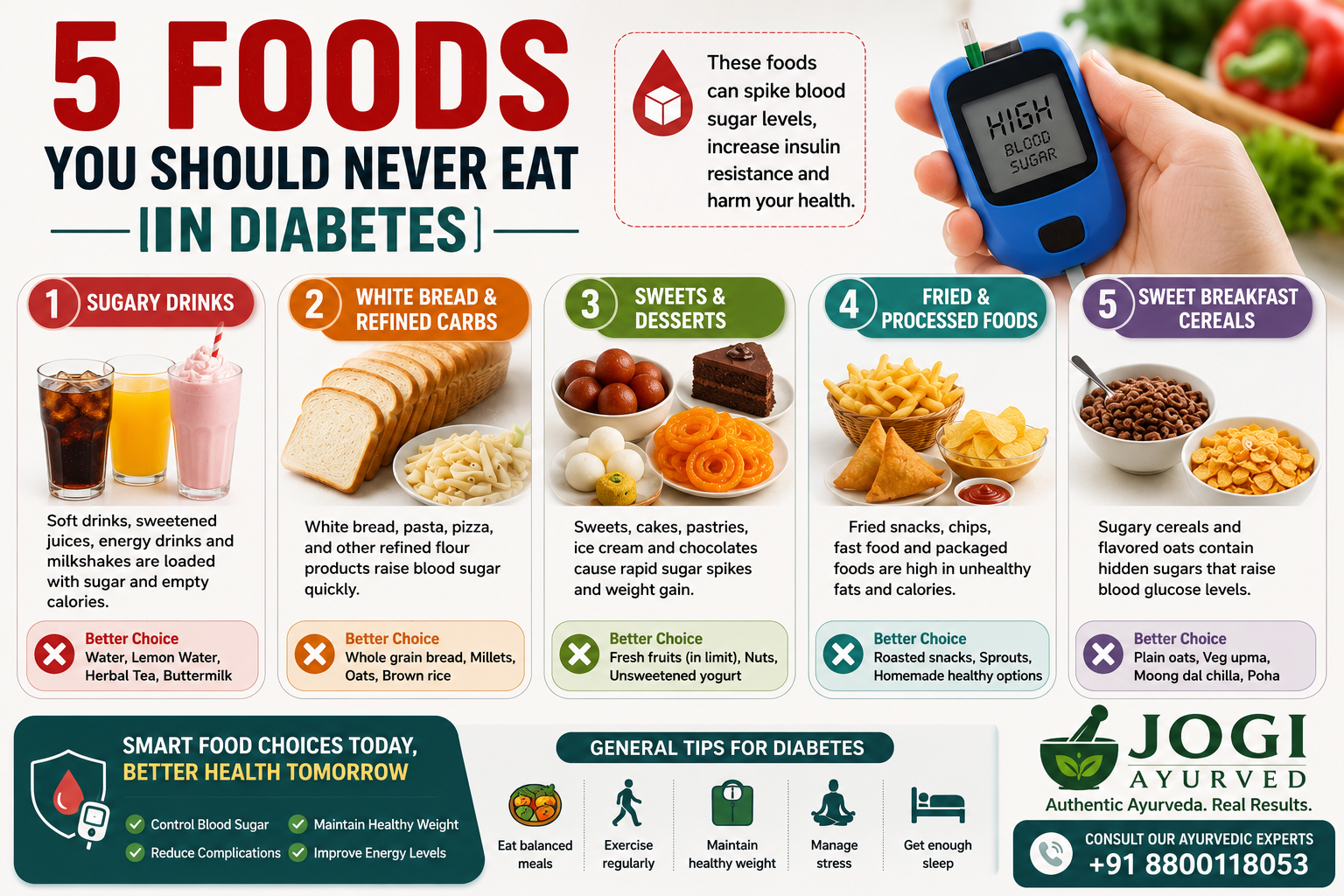
1. Sugary Drinks
Sugary beverages are among the biggest contributors to sudden increases in blood glucose.
Examples include:
- Soft drinks
- Sweetened fruit juices
- Energy drinks
- Sweetened iced tea
- Flavored milkshakes
These drinks provide large amounts of sugar with little nutritional value.
Better Choices
- Water
- Lemon water without added sugar
- Unsweetened herbal tea
- Buttermilk (without added sugar)
- Coconut water in moderation, if appropriate for your overall diet and blood sugar goals
2. White Bread and Refined Flour Products
Foods made from refined flour digest quickly and may raise blood sugar faster than whole-grain alternatives.
Examples include:
- White bread
- White pasta
- Pizza made with refined flour
- Bakery products
- White buns
Better Choices
- Whole wheat bread
- Multigrain roti
- Oats
- Millets (such as jowar, bajra, and ragi)
- Brown rice in appropriate portions
3. Sweets and Desserts
Traditional sweets and desserts often contain high amounts of sugar and refined carbohydrates.
Examples include:
- Gulab Jamun
- Rasgulla
- Jalebi
- Cakes
- Pastries
- Ice cream
- Cookies
Frequent consumption can make blood sugar management more difficult.
Better Choices
- Fresh fruit in appropriate portions
- Unsweetened yogurt
- Homemade healthy snacks
- Nuts in moderation
4. Fried and Processed Foods
Deep-fried and highly processed foods are often rich in unhealthy fats and calories.
Examples include:
- French fries
- Chips
- Fried snacks
- Fast food
- Packaged namkeen
These foods may contribute to weight gain and cardiovascular risk.
Better Choices
- Roasted chana
- Sprouts
- Baked snacks
- Homemade vegetable snacks
- Mixed nuts in moderation
5. Sweet Breakfast Cereals
Many packaged cereals marketed as healthy actually contain significant amounts of added sugar.
Examples include:
- Sugary cornflakes
- Chocolate cereals
- Sweetened granola
- Flavored oats with added sugar
Better Choices
- Plain oats
- Vegetable upma
- Moong dal chilla
- Vegetable poha
- Besan chilla
Foods That Support Healthy Blood Sugar
A balanced diabetes-friendly diet may include:
- Green leafy vegetables
- Whole grains
- Lentils
- Beans
- Sprouts
- Low-glycemic fruits
- Nuts and seeds
- Lean protein
- Healthy fats
- High-fiber foods
Your diet should be individualized based on your medical condition, medications, and nutritional needs.
Ayurvedic View of Diabetes
In Ayurveda, diabetes is described under Madhumeha, a condition associated with disturbances in Kapha Dosha, impaired Agni (digestive fire), and metabolic imbalance.
Contributing factors may include:
- Sedentary lifestyle
- Excessive intake of sweet and heavy foods
- Obesity
- Stress
- Poor digestion
Ayurveda focuses on restoring metabolic balance through personalized care.
Ayurvedic Management of Diabetes
At JOGI Ayurved, diabetes management is personalized according to each individual’s constitution (Prakriti), symptoms, and overall health.
Treatment may include:
Personalized Herbal Support
Traditional Ayurvedic herbs may help support:
- Healthy blood sugar levels
- Digestion
- Metabolism
- Overall wellness
Herbal medicines should always be taken under the guidance of a qualified Ayurvedic physician.
Panchakarma Therapy
Selected Panchakarma procedures may help:
- Improve metabolic health
- Support detoxification
- Balance doshas
- Promote overall well-being
Personalized Diet Plan
Dietary recommendations may include:
- Portion control
- High-fiber meals
- Whole grains
- Seasonal vegetables
- Healthy proteins
- Limiting added sugars
Lifestyle Changes
Healthy habits include:
- Daily walking
- Regular exercise
- Yoga
- Weight management
- Adequate sleep
- Stress reduction
- Regular blood sugar monitoring
When Should You Consult a Doctor?
Consult your healthcare provider if you experience:
- Frequent high blood sugar readings
- Increased thirst
- Frequent urination
- Blurred vision
- Unexplained weight loss
- Slow-healing wounds
- Numbness or tingling in the feet
Regular medical follow-up is essential for preventing diabetes-related complications.
Tips for Better Diabetes Management
- Eat meals at regular times
- Choose whole foods over processed foods
- Increase dietary fiber
- Stay physically active
- Drink enough water
- Maintain a healthy weight
- Avoid sugary drinks
- Read food labels
- Monitor blood sugar as advised
- Follow your doctor’s treatment plan
Frequently Asked Questions (FAQs)
Can people with diabetes eat fruit?
Yes. Most people with diabetes can include fruit as part of a balanced diet, but portion size and fruit selection matter. Consult your healthcare provider or dietitian for personalized advice.
Is rice completely banned in diabetes?
No. Portion size, the type of rice, and your overall meal composition are important. Whole grains are often preferred.
Can Ayurveda cure diabetes?
There is currently no proven cure for diabetes. Ayurveda may complement standard medical care by supporting healthy lifestyle habits and overall metabolic health. Do not stop prescribed diabetes medications without consulting your doctor.
Is honey better than sugar for diabetes?
Honey also raises blood sugar and should not be considered a free or unlimited alternative. Speak with your healthcare provider about appropriate sweetener choices.
Which breakfast is best for diabetes?
High-fiber, protein-rich breakfasts such as oats, vegetable upma, moong dal chilla, or vegetable besan chilla may be suitable options for many people.
Conclusion
Managing diabetes starts with making informed food choices. Reducing sugary drinks, refined carbohydrates, sweets, fried foods, and highly processed cereals can help support healthier blood sugar levels.
Combining a balanced diet, regular exercise, medical care, and personalized Ayurvedic guidance may contribute to better long-term health and quality of life.
If you have diabetes or prediabetes, consult a qualified healthcare professional before making major dietary or treatment changes.
Important Links
- Foods to Avoid in Diabetes
- 5 Foods You Should Never Eat in Diabetes
- Diabetes Diet
- Best Diet for Diabetes
- Diabetes Food List
- Foods That Raise Blood Sugar
- Ayurvedic Treatment for Diabetes
- Diabetes Meal Plan
- Blood Sugar Control
- Diabetes Nutrition
- Type 2 Diabetes Diet
- Healthy Eating for Diabetes
- JOGI Ayurved
- Online Ayurvedic Consultation
- Natural Diabetes Management
Our Important Services
- Ayurvedic Treatment for Diabetes
- Diabetes Diet Plan
- Ayurvedic Weight Management
- Online Ayurvedic Consultation
- Panchakarma for Metabolic Health