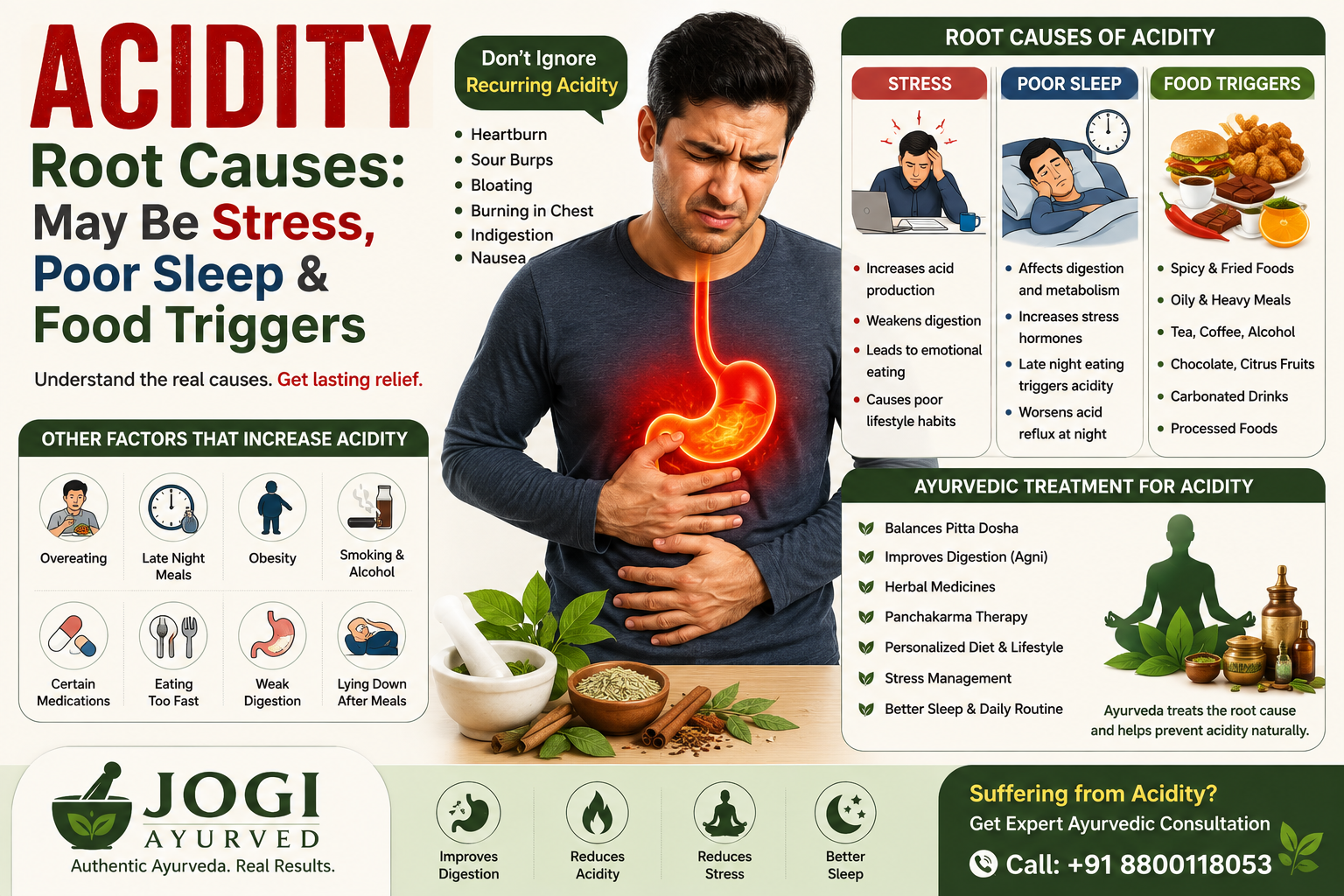
Acidity Root Causes: May Be Stress, Poor Sleep & Food Triggers
Do you frequently experience heartburn, acid reflux, sour burps, bloating, or burning in the chest after meals?
Many people believe that acidity is caused only by spicy food. However, the real causes are often more complex. Stress, inadequate sleep, irregular eating habits, and certain foods can all contribute to recurring acidity.
At JOGI Ayurved, we focus on identifying the underlying causes of digestive discomfort and supporting long-term digestive health through personalized Ayurvedic care.
What Is Acidity?
Acidity occurs when stomach acid flows back into the esophagus (food pipe), causing symptoms such as:
- Burning sensation in the chest (heartburn)
- Sour or bitter taste in the mouth
- Acid reflux
- Burping
- Bloating
- Nausea
- Indigestion
- Upper abdominal discomfort
Occasional acidity is common, but frequent symptoms should be evaluated by a healthcare professional.
Common Root Causes of Acidity
1. Stress
Chronic stress can affect digestion and increase the likelihood of acid reflux in some people.
Stress may contribute to:
- Increased stomach discomfort
- Poor digestion
- Emotional eating
- Irregular meal timing
- Sleep disturbances
2. Poor Sleep
Lack of quality sleep may worsen digestive symptoms.
Poor sleep can:
- Affect digestion
- Increase stress hormones
- Promote late-night eating
- Worsen acid reflux symptoms
People who lie down soon after dinner may notice symptoms become more frequent.
3. Food Triggers
Certain foods commonly trigger acidity in susceptible individuals.
Examples include:
- Fried foods
- Spicy foods
- Oily meals
- Tomatoes
- Citrus fruits
- Chocolate
- Coffee
- Tea
- Carbonated drinks
- Alcohol
- Mint
- Processed foods
Not everyone reacts to the same foods, so keeping a food diary may help identify personal triggers.
4. Eating Too Fast
Fast eating can lead to:
- Swallowing excess air
- Poor chewing
- Overeating
- Indigestion
Eating slowly and mindfully may improve digestion.
5. Overeating
Large meals increase stomach pressure and may increase the risk of reflux.
Smaller, balanced meals are often better tolerated.
6. Late-Night Meals
Eating shortly before bedtime is a common trigger for nighttime acidity.
Try to finish dinner 2–3 hours before sleeping whenever possible.
7. Obesity
Excess abdominal weight increases pressure on the stomach and may contribute to acid reflux.
Maintaining a healthy weight may reduce symptoms.
8. Smoking and Alcohol
Smoking and alcohol can relax the lower esophageal sphincter, making reflux more likely.
Reducing or avoiding these habits may improve digestive health.
9. Certain Medicines
Some medications may increase the risk of acidity, including:
- Pain relievers (NSAIDs)
- Certain antibiotics
- Some blood pressure medicines
Never stop prescribed medication without consulting your doctor.
Symptoms You Should Not Ignore
Consult a healthcare professional if you experience:
- Frequent heartburn (more than twice a week)
- Difficulty swallowing
- Persistent vomiting
- Blood in vomit or stools
- Unexplained weight loss
- Severe chest pain
- Ongoing abdominal pain
- Symptoms that do not improve
These symptoms require proper medical evaluation.
Ayurvedic View of Acidity
In Ayurveda, acidity is often associated with an aggravation of Pitta Dosha, weakened digestive fire (Agni), and lifestyle factors that disturb digestive balance.
Common contributing factors include:
- Irregular meals
- Excess spicy or oily foods
- Mental stress
- Sleep deprivation
- Poor digestion
Ayurveda aims to restore digestive balance through individualized treatment.
Ayurvedic Treatment for Acidity
At JOGI Ayurved, treatment is tailored according to your constitution (Prakriti), symptoms, and overall health.
Treatment may include:
Personalized Herbal Support
Traditional Ayurvedic herbs may support:
- Healthy digestion
- Acid balance
- Relief from bloating
- Digestive comfort
Herbal medicines should always be taken under the supervision of a qualified Ayurvedic physician.
Panchakarma Therapy
When appropriate, Panchakarma therapies may help:
- Improve digestion
- Support detoxification
- Balance doshas
- Promote digestive wellness
Diet Recommendations
Choose foods that are generally gentle on digestion, such as:
- Fresh vegetables
- Seasonal fruits (as tolerated)
- Whole grains
- Warm home-cooked meals
- Adequate water
Limit foods that personally trigger your symptoms.
Lifestyle Changes
Healthy habits include:
- Eat meals on time
- Chew food thoroughly
- Avoid overeating
- Walk after meals
- Maintain a healthy weight
- Manage stress
- Sleep 7–9 hours daily
- Avoid lying down immediately after eating
How to Prevent Acidity Naturally
- Eat smaller meals
- Avoid skipping meals
- Reduce stress
- Stay hydrated
- Exercise regularly
- Avoid smoking
- Limit alcohol
- Identify personal food triggers
- Sleep on time
- Maintain a healthy weight
Frequently Asked Questions (FAQs)
Can stress really cause acidity?
Stress may worsen digestive symptoms and contribute to acid reflux in some individuals.
Does poor sleep increase acidity?
Poor sleep and late-night eating can make acid reflux symptoms more noticeable.
Which foods commonly trigger acidity?
Common triggers include spicy foods, fried foods, coffee, chocolate, carbonated drinks, tomatoes, citrus fruits, and alcohol, though triggers vary between individuals.
Does Ayurveda help with acidity?
Ayurveda focuses on personalized diet, lifestyle changes, and traditional herbal approaches to support healthy digestion. Treatment should be guided by a qualified Ayurvedic practitioner.
When should I see a doctor?
If you have persistent heartburn, difficulty swallowing, weight loss, vomiting blood, black stools, or severe chest pain, seek medical evaluation promptly.
Conclusion
Acidity is not always caused by spicy food alone. Stress, poor sleep, overeating, irregular eating habits, and individual food triggers can all contribute to recurring digestive discomfort.
By identifying the underlying causes and making appropriate dietary and lifestyle changes, many people can improve their digestive health. Ayurveda complements this approach by emphasizing personalized care that supports healthy digestion and overall well-being.
If acidity is frequent or persistent, consult a qualified healthcare professional for proper evaluation and treatment.
Important Links
- Acidity Causes
- Root Cause of Acidity
- Stress and Acidity
- Poor Sleep and Acid Reflux
- Food Triggers for Acidity
- Heartburn Treatment
- Acid Reflux Symptoms
- Ayurvedic Treatment for Acidity
- Natural Treatment for Acidity
- Hyperacidity Ayurveda
- Indigestion Treatment
- GERD Natural Support
- Digestive Health
- JOGI Ayurved
- Online Ayurvedic Consultation
Our Important Services
- Ayurvedic Treatment for Acidity
- Ayurvedic Treatment for Gastritis
- Panchakarma for Digestive Health
- Ayurvedic Diet for Better Digestion
- Online Ayurvedic Consultation