
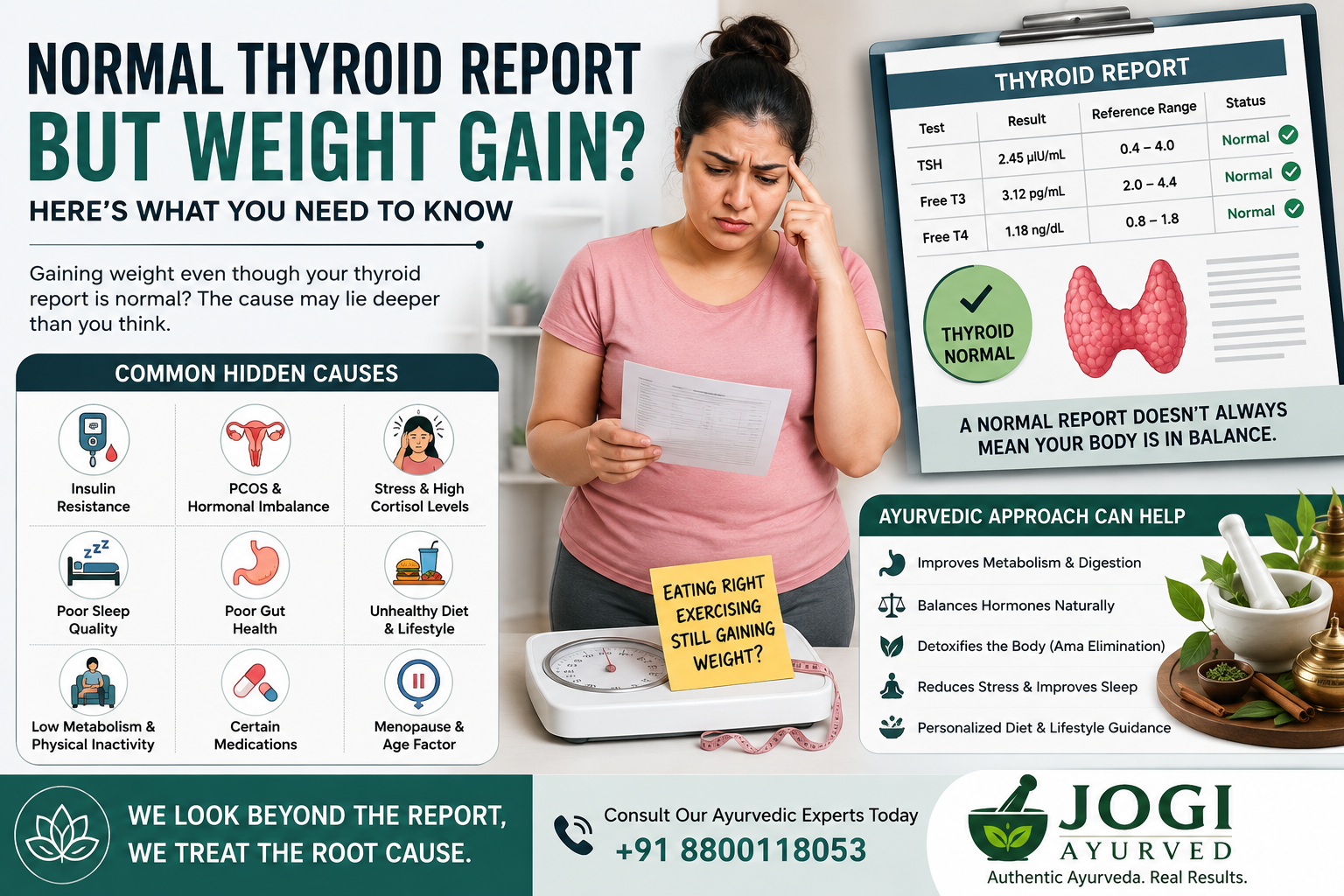
Normal Thyroid Report But Weight Gain? Here’s What You Need to Know
Have you been struggling with weight gain even though your thyroid test is normal?
Many people assume that thyroid problems are the only reason for unexplained weight gain. However, the truth is that a normal thyroid report does not always mean your metabolism is functioning optimally.
If your TSH, T3, and T4 levels are within the normal range but you’re still gaining weight, feeling tired, bloated, or unable to lose fat despite dieting and exercise, there may be other underlying causes.
At JOGI Ayurved, we take a holistic approach to weight management by identifying the root cause rather than simply focusing on the weighing scale.
Can You Gain Weight with a Normal Thyroid?
Yes.
Many people gain weight despite having perfectly normal thyroid function tests.
Weight gain is influenced by multiple factors including:
- Hormonal imbalance
- Insulin resistance
- PCOS
- Poor metabolism
- Stress hormones
- Sleep disorders
- Gut health
- Lifestyle habits
- Certain medications
- Poor dietary choices
A normal thyroid report simply rules out one possible cause—it doesn’t explain everything.
What Does a Normal Thyroid Report Mean?
A thyroid profile usually includes:
- TSH (Thyroid Stimulating Hormone)
- Free T3
- Free T4
If these values are within the laboratory’s reference range, your thyroid gland is generally functioning normally.
However, symptoms such as fatigue or weight gain may have other causes that deserve evaluation.
Why Am I Gaining Weight Despite a Normal Thyroid?
1. Insulin Resistance
Insulin resistance is one of the most common hidden causes of stubborn weight gain.
Symptoms include:
- Belly fat
- Sugar cravings
- Fatigue after meals
- Difficulty losing weight
- Dark patches on the neck or underarms (in some people)
2. PCOS (Polycystic Ovary Syndrome)
Women with PCOS often experience:
- Weight gain
- Irregular periods
- Acne
- Hair fall
- Difficulty conceiving
Even with a normal thyroid, PCOS can affect metabolism.
3. High Stress Levels
Chronic stress raises cortisol levels.
High cortisol may contribute to:
- Increased appetite
- Emotional eating
- Belly fat
- Poor sleep
- Low energy
4. Poor Sleep
Sleeping less than 7 hours regularly can influence hormones related to hunger and fullness.
Poor sleep may:
- Increase cravings
- Slow recovery
- Reduce physical activity
- Affect weight management
5. Slow Metabolism
Your metabolism may be influenced by:
- Low muscle mass
- Physical inactivity
- Aging
- Crash dieting
- Nutritional deficiencies
6. Emotional Eating
Many people eat because of:
- Stress
- Anxiety
- Boredom
- Depression
- Emotional triggers
This often leads to gradual weight gain.
7. Poor Gut Health
Digestive imbalance may contribute to:
- Bloating
- Constipation
- Poor digestion
- Increased cravings
- Weight gain in some individuals
8. Menopause
Women approaching menopause experience hormonal changes that may make weight management more challenging.
9. Certain Medicines
Some medications are associated with weight gain, including:
- Steroids
- Certain antidepressants
- Some diabetes medicines
- Certain anti-seizure medicines
Do not stop prescribed medication without consulting your doctor.
Symptoms That May Accompany Weight Gain
You may notice:
- Fatigue
- Constipation
- Bloating
- Low energy
- Mood swings
- Sugar cravings
- Increased abdominal fat
- Poor sleep
- Difficulty losing weight
- Water retention
Tests Your Doctor May Recommend
Depending on your symptoms, your healthcare provider may advise:
- Blood sugar testing
- HbA1c
- Lipid profile
- Vitamin D
- Vitamin B12
- Iron studies
- Liver function tests
- Hormone evaluation (when appropriate)
- PCOS assessment (if indicated)
The choice of tests depends on your medical history and symptoms.
Ayurvedic View of Weight Gain
According to Ayurveda, weight gain is often associated with an imbalance of Kapha Dosha, weakened Agni (digestive fire), and the accumulation of Ama (metabolic waste).
Contributing factors include:
- Heavy foods
- Sedentary lifestyle
- Poor digestion
- Stress
- Irregular eating habits
- Lack of exercise
Ayurveda aims to improve metabolism and overall health through personalized treatment.
Ayurvedic Treatment for Weight Gain
At JOGI Ayurved, treatment is customized according to your body constitution (Prakriti), lifestyle, and underlying health concerns.
Treatment may include:
Personalized Herbal Support
Traditional Ayurvedic formulations may be recommended to support:
- Healthy metabolism
- Digestion
- Hormonal balance
- Weight management
Always take herbal medicines under the guidance of a qualified Ayurvedic physician.
Panchakarma Therapy
Selected Panchakarma procedures may help:
- Support detoxification
- Improve digestion
- Balance doshas
- Promote overall wellness
Personalized Diet Plan
Recommended foods may include:
- Fresh vegetables
- Whole grains
- Seasonal fruits
- Lean proteins
- High-fiber foods
- Adequate hydration
Limit:
- Sugary drinks
- Fried foods
- Processed snacks
- Excess refined carbohydrates
Lifestyle Modifications
Healthy habits include:
- Daily walking
- Regular yoga
- Strength training
- Meditation
- Stress management
- 7–9 hours of sleep
- Consistent meal timing
When Should You Consult a Doctor?
Seek medical advice if:
- Weight increases rapidly without explanation
- You experience persistent fatigue
- Menstrual cycles become irregular
- You develop excessive hair growth or acne
- Swelling occurs in your legs or face
- Weight gain is accompanied by severe symptoms such as chest pain or shortness of breath
A healthcare professional can evaluate the cause and recommend appropriate treatment.
Tips for Healthy Weight Management
- Eat balanced meals
- Avoid skipping breakfast
- Increase protein intake
- Stay physically active
- Reduce stress
- Sleep well
- Stay hydrated
- Avoid crash diets
- Monitor portion sizes
- Follow medical advice for underlying conditions
Frequently Asked Questions (FAQs)
Can I gain weight if my thyroid is normal?
Yes. Weight gain can result from many factors besides thyroid disease, including diet, physical inactivity, hormonal changes, medications, stress, and sleep problems.
Can stress cause weight gain?
Yes. Chronic stress may affect eating habits, sleep, and hormones, making weight management more difficult.
Is PCOS linked to weight gain?
Yes. Many women with PCOS experience weight gain and insulin resistance, although not everyone with PCOS is overweight.
Does Ayurveda help with weight management?
Ayurveda focuses on personalized diet, lifestyle, and herbal approaches to support healthy metabolism and overall wellness. Treatment should be guided by a qualified practitioner.
Should I repeat my thyroid test?
If you develop new symptoms or your doctor suspects thyroid disease despite previous normal results, they may recommend repeat testing based on your clinical condition.
Conclusion
A normal thyroid report does not necessarily explain unexplained weight gain. Many other factors—including insulin resistance, PCOS, stress, sleep, medications, and lifestyle—can contribute.
Rather than focusing only on the number on the scale, identifying the underlying cause is the first step toward effective and sustainable weight management.
At JOGI Ayurved, we provide individualized Ayurvedic care that combines dietary guidance, lifestyle modification, and traditional therapies to support long-term metabolic health.
Important Links
- Normal Thyroid Report But Weight Gain
- Weight Gain with Normal Thyroid
- Normal TSH but Weight Gain
- Why Am I Gaining Weight with Normal Thyroid
- Weight Gain Causes
- Ayurvedic Treatment for Weight Gain
- Natural Weight Loss Ayurveda
- Slow Metabolism Treatment
- Hormonal Weight Gain
- PCOS Weight Gain
- Insulin Resistance Weight Gain
- Healthy Weight Management
- JOGI Ayurved
- Ayurvedic Weight Loss Clinic
- Online Ayurvedic Consultation
Our Important Services
- Ayurvedic Treatment for Thyroid Disorders
- Ayurvedic Weight Loss Program
- Ayurvedic Treatment for PCOS
- Ayurvedic Treatment for Hormonal Imbalance
- Online Ayurvedic Consultation
- Panchakarma for Detoxification