
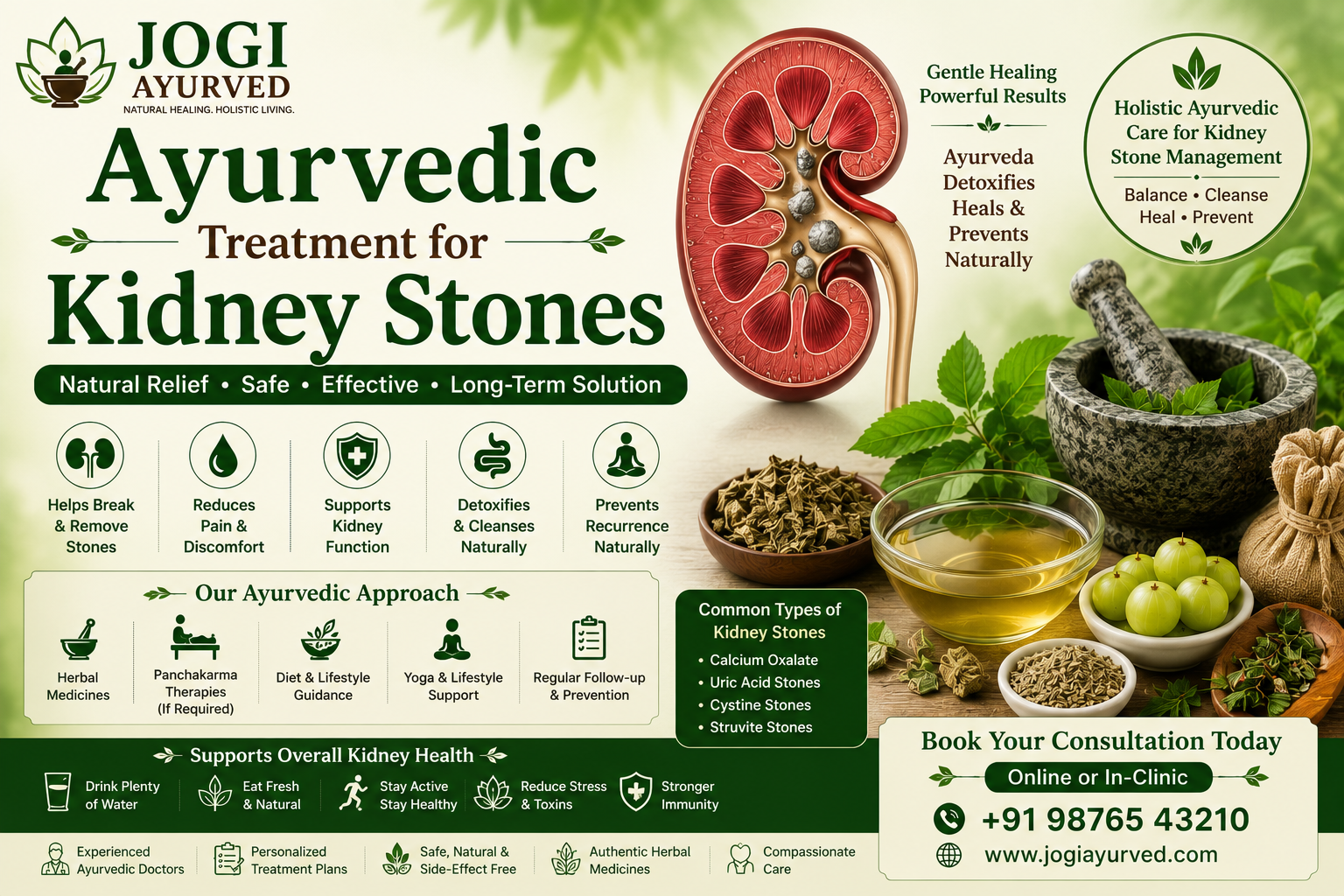
Ayurvedic Treatment for Kidney Stones
What is the Disease?
Kidney stones (Renal Calculi), known as “Ashmari” in Ayurveda, are hard mineral and salt deposits that form inside the kidneys. They develop when urine becomes concentrated, allowing minerals to crystallize and stick together. Stones can vary in size — from as small as a grain of sand to as large as a golf ball — and may remain in the kidney or travel through the urinary tract, causing significant pain along the way.
Symptoms
- Severe pain in the back, side, lower abdomen, or groin
- Pain that comes in waves and fluctuates in intensity
- Burning sensation or pain during urination
- Blood in urine (pink, red, or brown)
- Cloudy or foul-smelling urine
- Nausea and vomiting
- Frequent urge to urinate
- Fever and chills (if infection is present)
- Difficulty passing urine or passing only small amounts
Causes
- Low water intake and chronic dehydration
- Diet high in sodium, sugar, and animal protein
- Excess oxalate-rich foods (spinach, nuts, chocolate)
- Obesity and sedentary lifestyle
- Family or personal history of kidney stones
- Certain medical conditions (hyperparathyroidism, gout, UTIs)
- Digestive disorders affecting mineral absorption
Risk Factors
- Family history of kidney stones
- Dehydration or living in hot climates
- Diets high in protein, salt, or sugar
- Obesity and high BMI
- Digestive diseases and surgeries (gastric bypass, IBD)
- Certain supplements and medications
- Underlying metabolic conditions
Diagnosis
- Physical examination and medical history
- Urinalysis to detect crystals, blood, or infection
- Blood tests to check calcium, uric acid, and kidney function
- Imaging tests: ultrasound, CT scan, or X-ray (KUB)
- Stone analysis (if a stone is passed or removed)
Ayurvedic Perspective
In Ayurveda, kidney stones are referred to as Ashmari, arising primarily from an imbalance of Kapha and Vata dosha, along with vitiated Meda dhatu (fat tissue) and impaired Agni (digestive fire). Poor digestion leads to the accumulation of toxins (Ama), which combine with minerals in the urinary tract and solidify into stones over time. Ayurvedic treatment focuses on correcting the underlying doshic imbalance, improving digestion, and gradually dissolving or expelling the stone through natural means.
Treatment Approach
Ayurvedic management of kidney stones is holistic and typically includes:
- Pacifying aggravated Vata and Kapha doshas
- Improving digestive fire (Agni) to prevent further toxin accumulation
- Using litholytic (stone-dissolving) and diuretic herbs
- Panchakarma detoxification where appropriate
- Dietary and lifestyle correction to prevent recurrence
Treatment is customized based on the size, location, and composition of the stone, as well as the individual’s constitution (Prakriti).
Panchakarma (If Appropriate)
For suitable cases, Panchakarma therapies may be recommended to support detoxification and balance:
- Basti (medicated enema) – helps balance Vata dosha and supports urinary tract function
- Virechana (therapeutic purgation) – helps eliminate Pitta-related toxins
- Swedana (herbal steam therapy) – may help relieve associated pain and stiffness
Panchakarma is advised only after proper evaluation by a qualified Ayurvedic physician, as it is not suitable for very large stones or acute obstructive conditions.
Herbal Medicines (General Information)
Ayurvedic practitioners may consider herbs traditionally used for urinary tract and stone-related support, such as:
- Pashanbheda
- Gokshura
- Varuna
- Punarnava
- Kulattha (Horse gram)
- Shilajit
This information is general in nature. Herbal formulations should only be taken under the guidance of a qualified Ayurvedic doctor, as dosage and combination depend on individual diagnosis.
Diet Recommendations
- Drink plenty of water throughout the day
- Include barley water and coconut water
- Favor light, easily digestible foods
- Include pumpkin, bottle gourd, and cucumber
- Buttermilk in moderation
- Fresh fruits like pomegranate and watermelon
- Whole grains such as barley and old rice
Foods to Avoid
- Excess salt and processed foods
- Spinach, tomatoes, and other high-oxalate vegetables in excess
- Red meat and organ meats
- Excessive tea, coffee, and caffeinated drinks
- Fried, spicy, and heavy foods
- Alcohol
- Excess dairy in certain stone types (as advised by physician)
Lifestyle Modifications
- Maintain adequate hydration throughout the day
- Avoid holding urine for long periods
- Maintain a regular sleep schedule
- Reduce prolonged sitting; stay physically active
- Manage stress through relaxation techniques
- Avoid excessive intake of supplements without medical advice
Yoga & Exercise
Certain yoga asanas and practices may support kidney and urinary health:
- Pavanmuktasana (Wind-Relieving Pose)
- Dhanurasana (Bow Pose)
- Bhujangasana (Cobra Pose)
- Ardha Matsyendrasana (Half Spinal Twist)
- Pranayama (breathing exercises) for overall detoxification
Yoga should be practiced under guidance, especially during an active painful episode.
Prevention Tips
- Drink 8–10 glasses of water daily
- Limit salt and animal protein intake
- Maintain a healthy body weight
- Avoid excessive intake of oxalate-rich foods
- Get regular health check-ups if you have a history of stones
- Address underlying digestive or metabolic issues early
Frequently Asked Questions
1. Can Ayurveda dissolve kidney stones completely? Ayurvedic treatment may help in dissolving smaller stones and supporting their natural passage, depending on stone size, location, and composition. Larger or obstructive stones may require conventional medical intervention.
2. How long does Ayurvedic treatment for kidney stones take? Duration varies based on stone size and individual response, typically ranging from a few weeks to a few months.
3. Are Ayurvedic remedies for kidney stones safe? When prescribed and monitored by a qualified Ayurvedic physician, these remedies are generally considered safe. Self-medication is not recommended.
4. Can kidney stones come back after Ayurvedic treatment? Recurrence is possible if underlying dietary and lifestyle factors aren’t addressed, which is why long-term diet and lifestyle changes are emphasized.
5. When should I see a doctor immediately instead of relying on home remedies? Seek immediate medical care if you experience severe pain, high fever, inability to urinate, or persistent vomiting, as these may indicate a medical emergency.
Why Choose JOGI Ayurved?
JOGI Ayurved offers personalized, evidence-informed Ayurvedic care rooted in classical principles and adapted to modern lifestyles. Our approach combines accurate diagnosis, individualized herbal protocols, and sustainable diet and lifestyle guidance to address the root cause of kidney stones — not just the symptoms. With experienced physicians and a patient-centered approach, we aim to support long-term urinary health and overall well-being.
Book an Online or In-Clinic Consultation
Take the first step toward natural, holistic kidney stone care. Book your consultation with JOGI Ayurved today — available both online and in-clinic — and get a treatment plan tailored to your unique constitution and health needs or Call +91 8800118053.