
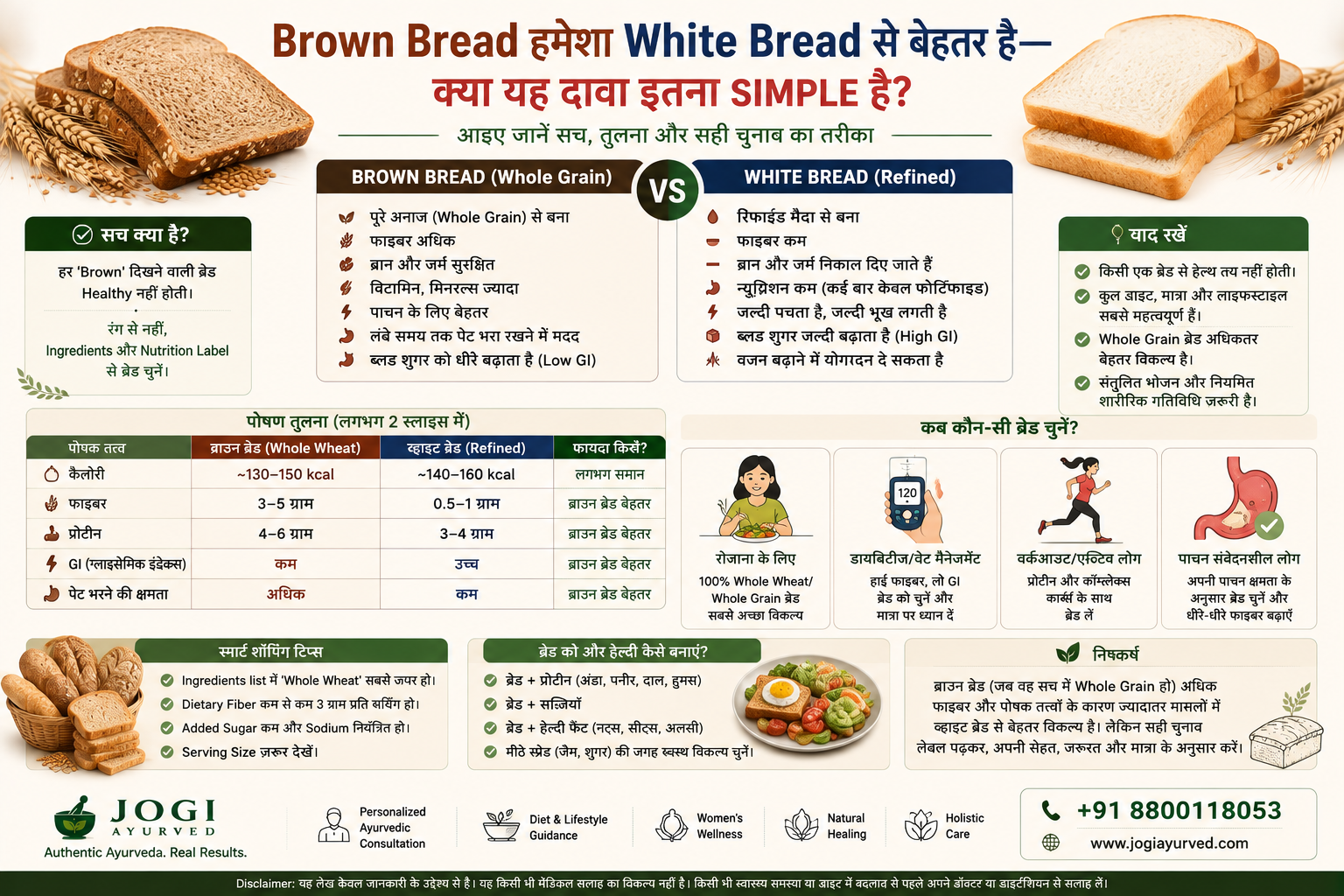
Brown Bread vs White Bread: Health Facts You Should Know
Bread is a common breakfast and snack food, but choosing between brown bread and white bread can be confusing.
Many people assume that every brown-colored bread is automatically healthier than white bread. That’s not always true.
The important question is not simply:
“Is the bread brown?”
Instead, ask:
“Is it actually made from whole grains, and what does the ingredient and nutrition label say?”
Whole-grain bread generally provides more dietary fiber and nutrients than bread made primarily from refined flour. Refined grains lose the bran and germ during processing, which removes much of their natural fiber and some nutrients.
So, when choosing between breads, 100% whole-wheat or whole-grain bread is generally a better everyday choice than refined white bread.
What Is White Bread?
White bread is usually made from refined wheat flour.
During refining, the bran and germ are removed, leaving mainly the starchy endosperm. Some vitamins and minerals may be added back through enrichment, but dietary fiber is generally not restored to the same level as in whole grains.
White bread is typically:
- Soft
- Light in color
- Mild in taste
- Easy to digest
- Lower in fiber than whole-grain bread
This does not mean white bread is “poison” or that you can never eat it.
The overall diet matters more than one food.
What Is Brown Bread?
The term “brown bread” can be misleading.
Some brown breads are genuinely made with whole wheat or whole grains. Others may simply be darker because of ingredients such as coloring, molasses or other components.
The American Heart Association recommends checking the ingredient list rather than judging bread by its color. Ideally, a whole-grain ingredient should appear prominently in the ingredient list.
Therefore:
Brown color ≠ automatically whole grain.
Brown Bread vs White Bread: Key Differences
| Feature | Whole-Grain/Brown Bread | White Bread |
|---|---|---|
| Grain type | Whole grain if genuinely whole-grain | Usually refined grain |
| Fiber | Generally higher | Generally lower |
| Bran | Retained | Removed during refining |
| Germ | Retained | Removed during refining |
| Nutrients | More naturally retained | Some may be added back |
| Fullness | Often more filling | May be less filling |
| Digestive health | Higher fiber can support digestion | Usually less fiber |
| Everyday choice | Generally preferable | Can be eaten occasionally |
The exact nutrition varies considerably between brands, so the package label matters.
Why Is Fiber Important?
One of the biggest nutritional differences between whole-grain and refined bread is dietary fiber.
Fiber can help:
- Support digestive health
- Improve bowel regularity
- Support healthy cholesterol levels
- Increase feelings of fullness
- Support healthy blood sugar management
Whole grains are an important source of dietary fiber, while most refined grains contain much less.
This is one reason health organizations generally recommend choosing whole grains more often than refined grains.
Is Brown Bread Better for Weight Loss?
It can be a better choice, but brown bread itself does not cause weight loss.
Whole-grain bread tends to provide more fiber, which may help you feel fuller.
However, weight management depends on your overall:
- Calorie intake
- Portion sizes
- Physical activity
- Protein intake
- Food choices
- Sleep
- Lifestyle
For example, eating six slices of a high-calorie whole-grain bread can still provide more calories than your body needs.
The better approach:
Choose nutritious bread + control portions + add protein and vegetables.
Does Brown Bread Raise Blood Sugar?
Bread contains carbohydrates, so both white and whole-grain bread can raise blood glucose.
However, the nutritional profile and processing of the bread matter.
Whole-grain bread generally contains more fiber than refined white bread, which can affect digestion and the body’s response to carbohydrates.
For people with diabetes or prediabetes, the best choice depends on the specific bread, portion size and the rest of the meal.
Don’t assume that any bread labeled “brown,” “multigrain” or “healthy” is automatically suitable for blood-sugar management.
Is Multigrain Bread the Same as Whole-Grain Bread?
No.
“Multigrain” simply means that multiple types of grains may have been used.
Those grains may be refined or whole.
For example, a bread can contain:
- Wheat
- Oats
- Barley
- Corn
but still contain mostly refined flour.
What should you look for?
Look for words such as:
100% whole wheat
or
100% whole grain
and check the ingredient list.
The American Heart Association recommends choosing products where whole grains make up a substantial portion of the grain ingredients.
Is Brown Bread Good for Digestion?
Whole-grain bread can support digestive health because it generally contains more fiber.
Fiber helps promote normal bowel function and can support a healthy digestive system.
However, some people may experience:
- Bloating
- Gas
- Abdominal discomfort
when they suddenly increase fiber intake.
Simple solution
Increase fiber gradually and drink adequate fluids.
What About White Bread?
White bread isn’t necessarily “bad.”
It can be convenient and may be useful in certain situations where a lower-fiber food is preferred.
For most healthy adults, however, dietary guidance generally favors whole grains over refined grains as part of an overall healthy eating pattern.
The goal is not to fear white bread.
The goal is to make higher-fiber, less-refined choices more often.
How to Choose Healthy Bread at the Supermarket
Don’t rely only on words like:
- Brown
- Multigrain
- Fitness
- Healthy
- High protein
- Natural
Instead, read the label.
Check 1: Ingredient List
Look for whole wheat or whole grain near the beginning of the ingredient list.
Check 2: Dietary Fiber
Compare fiber content between brands.
More fiber can be useful as part of a healthy diet.
Check 3: Added Sugar
Some packaged breads contain added sugar.
Compare labels and choose products with less added sugar when practical.
Check 4: Sodium
Bread can contribute to daily sodium intake.
Compare products if you’re trying to reduce sodium.
Check 5: Serving Size
Check how many slices constitute a serving.
Nutrition numbers can be misleading if serving sizes differ between products.
Is Brown Bread Good for Diabetes?
For people with diabetes, whole-grain bread can be a better option than refined white bread, particularly when it provides more fiber and is eaten in an appropriate portion.
But there is no universal “diabetes bread.”
Consider:
- Total carbohydrates
- Fiber
- Portion size
- Added sugar
- The rest of your meal
- Your individual glucose response
A slice or two of whole-grain bread combined with protein and vegetables may produce a more balanced meal than eating bread alone.
If you have diabetes, follow your healthcare professional’s individualized dietary advice.
Is Brown Bread Better for Heart Health?
Whole grains are associated with better cardiovascular health as part of an overall healthy dietary pattern.
The American Heart Association recommends choosing foods made mostly with whole grains rather than refined grains.
Whole grains also provide fiber and nutrients that contribute to a healthy eating pattern.
However, choosing whole-grain bread doesn’t cancel out an otherwise unhealthy diet.
Think about your complete eating pattern.
How to Make Your Bread Healthier
The bread itself is only one part of the meal.
Instead of eating plain bread with a sugary spread, try combining it with nutritious foods.
Option 1
Whole-grain bread + egg + vegetables
Option 2
Whole-grain bread + paneer + cucumber and tomato
Option 3
Whole-grain toast + unsweetened peanut butter + fruit
Option 4
Whole-grain bread + hummus + vegetables
Option 5
Whole-grain toast + yogurt + fruit
Combining carbohydrates with protein, fiber-rich foods and healthy fats can make a meal more satisfying.
Can You Eat Bread Every Day?
Yes, bread can be part of a healthy diet.
The important factors are:
- Type of bread
- Portion size
- Overall diet
- Activity level
- Individual health needs
If you enjoy bread, you don’t necessarily need to eliminate it.
A practical approach is to choose whole-grain bread more often and vary your carbohydrate sources.
You can also include:
- Oats
- Brown rice
- Millets
- Barley
- Quinoa
- Whole-wheat roti
- Other whole grains
Ayurveda and Bread: What Should You Consider?
Ayurveda traditionally emphasizes individual digestion, food quality, preparation, meal timing and overall dietary balance.
From an Ayurvedic wellness perspective, the same food may not suit every person in exactly the same way.
Some people may find certain breads heavy or difficult to digest, particularly when eaten in large quantities or combined with other heavy foods.
A balanced approach can include:
- Freshly prepared meals
- Appropriate portions
- Whole foods
- Seasonal vegetables
- Adequate protein
- Whole grains according to individual tolerance
- Regular meal timing
There is no need to label every packaged bread as unhealthy.
Instead, look at the ingredients, nutritional quality, portion size and your individual response.
Brown Bread vs White Bread: Which One Should You Choose?
For everyday use, consider this simple rule:
Choose Whole-Grain Bread More Often
Especially when the bread is genuinely made with whole wheat or whole grains and provides useful amounts of fiber.
Choose White Bread Occasionally
White bread can still fit into an overall balanced diet.
Don’t Trust Color Alone
A dark or brown appearance does not guarantee that the bread is whole grain.
Read the Label
Ingredient list + fiber + added sugar + sodium + serving size gives you a better picture than the front of the package.
7 Common Bread Mistakes
1. Assuming Brown Means Healthy
Brown color does not necessarily mean whole grain.
2. Choosing “Multigrain” Without Reading Ingredients
Multigrain doesn’t automatically mean whole grain.
3. Ignoring Portion Size
Even nutritious bread contains calories.
4. Eating Bread Alone
Adding protein and vegetables can create a more balanced meal.
5. Choosing Bread With Lots of Added Sugar
Always check the nutrition label.
6. Ignoring Sodium
Some packaged breads can contribute significant sodium.
7. Suddenly Increasing Fiber
Increase whole grains gradually if your current diet is low in fiber.
Frequently Asked Questions
Is brown bread healthier than white bread?
If the brown bread is genuinely whole-grain or whole-wheat, it is generally more nutritious than refined white bread because it typically provides more fiber and retains more components of the grain.
Is all brown bread whole wheat?
No. Bread can be brown because of ingredients other than whole grains. Always check the ingredient list.
Is whole-wheat bread the same as brown bread?
Not necessarily. “Whole-wheat” indicates that the whole wheat grain is used, while “brown bread” is a broader marketing or descriptive term that does not guarantee whole-grain content.
Is brown bread good for weight loss?
Whole-grain bread may help with fullness because it generally contains more fiber, but weight loss depends on total calorie intake and overall lifestyle.
Can diabetic people eat brown bread?
Many people with diabetes can include whole-grain bread in appropriate portions. However, carbohydrate quantity, fiber, serving size and the rest of the meal should be considered.
Is white bread unhealthy?
White bread is a refined-grain food and generally contains less fiber than whole-grain bread. It can still be included occasionally as part of an otherwise balanced diet.
How do I know if bread is really whole grain?
Check the ingredient list for a whole-grain ingredient near the beginning and review the nutrition label for fiber. Don’t rely on the bread’s color alone.
Conclusion
Brown bread is not automatically healthier just because it is brown.
The real difference is whether the bread is made from whole grains or refined grains.
Whole-grain bread generally provides more fiber and retains more of the grain’s natural nutrients than refined white bread. Health organizations recommend choosing whole grains more often as part of a balanced dietary pattern.
So when buying bread:
Don’t judge by color. Read the label. Choose whole grains more often. Control portions. Build a balanced meal.
At JOGI Ayurved, personalized Ayurvedic diet and lifestyle guidance can help you choose foods according to your individual health goals, digestion and overall wellness.
Important Links
- Brown Bread vs White Bread
- Brown Bread White Bread Health Facts
- Is Brown Bread Healthy
- Is White Bread Healthy
- Brown Bread Benefits
- White Bread Health Effects
- Whole Wheat Bread Benefits
- Whole Grain Bread Benefits
- Brown Bread for Weight Loss
- Brown Bread for Diabetes
- Brown Bread for Digestion
- Brown Bread vs White Bread Nutrition
- Best Bread for Health
- Healthy Bread Choice
- Ayurvedic Diet
- JOGI Ayurved
References:
- https://pmc.ncbi.nlm.nih.gov/articles/PMC12930236/
- https://www.sciencedirect.com/science/article/abs/pii/S0271531700001263
- https://www.bhf.org.uk/informationsupport/heart-matters-magazine/nutrition/wholegrain-foods
- https://www.healthline.com/nutrition/9-benefits-of-whole-grains
Medical Disclaimer
This article is for general educational purposes and does not replace personalized medical or nutritional advice. People with diabetes, celiac disease, wheat allergy, digestive disorders or other medical conditions should seek individualized dietary guidance from a qualified healthcare professional.