
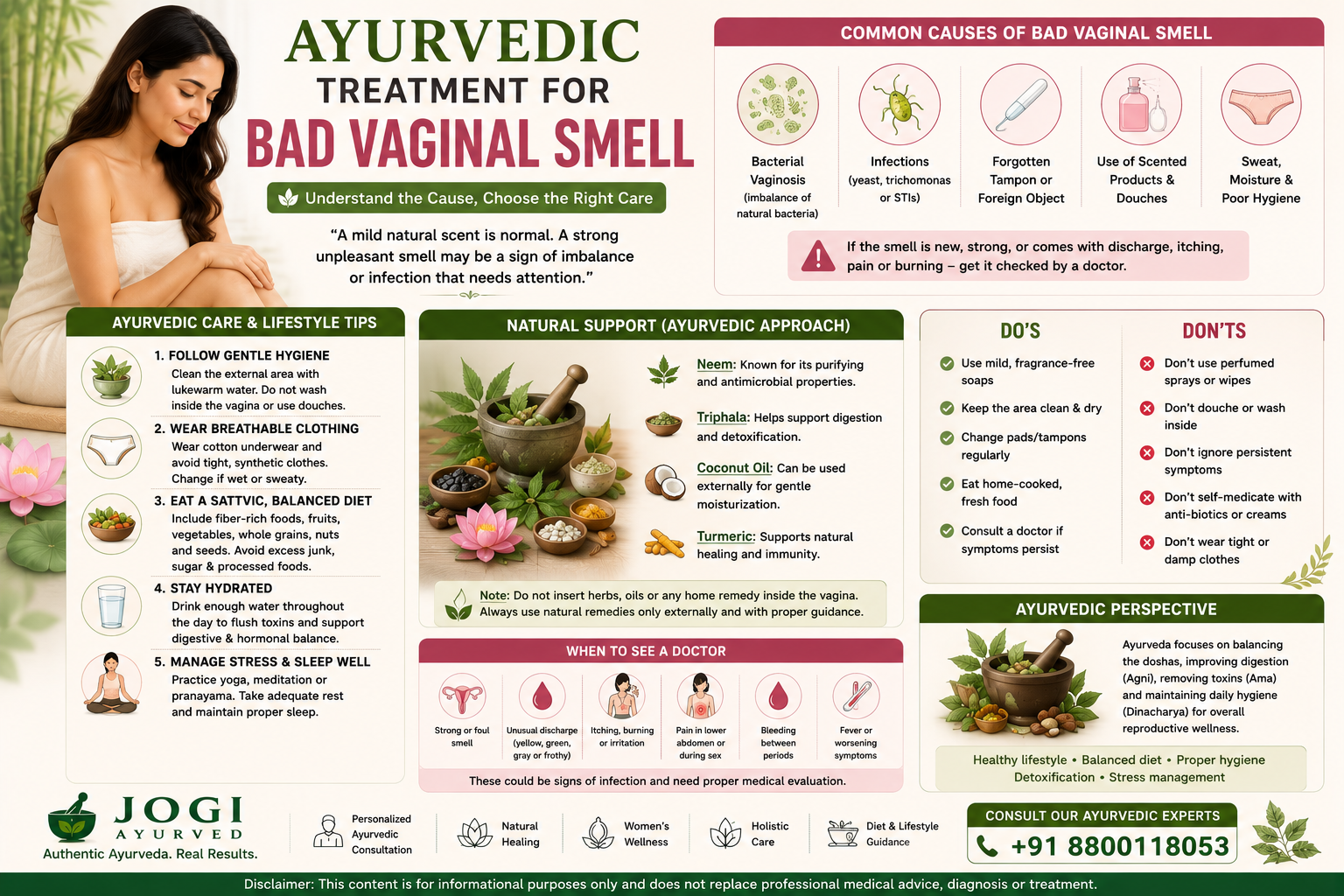
Ayurvedic Treatment for Bad Vaginal Smell
A mild, natural vaginal scent is normal. The vagina does not need to smell like perfume or fragrance. However, a new, strong or unpleasant vaginal smell, especially when accompanied by unusual discharge, itching, burning or pain, may indicate an underlying problem.
Many women look for Ayurvedic treatment for bad vaginal smell because they prefer natural approaches. Ayurveda may provide supportive guidance around hygiene, diet, lifestyle and overall wellness. However, an unusual vaginal odor should not simply be covered up with home remedies.
The most important step is to understand why the smell has changed.
Is Vaginal Smell Normal?
Yes.
A healthy vagina normally has a mild natural scent. Vaginal discharge is also normal and helps keep the vagina clean and moist. Normal discharge is generally clear or white and does not have a strong unpleasant smell.
The smell can change slightly at different times, including around the menstrual cycle.
A normal vaginal scent is usually:
- Mild
- Natural
- Not strongly unpleasant
- Not associated with severe itching or pain
A sudden strong odor is different and deserves attention.
What Causes Bad Vaginal Smell?
There are several possible causes.
1. Bacterial Vaginosis
Bacterial vaginosis (BV) is one of the common causes of an unusual vaginal odor.
It occurs when the normal balance of bacteria in the vagina changes.
A typical symptom is a strong fishy smell, often accompanied by thin, grayish-white discharge. Some women have no symptoms at all.
BV is treatable, but it may require antibiotics prescribed by a healthcare professional.
2. Trichomoniasis and Other Infections
Some sexually transmitted infections can cause:
- Unusual vaginal odor
- Yellow or green discharge
- Burning
- Pain while urinating
- Pain during sex
- Vaginal irritation
For example, trichomoniasis can cause unusual discharge and odor.
If you have these symptoms, it is important to get tested rather than trying to treat the smell at home.
3. Forgotten Tampon or Foreign Object
A retained tampon or another object in the vagina can cause a particularly unpleasant smell and abnormal discharge.
If you think something may have been left inside the vagina, seek medical care.
Do not attempt aggressive cleaning or use chemical products to remove the smell.
4. Excessive Use of Scented Products
Many women believe that vaginal deodorants, scented washes and perfumes improve vaginal hygiene.
They can actually cause irritation and disturb the natural vaginal environment.
Avoid:
- Vaginal deodorants
- Scented intimate washes
- Perfumed soaps
- Scented wipes
- Bubble baths
- Vaginal douches
NHS guidance specifically recommends avoiding perfumed products and washing inside the vagina.
5. Sweat and Moisture
The external genital area can become sweaty, particularly during hot weather or exercise.
Sweat itself is not the same as an internal vaginal odor, but moisture, tight clothing and prolonged dampness can contribute to discomfort and external odor.
Helpful habits include:
- Changing sweaty clothes
- Wearing breathable underwear
- Keeping the external area dry
- Changing underwear regularly
- Avoiding excessively tight clothing
Ayurvedic Perspective on Vaginal Health
Ayurveda traditionally emphasizes maintaining balance through:
- Diet
- Digestion
- Daily routine
- Personal hygiene
- Sleep
- Stress management
- Individualized care
An Ayurvedic approach to women’s wellness may therefore focus on supporting overall health and healthy daily habits, rather than simply trying to mask vaginal odor.
However, an Ayurvedic approach should not assume that every unusual smell is caused by “dosha imbalance.”
A new or persistent odor can sometimes indicate an infection that requires medical diagnosis and treatment.
7 Ayurvedic-Inspired Ways to Support Vaginal Wellness
1. Maintain Gentle Hygiene
Clean the external vulvar area gently with water.
Avoid aggressively scrubbing the area.
The vagina itself does not need internal washing or douching.
Remember:
Clean the outside gently. Do not wash inside the vagina.
2. Avoid Perfumed Products
Choose simple, fragrance-free products around the genital area.
Avoid using:
- Perfumed intimate washes
- Deodorant sprays
- Strong soaps
- Scented wipes
- Vaginal cleansing products
These products can irritate sensitive skin and may disturb the normal vaginal environment.
3. Wear Breathable Underwear
Cotton or other breathable underwear can help reduce moisture and discomfort.
Change underwear after heavy sweating or exercise.
Avoid remaining in wet or sweaty clothes for long periods.
4. Eat a Balanced Diet
Ayurveda places considerable emphasis on appropriate food and digestion.
Choose a balanced diet containing:
- Vegetables
- Seasonal fruits
- Whole grains
- Lentils
- Beans
- Nuts and seeds
- Adequate protein
- Healthy fats
There is no specific food proven to eliminate abnormal vaginal odor, but good nutrition supports overall health.
5. Stay Adequately Hydrated
Drink enough fluids according to your thirst and individual health needs.
Adequate hydration supports normal body functions and urinary health.
However, drinking large amounts of water will not treat bacterial vaginosis, an STI or another vaginal infection.
Neem Water or Alum Water Wash
You may find traditional advice recommending neem water or alum (fitkari) water to wash the vagina for unpleasant odor. However, these substances should not be used inside the vagina.
The vagina is naturally self-cleaning, and internal washing or douching can disturb its normal bacterial balance. This may increase irritation or the risk of conditions such as bacterial vaginosis.
For daily hygiene, gently clean the external vulvar area with water and avoid perfumed soaps, vaginal deodorants, scented wipes and internal washes.
If you have a strong or fishy odor, unusual discharge, itching, burning, pelvic pain or pain while urinating, don’t try to mask the smell with neem or alum water. These symptoms can indicate an infection and should be evaluated by a healthcare professional.
Important: Avoid putting neem water, alum water, herbal preparations, oils, lemon, vinegar or other home remedies inside the vagina.
6. Manage Stress and Sleep Well
Stress management is an important part of overall Ayurvedic wellness.
Try:
- Gentle yoga
- Meditation
- Deep breathing
- Walking
- Relaxation exercises
- Regular sleep
These practices support general well-being but should not be considered a direct treatment for an infection causing vaginal odor.
7. Maintain Healthy Menstrual Hygiene
During your period:
- Change pads regularly.
- Change tampons according to product instructions.
- Keep the external area clean.
- Avoid strongly fragranced menstrual products if they cause irritation.
- Change underwear when necessary.
If you notice a persistent unusual odor during or after your period, especially with discharge, itching or pain, seek medical advice.
Can Ayurvedic Home Remedies Remove Bad Vaginal Smell?
Be careful with online “natural” remedies.
Do not put the following inside the vagina:
- Lemon juice
- Vinegar
- Baking soda
- Essential oils
- Garlic
- Herbal pastes
- Undiluted oils
- Antiseptic liquids
The vagina has its own natural environment. Douching and inappropriate products can disturb this environment and may increase irritation or infection risk.
Natural does not automatically mean safe.
What About Ayurvedic Herbs?
Ayurvedic medicine uses many herbs traditionally for women’s health.
However, there is an important difference between general wellness support and treating an infection.
If bad vaginal smell is caused by bacterial vaginosis, trichomoniasis or another infection, simply taking an herbal preparation may delay appropriate treatment.
If you want to use Ayurvedic medicines, discuss them with a qualified Ayurvedic practitioner and tell them about any conventional medicines you are taking.
Bad Vaginal Smell With Discharge: What It May Mean
The combination of smell and discharge can provide clues, but symptoms alone cannot reliably diagnose the cause.
| Symptom | Possible Cause |
|---|---|
| Strong fishy smell + thin gray/white discharge | Bacterial vaginosis |
| Thick white discharge + itching | Thrush |
| Yellow/green or frothy discharge | Possible trichomoniasis |
| Discharge + pelvic pain | Possible infection requiring evaluation |
| Strong odor + possible retained tampon | Foreign object |
| Irritation after scented products | Contact irritation |
These are only general possibilities, not a diagnosis. NHS guidance recommends medical evaluation when discharge changes in smell, colour or texture.
When Should You See a Doctor?
Do not rely only on home remedies if you have:
- Strong or persistent vaginal odor
- Unusual discharge
- Green or yellow discharge
- Fishy odor
- Vaginal itching
- Burning
- Pain while urinating
- Pain during sex
- Pelvic pain
- Bleeding between periods
- Bleeding after sex
- Symptoms after sex with a new partner
These symptoms may require examination and testing.
What Happens During a Medical Checkup?
A healthcare professional may:
- Ask about your symptoms.
- Ask about your menstrual and sexual health.
- Examine the external genital area.
- Perform a vaginal examination if needed.
- Take a vaginal swab or sample for testing.
Testing helps determine whether the problem is BV, thrush, an STI or another condition.
Treatment depends on the cause.
For example, symptomatic bacterial vaginosis is commonly treated with prescribed antibiotics.
What If You Are Pregnant?
Pregnancy requires extra caution.
If you are pregnant and notice an unpleasant or unusual vaginal odor, particularly with discharge, itching, soreness or pain, contact your maternity care professional.
Bacterial vaginosis during pregnancy may be associated with pregnancy complications, so appropriate evaluation and treatment are important.
Do not start Ayurvedic herbs or vaginal preparations during pregnancy without qualified medical guidance.
Simple Daily Routine for Vaginal Wellness
Morning
- Drink fluids according to your needs.
- Wear clean, breathable underwear.
- Follow normal personal hygiene.
During the Day
- Change after heavy sweating.
- Avoid unnecessary scented intimate products.
- Maintain a balanced diet.
During Your Period
- Change menstrual products regularly.
- Keep the external area clean.
- Avoid irritating products.
Evening
- Clean the external area gently.
- Change out of damp clothing.
- Practice relaxation or gentle yoga.
- Get adequate sleep.
Common Mistakes to Avoid
Using Vaginal Perfume
Vaginal odor should not be covered with perfume or deodorant.
Douching
Washing inside the vagina can disturb its natural environment.
Using Random Herbal Remedies
A home remedy may delay diagnosis of an infection.
Ignoring Persistent Odor
A strong new odor deserves attention, particularly when other symptoms are present.
Self-Treating an STI
If an STI is possible, proper testing and treatment are important.
Frequently Asked Questions
What is the best Ayurvedic treatment for bad vaginal smell?
There is no single Ayurvedic treatment proven to cure every cause of vaginal odor. Ayurvedic care can support healthy lifestyle and hygiene habits, but persistent or unusual odor should be evaluated to identify the underlying cause.
Is bad vaginal smell normal?
A mild natural scent can be normal. A strong, unpleasant or new odor—especially with unusual discharge, itching, burning or pain—may indicate a problem that needs evaluation.
Can yogurt cure vaginal odor?
Eating yogurt can be part of a balanced diet, but it should not be considered a proven treatment for abnormal vaginal odor. Do not put yogurt inside the vagina.
Can I use lemon or vinegar to remove vaginal smell?
No. Avoid putting lemon juice, vinegar or other acidic substances inside the vagina. They can irritate sensitive tissue and disturb the natural vaginal environment.
Can turmeric cure vaginal infection?
Turmeric is a commonly used culinary spice, but applying turmeric inside the vagina or using it as a substitute for infection treatment is not recommended.
Why does my vagina smell fishy?
A fishy odor, particularly with thin grayish-white discharge, can occur with bacterial vaginosis. A healthcare professional can confirm the diagnosis and recommend appropriate treatment.
Can Ayurveda cure bacterial vaginosis?
Ayurvedic lifestyle practices may complement general wellness, but bacterial vaginosis may require medical treatment. Do not delay appropriate evaluation or prescribed treatment.
Conclusion
A mild natural vaginal scent is normal, but a new, strong or unpleasant odor should not simply be hidden with perfumes or home remedies.
Common causes include bacterial vaginosis, sexually transmitted infections, irritation, sweat and other vaginal or vulvar conditions.
A safe Ayurvedic wellness approach can focus on:
- Gentle external hygiene
- Avoiding scented products
- Breathable underwear
- Balanced nutrition
- Adequate hydration
- Stress management
- Good sleep
- Appropriate menstrual hygiene
But if the odor persists or occurs with abnormal discharge, itching, burning, pelvic pain or bleeding, get a proper medical evaluation.
At JOGI Ayurved, personalized Ayurvedic lifestyle guidance can complement appropriate women’s health care. Ayurvedic medicines or therapies should be recommended only after an individual assessment.
Important Links
- Ayurvedic Treatment for Bad Vaginal Smell
- Bad Vaginal Smell Treatment
- Vaginal Odor Home Remedies
- Ayurvedic Treatment for Vaginal Odor
- Fishy Vaginal Smell
- Vaginal Smell Causes
- Unpleasant Vaginal Odor
- Vaginal Discharge and Smell
- Bacterial Vaginosis Ayurveda
- Women’s Ayurvedic Health
- Vaginal Hygiene Tips
- Natural Vaginal Care
- Ayurvedic Women’s Health
- JOGI Ayurved
- Online Ayurvedic Consultation
Suggested Internal Links
- Late Night Menstrual Routine: Manage Period Cravings & Hunger
- 5 Tips to Prevent Piles During Pregnancy
- 3 Ayurvedic Ways to Strengthen Digestive Fire
- Shirodhara Therapy Benefits for Stress Relief
- Can Ayurveda Cure Every Illness?
- Online Ayurvedic Consultation
Medical Disclaimer
This article is for educational purposes only and does not replace gynecological diagnosis or treatment. Persistent vaginal odor, unusual discharge, pelvic pain, bleeding, itching or burning should be evaluated by a qualified healthcare professional. Do not insert herbal remedies, oils, acids or other home remedies into the vagina.