5 Tips to Prevent Piles During Pregnancy
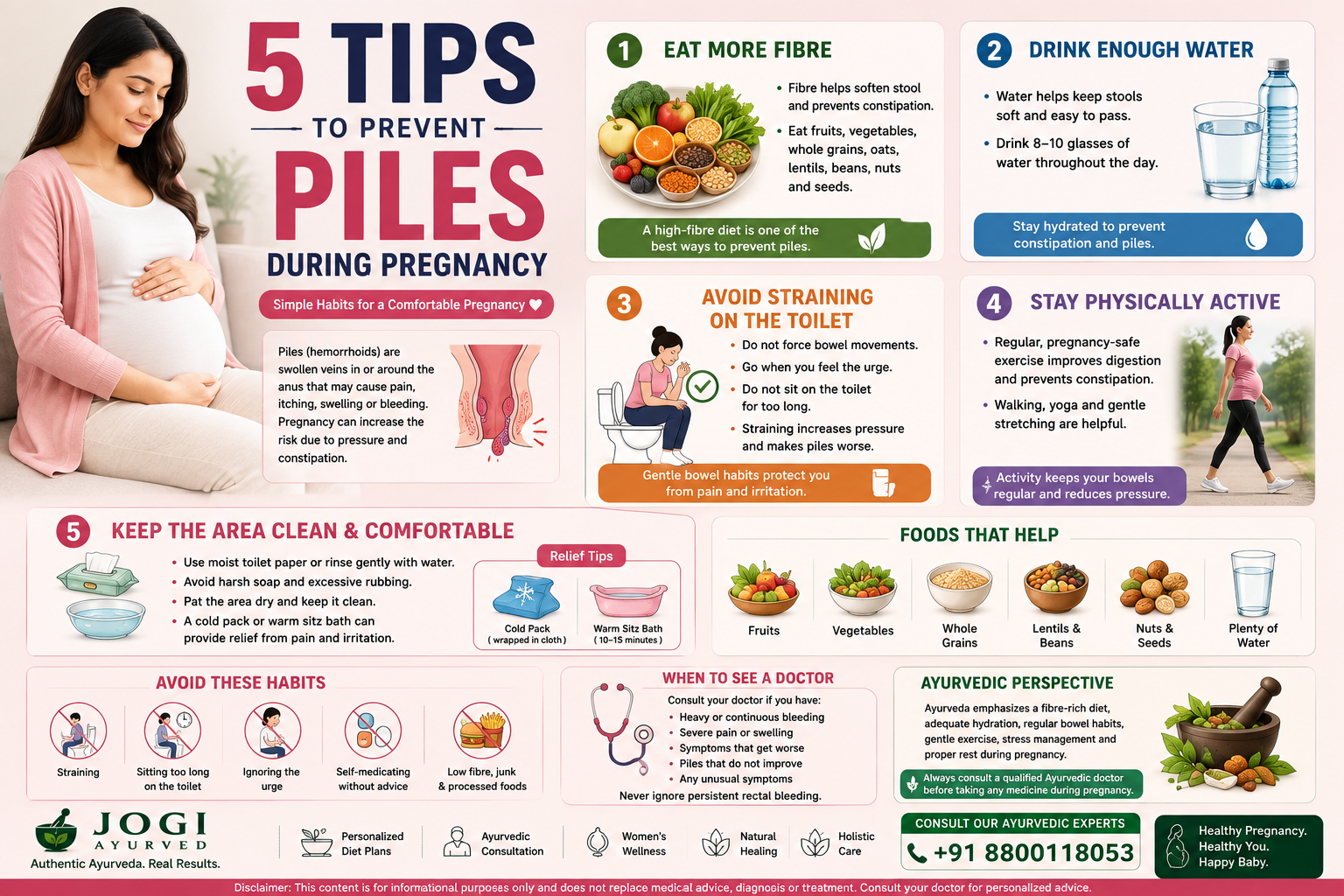
Pregnancy brings many physical changes, and piles (haemorrhoids) are one of the common problems that some women experience. Piles are swollen blood vessels in or around the anus and may cause itching, soreness, swelling, pain or bright-red bleeding after passing stool.
Pregnancy can increase the likelihood of piles because of pressure from the growing baby and the increased tendency toward constipation. Straining during bowel movements can make symptoms worse.
The good news is that several simple lifestyle habits can help reduce the risk of constipation and prevent piles from becoming worse.
Here are 5 practical tips for managing and preventing piles during pregnancy.
1. Eat More Fibre
One of the most important steps is to prevent constipation.
Fibre helps make stools softer and easier to pass, reducing the need to strain.
Include fibre-rich foods such as:
- Fruits
- Vegetables
- Whole-grain bread
- Oats
- Brown rice
- Lentils
- Beans
- Chickpeas
- Nuts and seeds
NHS guidance recommends a high-fibre diet during pregnancy to help prevent constipation and piles.
Simple Tip
Instead of suddenly eating a very large amount of fibre, increase it gradually. A sudden increase may cause gas or abdominal discomfort.
2. Drink Enough Water
Adequate fluid intake helps keep stools softer.
Make water your primary drink and spread your fluid intake throughout the day.
You can also get fluids from:
- Soups
- Fruits
- Vegetables
- Other suitable non-alcoholic drinks
The amount of fluid needed can vary depending on your health, activity level and pregnancy needs.
If your doctor has given you specific fluid restrictions, follow their advice.
Adequate water intake combined with dietary fibre can help prevent constipation, which is an important factor in managing piles.
3. Avoid Straining on the Toilet
One of the most important habits during pregnancy is:
Do not force a bowel movement.
Straining can increase pressure around the rectal veins and may make piles more painful or swollen.
Try these habits:
- Go to the toilet when you feel the urge.
- Don’t deliberately hold your stool.
- Avoid sitting on the toilet for a long time.
- Don’t repeatedly push hard.
- Give yourself enough time without rushing.
If constipation continues despite dietary and lifestyle changes, speak with your doctor, midwife or pharmacist about pregnancy-appropriate treatment.
4. Stay Physically Active
Regular, pregnancy-appropriate physical activity can help support bowel regularity and reduce constipation.
Depending on your pregnancy and your healthcare professional’s advice, suitable activities may include:
- Walking
- Pregnancy-friendly yoga
- Gentle stretching
- Swimming
- Other recommended exercises
NHS guidance recommends regular exercise during pregnancy to help prevent constipation, which can contribute to piles.
Important
Your exercise routine should match your pregnancy and medical circumstances.
If your doctor or midwife has advised you to restrict activity, follow their recommendation.
5. Keep the Area Clean and Comfortable
If you already have piles, gentle hygiene can help reduce irritation.
After passing stool:
- Use moist toilet paper or rinse gently with water.
- Avoid aggressive rubbing.
- Pat the area dry instead of rubbing.
- Keep the area clean and dry.
- Avoid strongly fragranced soaps or products around the anus.
For discomfort, a cold pack wrapped in a cloth can provide temporary relief. A warm bath may also help soothe itching and discomfort.
Why Are Piles Common During Pregnancy?
Several factors can contribute to piles during pregnancy.
Growing Baby and Pelvic Pressure
As pregnancy progresses, the growing uterus can increase pressure in the pelvic area.
Constipation
Hormonal changes during pregnancy can contribute to constipation.
Straining
Hard stools and repeated straining can increase pressure around the anal veins.
Reduced Physical Activity
If pregnancy discomfort makes you less active, constipation may become more likely.
Common Symptoms of Piles During Pregnancy
Piles may cause:
- Itching around the anus
- Pain or soreness
- Swelling
- A lump around the anus
- Discomfort while passing stool
- Bright-red blood after passing stool
These symptoms can also occur with other conditions, so persistent or unusual symptoms should be evaluated rather than automatically assumed to be piles.
What to Avoid If You Have Piles During Pregnancy
Avoid Straining
Don’t force bowel movements.
Avoid Long Toilet Sessions
Don’t sit on the toilet longer than necessary.
Avoid Ignoring the Urge
Delaying bowel movements can contribute to constipation.
Avoid Self-Medicating
Pregnancy changes which medicines are appropriate. Always check with your doctor, midwife or pharmacist before using creams, suppositories, laxatives or other medicines.
Avoid Aggressive Cleaning
Rubbing or using strongly fragranced products can irritate the area.
Can You Use Piles Cream During Pregnancy?
Some treatments may be suitable during pregnancy, but not every piles cream or medicine is appropriate.
The NHS Specialist Pharmacy Service recommends starting with non-drug measures such as adequate fibre, fluids, regular exercise and avoiding straining. If these measures are insufficient, a healthcare professional can advise whether a suitable topical treatment is appropriate.
Therefore, don’t automatically use an over-the-counter piles product simply because it is available.
Check with your doctor, midwife or pharmacist first.
Can Constipation Cause Piles During Pregnancy?
Yes.
Constipation can lead to harder stools and increased straining, both of which can contribute to piles or make existing piles worse.
That’s why preventing constipation is one of the most useful strategies for reducing piles during pregnancy.
A simple routine is:
Fibre-rich food + adequate fluids + regular movement + no straining
Ayurvedic Perspective on Piles During Pregnancy
Ayurveda traditionally gives importance to healthy digestion, regular bowel movements, appropriate food choices and daily routines.
An Ayurvedic lifestyle approach may emphasize:
- Freshly prepared meals
- Fibre-rich foods
- Adequate hydration
- Regular meal timing
- Gentle physical activity
- Adequate rest
- Avoiding unnecessary straining
However, pregnancy requires special care.
Not every Ayurvedic herb, laxative, oil, formulation or therapy is appropriate during pregnancy.
Do not take Ayurvedic medicines or herbal preparations during pregnancy without guidance from a qualified healthcare professional who knows your pregnancy history.
A Simple Daily Routine to Reduce Piles Risk
Morning
Start the day with adequate fluids and a nutritious breakfast containing fibre.
During the Day
Eat fruits, vegetables, whole grains and pulses as appropriate.
Physical Activity
Take a pregnancy-appropriate walk or perform recommended activity.
Toilet Routine
Go when you feel the urge and avoid straining.
Evening
Choose a balanced dinner and maintain adequate hydration.
Before Bed
Relax and get adequate sleep.
When Should You Contact Your Doctor?
Don’t assume that every instance of rectal bleeding during pregnancy is caused by piles.
Speak with your doctor or maternity team if:
- Bleeding continues or increases
- You have significant pain
- Symptoms are getting worse
- You develop a new or unusual lump
- Home measures are not helping
- You are unsure whether the bleeding is from the anus or vagina
Seek urgent medical attention for heavy or continuous bleeding, severe pain, or other serious symptoms.
Frequently Asked Questions
Are piles common during pregnancy?
Yes. Pregnancy is one of the factors that can increase the likelihood of developing haemorrhoids, particularly when constipation and straining are also present.
How can I prevent piles naturally during pregnancy?
Focus on preventing constipation through fibre-rich foods, adequate fluids, pregnancy-appropriate activity and avoiding straining during bowel movements.
Is it safe to use piles medicine during pregnancy?
Some treatments may be appropriate, but you should check with your doctor, midwife or pharmacist before using any medicine or cream during pregnancy.
Can walking help prevent piles during pregnancy?
Regular pregnancy-appropriate exercise can help reduce constipation, which may reduce the risk of piles.
What foods are good for piles during pregnancy?
Fibre-rich foods such as fruits, vegetables, whole grains, lentils, beans and suitable nuts and seeds can help keep stools softer and easier to pass.
Do piles go away after pregnancy?
Piles that develop during pregnancy may improve after childbirth, particularly when constipation and pregnancy-related pressure resolve. However, persistent or severe symptoms should be evaluated.
Can Ayurveda treat piles during pregnancy?
Ayurvedic diet and lifestyle guidance may support healthy bowel habits, but herbal medicines and Ayurvedic treatments during pregnancy should only be used under qualified professional guidance.
Conclusion
Piles can be uncomfortable during pregnancy, but simple daily habits can help reduce the risk and prevent symptoms from becoming worse.
Remember these 5 key tips:
- Eat enough fibre.
- Drink adequate water.
- Avoid straining during bowel movements.
- Stay physically active when medically appropriate.
- Keep the anal area clean and comfortable.
Most importantly, don’t self-medicate during pregnancy. If you have persistent pain, bleeding or worsening symptoms, speak with your doctor or maternity care team.
At JOGI Ayurved, personalized Ayurvedic diet and lifestyle guidance can complement appropriate pregnancy care. Any Ayurvedic medicine or therapy during pregnancy should be considered only after professional assessment.
Important Links
- 5 Tips to Prevent Piles During Pregnancy
- Piles During Pregnancy
- Hemorrhoids During Pregnancy
- Pregnancy Piles Home Remedies
- How to Prevent Piles During Pregnancy
- Piles Treatment During Pregnancy
- Pregnancy Hemorrhoids Relief
- Constipation and Piles During Pregnancy
- Ayurvedic Piles Treatment During Pregnancy
- Natural Piles Relief During Pregnancy
- Pregnancy Constipation
- Piles Prevention Tips
- Ayurvedic Pregnancy Care
- JOGI Ayurved
Suggested Internal Links
- Drinking Water During Meals: Does It Affect Digestion?
- 3 Ayurvedic Ways to Strengthen Digestive Fire
- Acidity Root Causes: Stress, Sleep & Food Triggers
- Late-Night Dinner and Next-Day Hunger
- Does the Perfect Ayurvedic Meal Really Exist?
- Online Ayurvedic Consultation
Medical Disclaimer
This article is for educational purposes only and does not replace prenatal medical care. Pregnancy-related symptoms should be discussed with your doctor or maternity care team, particularly if you have bleeding, severe pain, persistent constipation, or worsening symptoms. Do not take Ayurvedic or other herbal medicines during pregnancy without qualified professional guidance.