3 Secret Home Remedies to Prevent Summer Skin Tan
Summer means more outdoor activities, but increased sun exposure can leave your skin looking darker, uneven, dry, or dull.
A suntan is actually a response of the skin to ultraviolet (UV) radiation. According to WHO, tanning is a sign of UV-related skin damage rather than a sign of healthy skin.
The good news is that you can take simple steps at home to reduce sun exposure and support healthy-looking skin.
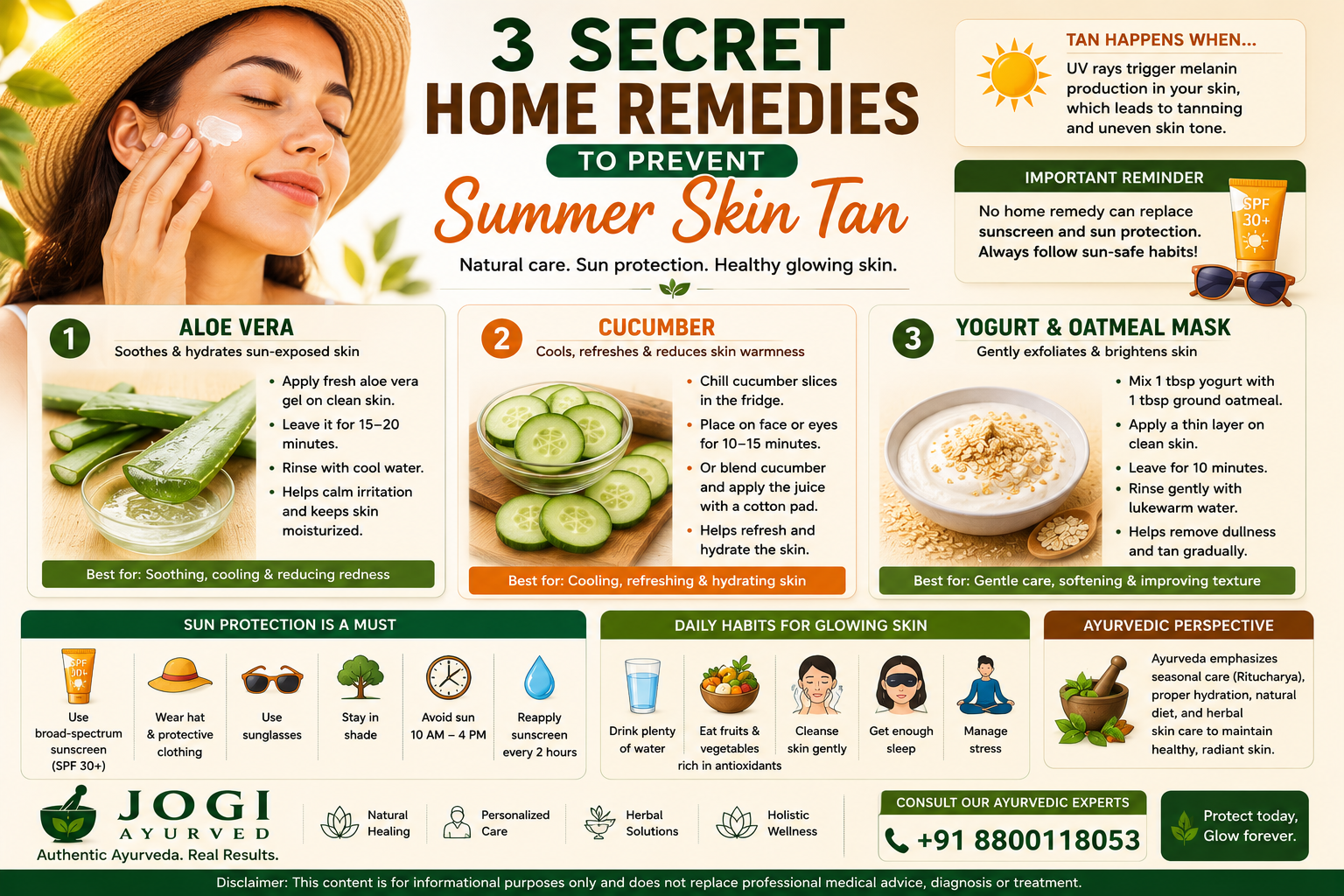
Here are 3 simple home remedies and daily habits that can complement proper sun protection.
Important: Home remedies cannot completely prevent tanning if your skin continues to receive significant UV exposure. Sunscreen, shade, protective clothing, and limiting intense sun exposure remain the most important measures.
Why Does Skin Tan in Summer?
When UV radiation reaches your skin, it stimulates the production and distribution of melanin, the pigment responsible for skin color.
UVA can cause relatively rapid darkening, while UVB stimulates increased melanin production over the following days.
That is why repeated outdoor exposure during summer can gradually make your skin appear darker.
3 Home Remedies and Habits to Help Prevent Summer Tan
1. Aloe Vera for Soothing Sun-Exposed Skin
Aloe vera is commonly used as a soothing ingredient in skincare.
If your skin feels dry or uncomfortable after spending time outdoors, a plain, fragrance-free aloe vera gel may provide a cooling and moisturizing feel.
How to use it
- Clean your face gently.
- Apply a thin layer of aloe vera gel.
- Leave it on according to the product instructions.
- Rinse if needed.
- Follow with a suitable moisturizer.
Important Point
Aloe vera should not be considered a sunscreen.
It cannot provide reliable UV protection or prevent tanning by itself.
If you develop a sunburn, blistering, severe pain, or significant skin swelling, seek appropriate medical advice rather than relying only on home remedies.
2. Cucumber and Hydration for Fresh-Looking Skin
Cucumber contains a high amount of water and can be included as part of a healthy summer diet.
You can also use a cool cucumber compress for a short period to make warm or tired skin feel refreshed.
Simple method
- Wash a fresh cucumber.
- Slice it.
- Place the slices over closed eyes or on comfortable areas of the face for a few minutes.
- Remove and gently rinse if necessary.
- Apply moisturizer.
However, cucumber does not block UV radiation or reverse sun damage.
Its main value here is cooling and refreshing the skin, not preventing tanning.
3. Yogurt and Oatmeal for Gentle Skin Care
A simple yogurt-and-oatmeal mask is sometimes used as a home skincare practice.
Plain yogurt contains lactic acid, while finely ground oatmeal can help create a gentle cleansing or soothing texture.
Simple home mask
Mix:
- 1 tablespoon plain yogurt
- 1 tablespoon finely ground oatmeal
Apply a thin layer to clean skin.
Leave it for around 10 minutes, then rinse gently with lukewarm water.
Be Careful
Do not scrub aggressively.
If the mixture causes:
- Burning
- Stinging
- Redness
- Itching
wash it off and stop using it.
Skin irritation can itself contribute to post-inflammatory hyperpigmentation, particularly in people prone to dark spots. The AAD recommends using gentle, fragrance-free products when dealing with hyperpigmentation-prone skin.
The Most Important “Home Remedy”: Sun Protection
If your goal is genuinely to prevent summer tanning, sunscreen and physical protection are much more important than DIY face masks.
The American Academy of Dermatology recommends sunscreen that provides:
- SPF 30 or higher
- Broad-spectrum protection
- Water resistance
Apply sunscreen to exposed skin and reapply approximately every two hours when outdoors, or after swimming or sweating, according to the product directions.
5 Ways to Prevent Summer Tanning
1. Use Sunscreen Every Day
Apply a broad-spectrum SPF 30 or higher sunscreen to exposed skin.
2. Wear Protective Clothing
Long sleeves, trousers, a wide-brimmed hat, and UV-protective sunglasses can reduce direct sun exposure.
3. Seek Shade
Try to stay in the shade when UV levels are high.
4. Avoid Peak Sun Exposure
UV radiation is generally strongest around the middle of the day. WHO recommends limiting exposure during periods of intense UV radiation.
5. Reapply Sunscreen
If you remain outdoors, reapply approximately every two hours and after swimming or heavy sweating, according to the sunscreen’s instructions.
Can Home Remedies Remove an Existing Tan?
A tan generally fades gradually as the skin naturally renews itself.
Home remedies should not be expected to instantly remove a tan.
More importantly, continuing to expose your skin to UV radiation can cause further darkening.
For people with hyperpigmentation or darker skin tones, the AAD emphasizes sun protection as an important part of preventing and improving dark spots.
Avoid These Common DIY Tan-Removal Mistakes
Avoid Lemon Juice
Applying lemon or other acidic citrus juices directly to the skin can cause irritation and may increase the risk of skin reactions after sun exposure.
Avoid Baking Soda
Baking soda can be irritating and is not a proven treatment for tanning.
Avoid Harsh Scrubbing
Aggressive scrubbing can irritate the skin and potentially worsen pigmentation.
Avoid Undiluted Essential Oils
Essential oils can cause irritation or allergic reactions in some people.
Avoid Bleaching Products
Never use household bleach or other harsh chemicals on your skin. The AAD specifically warns against using liquid bleach to treat pigmentation.
Ayurvedic Perspective on Summer Skin Care
Ayurveda traditionally emphasizes adapting daily routines and diet according to the season.
An Ayurvedic-inspired summer routine may include:
- Eating fresh seasonal foods
- Staying adequately hydrated
- Avoiding excessive heat exposure
- Wearing comfortable protective clothing
- Maintaining regular sleep
- Using gentle skincare
- Practicing stress-reducing activities
Traditional Ayurvedic oils or herbal preparations may be used in some skincare routines, but not every natural ingredient is suitable for every skin type.
If you have sensitive skin, eczema, acne, pigmentation, or another skin condition, consult a qualified professional before using concentrated herbal preparations.
Summer Foods for Healthy-Looking Skin
Instead of focusing only on topical remedies, maintain a balanced diet.
Include:
Water-Rich Foods
- Cucumber
- Watermelon
- Melons
- Tomatoes
- Seasonal fruits
Antioxidant-Rich Foods
- Colourful vegetables
- Berries where available
- Citrus fruits
- Nuts and seeds
- Leafy greens
Healthy Fats
- Nuts
- Seeds
- Avocado
- Appropriate plant oils
A balanced diet supports overall health, but no particular food can replace sunscreen or prevent UV-induced tanning.
Simple Summer Skin-Care Routine
Morning
Cleanse → Moisturize → SPF 30+ sunscreen
Before Going Outdoors
Sunscreen → Protective clothing → Hat → Sunglasses
After Coming Home
Gentle cleansing → Moisturizer → Aloe vera if comfortable
Night
Gentle cleansing → Moisturizer → Adequate sleep
Consistency is more important than using many different products.
Can Darker Skin Tones Get Sun Damage?
Yes.
People with darker skin generally have more melanin, which provides some natural protection, but all skin tones can experience UV damage.
The AAD recommends sun protection for everyone and notes that visible light can also contribute to skin darkening, particularly in people with darker skin tones.
When Should You See a Dermatologist?
Consult a dermatologist if you develop:
- Persistent dark patches
- Rapidly changing pigmentation
- Unusual spots
- Persistent itching
- A non-healing skin lesion
- Severe sunburn
- Blisters
- Repeated unexplained skin reactions
Not every dark patch is a simple suntan. Conditions such as melasma, post-inflammatory hyperpigmentation, and other skin disorders can also cause pigmentation changes.
Frequently Asked Questions
What is the best home remedy to prevent summer tan?
There is no home ingredient that can reliably block UV rays. The most effective prevention is broad-spectrum SPF 30+ sunscreen combined with shade, protective clothing, and limiting intense sun exposure.
Can aloe vera prevent tanning?
No. Aloe vera may soothe or moisturize the skin, but it does not provide reliable UV protection.
Does cucumber remove tan?
Cucumber may feel cooling and refreshing, but there is no good evidence that applying cucumber can remove a UV-induced tan.
Can yogurt remove a suntan?
Yogurt may provide gentle skincare benefits, but it should not be considered a proven treatment for removing a tan.
Does sunscreen stop tanning completely?
Sunscreen reduces UV exposure but does not provide 100% protection. Combining sunscreen with shade and protective clothing provides better protection.
Is tanning healthy?
No. WHO states that there is no healthy tan. A tan is a biological response to UV exposure and indicates skin damage.
Conclusion
Summer tanning is mainly a response to UV exposure, so the best way to prevent it is to reduce that exposure.
You can use simple home skincare practices such as aloe vera for soothing, cucumber for a refreshing compress, and a gentle yogurt-oatmeal mask if your skin tolerates it. However, these should be considered supportive skincare—not substitutes for sun protection.
For effective summer skin care:
Protect → Moisturize → Hydrate → Eat well → Avoid excessive sun exposure.
Most importantly, remember:
A tan is not a sign of healthy skin.
Consistent sun protection helps reduce tanning as well as long-term UV-related skin damage.
At JOGI Ayurved, personalized Ayurvedic lifestyle and wellness guidance can complement a sensible summer skincare routine.
Important Links
- 3 Secret Home Remedies to Prevent Summer Skin Tan
- Home Remedies for Summer Tan
- How to Prevent Skin Tan in Summer
- Summer Skin Tan Prevention
- Natural Ways to Prevent Tanning
- Ayurvedic Skin Care for Summer
- Summer Skin Care Tips
- Home Remedies for Tanned Skin
- How to Protect Skin From Sun
- Ayurvedic Summer Skin Care
- Natural Skin Care Tips
- Summer Skin Hydration
- Sunscreen and Tanning
- JOGI Ayurved
Our Important Services
- 5 Tips for Hydrating Dry Skin This Winter
- Can Ayurveda Cure Every Illness?
- Does the Perfect Ayurvedic Meal Really Exist?
- 3 Ayurvedic Ways to Strengthen Digestive Fire
- Shirodhara Therapy Benefits for Stress Relief
- Online Ayurvedic Consultation
Medical Disclaimer
This article is for educational purposes only and does not replace professional dermatological or medical advice. Home remedies may not be suitable for every skin type. If you develop persistent pigmentation, severe sunburn, blistering, or unusual skin changes, consult a qualified dermatologist.