
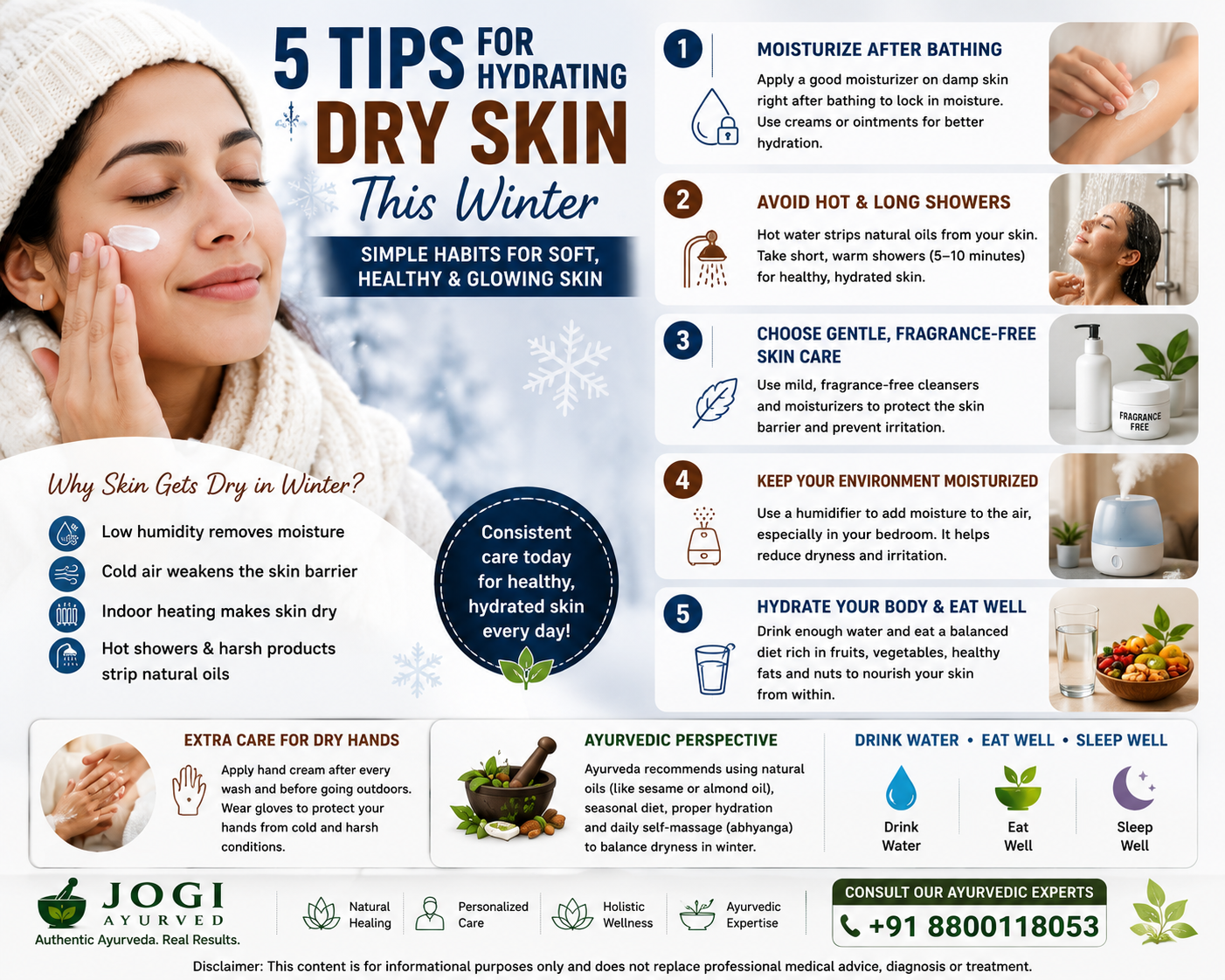
5 Tips for Hydrating Dry Skin This Winter
Winter can be hard on your skin. Cold outdoor air, low humidity and indoor heating can make the skin feel dry, tight, rough, flaky or itchy.
Fortunately, you don’t need a complicated skincare routine to protect your skin during winter.
A few simple daily habits can help your skin retain moisture and maintain a healthier skin barrier.
Here are 5 practical tips for hydrating dry skin this winter.
1. Moisturize Immediately After Bathing
One of the simplest ways to reduce winter dryness is to moisturize while your skin is still slightly damp.
After bathing:
- Gently pat your skin dry.
- Do not rub aggressively.
- Apply a moisturizer while the skin is still damp.
- Reapply whenever your skin feels dry.
Dermatologists recommend creams or ointments for very dry skin because they generally provide more moisture than lighter lotions. Ingredients commonly found in effective moisturizers include ceramides, glycerin, hyaluronic acid, petrolatum and shea butter.
Simple winter habit:
Bath → Pat dry → Moisturize
Don’t wait until your skin becomes completely dry before applying your moisturizer.
2. Avoid Very Hot and Long Showers
A long, hot shower may feel wonderful during cold weather, but it can make dry skin worse.
Dermatologists recommend keeping baths and showers relatively short—around 5–10 minutes—and using warm rather than hot water.
Hot water can remove some of the skin’s natural oils and leave the skin feeling tight and dry.
After bathing, gently pat your skin dry and moisturize immediately.
3. Choose Gentle, Fragrance-Free Skin Care
Winter-dry skin can become more sensitive to harsh products.
Avoid unnecessarily strong soaps and products containing heavy fragrances if they irritate your skin.
Look for products labelled:
- Fragrance-free
- Gentle
- For sensitive skin
- Moisturizing
The American Academy of Dermatology recommends fragrance-free products for dry and sensitive skin and notes that some fragranced or harsh products can increase irritation.
What about exfoliation?
If your skin is already dry, flaky or irritated, aggressive exfoliation may make the problem worse.
Instead of repeatedly scrubbing away flakes, focus on restoring moisture and protecting the skin barrier.
4. Keep Your Environment Moisturized
Cold weather can bring dry air, while indoor heating can make the environment even drier.
A humidifier can increase moisture in the air and may help reduce dry-skin discomfort. The AAD recommends using a humidifier when indoor air is dry and cleaning it regularly to help prevent mold.
Helpful winter habits:
- Use a humidifier if indoor air is dry.
- Keep the bedroom comfortably humid.
- Avoid excessive indoor heat.
- Keep your skin moisturized regularly.
A humidifier is particularly useful during sleep if your room becomes very dry.
5. Hydrate Your Body and Eat a Balanced Diet
Skin hydration isn’t only about skincare products.
Your body needs adequate fluids for normal physiological functions, although drinking excessive amounts of water does not automatically cure dry skin.
Try to:
- Drink water regularly according to thirst.
- Eat vegetables and fruits.
- Include nuts and seeds in appropriate portions.
- Eat a balanced diet.
- Avoid excessive alcohol.
- Limit highly processed foods.
Remember:
Drinking more water is not a replacement for moisturizer.
If your skin is dry because of environmental conditions, applying a suitable moisturizer and protecting the skin barrier are usually more directly helpful.
Bonus Tip: Protect Your Hands From Winter Dryness
Your hands are frequently exposed to:
- Cold air
- Water
- Soap
- Cleaning products
- Frequent handwashing
This can make winter dryness particularly noticeable.
Apply a fragrance-free hand cream after washing your hands and whenever your skin feels dry. Wearing gloves can also protect your hands from cold, dry air and irritating activities.
Ayurvedic Perspective on Winter Skin Care
Ayurveda traditionally emphasizes adjusting diet, lifestyle and daily routines according to the season.
During colder and drier weather, an Ayurvedic-inspired skincare routine may focus on:
- Keeping the skin moisturized
- Avoiding excessive hot-water bathing
- Eating freshly prepared, balanced meals
- Maintaining adequate hydration
- Getting sufficient sleep
- Managing stress
- Protecting the skin from cold, dry air
Traditional Ayurvedic oils are commonly used for external massage, but not every oil is suitable for every skin type.
If you have sensitive skin, eczema, acne-prone skin or an existing skin condition, it is better to seek individualized advice before applying herbal preparations or essential oils.
5-Minute Winter Skin Care Routine
You can keep your winter routine simple.
Morning
Step 1: Gentle cleansing
Step 2: Moisturizer
Step 3: Broad-spectrum sunscreen when going outdoors
During the Day
Step 4: Reapply moisturizer to dry areas
Step 5: Use hand cream after handwashing
Night
Step 6: Gentle cleansing
Step 7: Apply a thicker moisturizer or suitable cream to dry areas
The AAD recommends broad-spectrum, water-resistant sunscreen with SPF 30 or higher, even when protecting dry winter skin.
Common Winter Skin-Care Mistakes
Taking Very Hot Showers
Hot water can worsen dryness.
Scrubbing Flaky Skin
Aggressive exfoliation can further irritate dry skin.
Using Strong Fragranced Products
Fragrance can irritate sensitive, dry skin.
Waiting Until Skin Is Extremely Dry
Moisturize regularly rather than only when dryness becomes severe.
Forgetting Your Hands
Hands are exposed to frequent washing and cold air.
Assuming Every Natural Ingredient Is Safe
“Natural” does not automatically mean suitable for every skin type.
What Type of Moisturizer Is Best for Dry Winter Skin?
For significantly dry skin, creams and ointments are generally more effective than lotions because they help reduce water loss and provide a stronger moisturizing effect.
Look for ingredients such as:
- Ceramides
- Glycerin
- Hyaluronic acid
- Petrolatum
- Mineral oil
- Shea butter
Your skin type still matters.
For example, people with oily or acne-prone skin may prefer lighter, non-comedogenic formulations.
When Should You See a Dermatologist?
Occasional winter dryness is common, but persistent or severe dryness should not always be blamed on the weather.
See a dermatologist or healthcare professional if your skin:
- Becomes severely cracked
- Bleeds
- Develops a persistent rash
- Burns or stings
- Has severe itching
- Develops signs of infection
- Does not improve with basic skincare
Persistent dry skin can sometimes be associated with conditions such as eczema, psoriasis or other medical problems.
Frequently Asked Questions
How can I hydrate dry skin naturally in winter?
Use a gentle cleanser, take short warm showers, moisturize while the skin is damp, drink adequate fluids and protect your skin from cold, dry air.
Is drinking more water enough to treat dry skin?
No. Adequate hydration is important, but dry skin often also requires external moisturization and protection of the skin barrier.
Is hot water bad for dry skin?
Very hot or prolonged bathing can worsen dryness. Warm water and shorter showers are generally better for dry skin.
How often should I moisturize dry skin?
Apply moisturizer whenever your skin feels dry and especially after bathing or washing your hands. People with very dry skin may need to moisturize several times a day.
Is coconut oil good for dry skin?
Some people use coconut oil as a skin emollient, but it may not be ideal for every skin type, particularly acne-prone skin. A fragrance-free moisturizer formulated for your skin type may be a more predictable choice.
Can Ayurveda help with dry skin?
Ayurvedic lifestyle practices may complement a healthy skincare routine. However, persistent or severe dry skin should be evaluated by a qualified healthcare professional, particularly when there is a rash, cracking or bleeding.
Conclusion
Winter dry skin is common, but a few simple habits can make a big difference.
Remember these 5 winter hydration tips:
- Moisturize immediately after bathing.
- Avoid very hot and long showers.
- Choose gentle, fragrance-free skincare.
- Use a humidifier when indoor air is dry.
- Maintain adequate hydration and eat a balanced diet.
The most important habit is consistency.
Clean gently. Moisturize regularly. Protect your skin. Stay hydrated.
At JOGI Ayurved, personalized Ayurvedic lifestyle and wellness guidance can complement your daily skincare and seasonal self-care routine.
Important Links
- 5 Tips for Hydrating Dry Skin This Winter
- Dry Skin in Winter
- Winter Dry Skin Care
- How to Hydrate Dry Skin
- Dry Skin Home Remedies
- Winter Skin Care Tips
- Ayurvedic Skin Care for Dry Skin
- Natural Dry Skin Care
- How to Prevent Dry Skin in Winter
- Best Moisturizer for Dry Skin
- Dry Skin Hydration Tips
- Ayurvedic Winter Skin Care
- JOGI Ayurved
Our Important Services
- Ayurvedic Ways to Strengthen Digestive Fire
- Does the Perfect Ayurvedic Meal Really Exist?
- Shirodhara Therapy Benefits for Stress Relief
- Can Ayurveda Cure Every Illness?
- Online Ayurvedic Consultation