What Happens When You Eat Too Quickly? Effects on Digestion, Hunger & Weight
In today’s busy lifestyle, many people finish their meals in just a few minutes. You may eat while working, watching your phone, travelling, or simply because you are in a hurry.
But how quickly you eat can affect how much you eat and how satisfied you feel.
When you eat very quickly, your body may not have enough time to respond to the food before you have already consumed a large portion. Research reviewing 22 studies found that slower eating was associated with lower energy intake than faster eating, although the effect on hunger was less consistent.
This article that inspired this topic also highlights the connection between fast eating, digestive discomfort, overeating and the brain-gut relationship.
So, what exactly happens when you eat too quickly?
1. You May Eat More Before Feeling Full
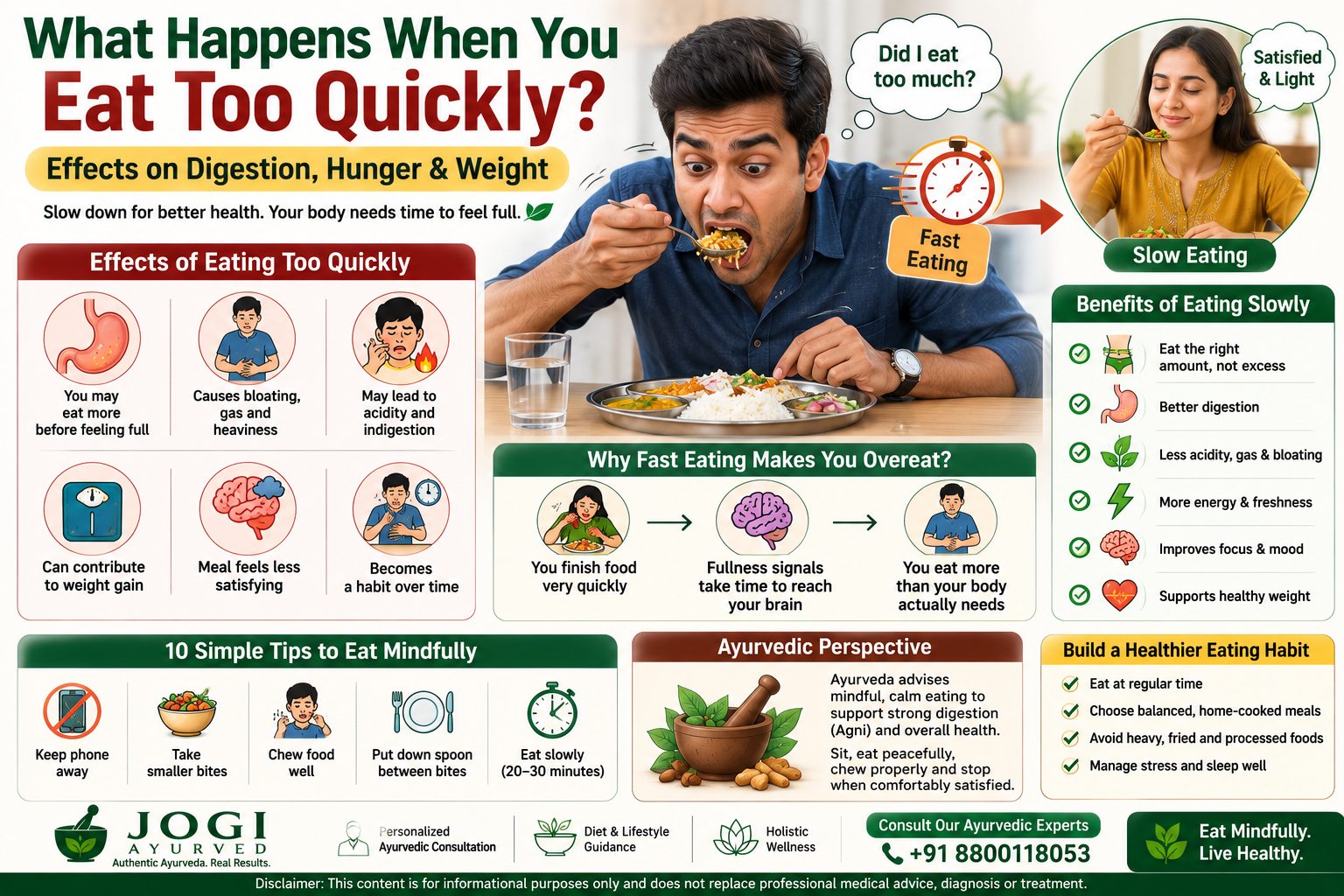
One of the biggest problems with fast eating is that fullness signals take time.
Your stomach and digestive system send signals to your brain as you eat. If you eat very quickly, you may finish your meal before you fully recognize that you have had enough.
This can make a normal portion feel unsatisfying and encourage you to take another serving.
Studies comparing different eating speeds have found that slower eating can reduce the amount of food consumed during a meal.
Simple example:
Fast eating:
Food → Eat quickly → Large amount consumed → Fullness catches up later
Slow eating:
Food → Chew slowly → Pause → Fullness signals develop → Easier to recognize satisfaction
2. Fast Eating May Cause Bloating and Gas
Eating quickly can cause you to swallow more air, particularly if you eat while talking, drinking through a straw, or rushing through your meal.
This may contribute to:
- Bloating
- Belching
- Gas
- Abdominal discomfort
Fast eating can also make it easier to swallow food without chewing it thoroughly. Northwestern Medicine notes that eating quickly can contribute to swallowed air, bloating and digestive discomfort.
3. You May Not Chew Your Food Properly
Digestion begins before food reaches your stomach.
Chewing breaks food into smaller pieces and mixes it with saliva, making it easier to swallow and process.
When you rush through meals, you may take larger bites and chew less.
This does not mean that fast eating automatically prevents nutrient absorption, as digestion continues through the stomach and intestines. However, inadequate chewing can make eating less comfortable and may contribute to digestive symptoms in some people.
4. You May Feel Heavy After Eating
Have you ever eaten quickly and then thought:
“Why do I feel so heavy?”
The problem may be partly related to eating too much food in a short period.
A large meal consumed quickly can leave you feeling:
- Very full
- Heavy
- Bloated
- Sleepy
- Uncomfortable
Eating more slowly gives you more opportunities to notice when you have had enough.
5. Fast Eating May Encourage Overeating
Fast eating and overeating often go together.
A systematic review and meta-analysis found that slower eating was associated with lower energy intake compared with faster eating.
Over time, regularly consuming more calories than your body needs can contribute to weight gain.
This does not mean that eating quickly automatically causes obesity. Weight is influenced by many factors, including overall diet, physical activity, sleep, genetics and metabolic health.
6. Your Meal May Feel Less Satisfying
You can finish a normal-sized meal and still feel like:
“I haven’t eaten enough.”
This may happen when you eat so quickly that you do not pay attention to the meal or give your body enough time to recognize satisfaction.
A controlled study found that slow eating was associated with lower energy intake and greater fullness in some participants compared with fast eating.
However, hunger and fullness responses differ from person to person.
7. Fast Eating Can Become a Habit
Fast eating is often not about hunger alone.
It can become an automatic behavior caused by:
- Busy work schedules
- Short lunch breaks
- Eating in front of screens
- Stress
- Multitasking
- Family habits
- Eating while travelling
- Long gaps between meals
Once fast eating becomes habitual, you may not even realize how quickly you are finishing your food.
The first step is simply noticing your eating speed.
The Brain-Gut Connection During a Meal
Your digestive system and brain communicate continuously.
As you eat, mechanical and hormonal signals related to food intake and stomach distension contribute to feelings of fullness.
But these signals are not instantaneous.
This is one reason why eating slowly can make it easier to recognize satisfaction before consuming an unnecessarily large amount of food.
The evidence does not support the idea that your brain simply needs an exact fixed number of minutes to “know” that you are full. The timing varies between individuals and meals.
Does Eating Quickly Damage Digestion?
It is better to say that fast eating may contribute to digestive discomfort rather than claiming that it permanently damages digestion.
Some people who regularly eat quickly may notice:
- Bloating
- Gas
- Indigestion
- Feeling overly full
- Heartburn or reflux symptoms
But these symptoms can have many causes.
If you have persistent digestive symptoms, do not assume that eating speed is the only reason.
Fast Eating and Acid Reflux
Eating very large meals quickly may worsen reflux symptoms in some people.
If you frequently experience:
- Heartburn
- Burning in the chest
- Sour taste
- Regurgitation
- Frequent belching
try eating smaller meals more slowly and identify your individual food triggers.
Persistent or severe reflux should be discussed with a healthcare professional.
Does Eating Quickly Cause Weight Gain?
It can contribute to overeating, but it is not the only cause of weight gain.
Research suggests that faster eating is associated with greater energy intake in experimental studies.
If fast eating repeatedly causes you to consume more food than you need, it may make weight management more difficult.
A healthier approach is to combine slower eating with:
- Appropriate portions
- Nutritious foods
- Regular physical activity
- Adequate sleep
- Sustainable eating habits
8 Signs You May Be Eating Too Quickly
You may want to slow down if:
- You regularly finish before everyone else.
- You barely remember tasting your food.
- You frequently take second servings immediately.
- You feel overly full after meals.
- You often experience bloating.
- You eat while looking at your phone or computer.
- You rarely chew your food thoroughly.
- You feel hungry again soon after eating.
Not every sign means that fast eating is the cause, but they can be useful clues.
How Fast Should You Eat?
There is no scientifically proven universal number of minutes that everyone must spend eating a meal.
Instead of focusing on a stopwatch, focus on eating more mindfully.
A practical goal is to:
- Take smaller bites.
- Chew comfortably.
- Put your spoon or fork down occasionally.
- Pause between bites.
- Notice your taste and texture.
- Stop when comfortably satisfied.
Some mindful-eating recommendations suggest allowing roughly 20–30 minutes for a meal, but this should be treated as a practical habit rather than a medical requirement.
10 Simple Ways to Stop Eating Too Quickly
1. Put Your Phone Away
Screens can distract you from hunger and fullness signals.
Try eating without:
- Mobile phones
- Television
- Laptops
- Work emails
2. Take Smaller Bites
Smaller bites naturally give you more opportunities to chew and pause.
3. Chew Thoroughly
Don’t swallow immediately after taking a bite.
Chew until the food is comfortable to swallow.
4. Put Down Your Spoon or Fork
Instead of preparing your next bite immediately, place your utensil down occasionally.
This creates natural pauses.
5. Eat at a Table
Avoid eating while walking, driving, or working whenever possible.
Create a clear boundary between work time and meal time.
6. Notice the Taste
Ask yourself:
- Is it sweet?
- Salty?
- Spicy?
- Sour?
- Crunchy?
- Soft?
Paying attention to taste can make the meal more mindful and enjoyable.
7. Start With a Moderate Portion
Don’t fill your plate excessively.
You can always take more if you are genuinely hungry.
8. Avoid Extreme Hunger
If you wait until you are extremely hungry, it can be much harder to eat slowly.
Regular, balanced meals may make mindful eating easier.
9. Take a Short Pause Mid-Meal
After eating part of your meal, stop for a moment and ask:
“Am I still hungry, or am I simply continuing because the food is there?”
10. Make Meals a Calm Routine
Try to create a peaceful environment.
Eating calmly can help turn food from a rushed activity into a mindful daily habit.
What Does Ayurveda Say About Eating Quickly?
Ayurveda places considerable importance on how food is eaten, not only what food is eaten.
Traditional Ayurvedic dietary principles emphasize mindful eating, appropriate portions, suitable food combinations and attention to digestive capacity.
From an Ayurvedic perspective, repeatedly eating while distracted, stressed or rushed may not support comfortable digestion.
A practical Ayurvedic-inspired approach is:
Sit down → Eat calmly → Chew properly → Avoid distractions → Stop when comfortably satisfied.
These principles can complement modern mindful-eating practices.
Can Eating Slowly Improve Digestion?
Eating slowly may improve the eating experience and digestive comfort for some people.
It can help you:
- Chew more thoroughly
- Eat more mindfully
- Recognize fullness
- Reduce the chance of overeating
- Enjoy food more
- Potentially reduce discomfort associated with rushing
Research supports a relationship between slower eating and lower energy intake, although the evidence is not uniform for every outcome.
What If You Are Always Hungry?
If you feel hungry again very soon after eating, do not automatically assume that you are eating too quickly.
Persistent hunger can have many possible causes, including:
- Meals that are low in protein or fibre
- Insufficient overall food intake
- Poor sleep
- Stress
- Increased physical activity
- Certain medications
- Diabetes or other medical conditions
If you are constantly hungry despite eating adequate meals, particularly if you also experience unexplained weight loss, excessive thirst, frequent urination or weakness, speak with a healthcare professional.
When Should You See a Doctor?
Occasional digestive discomfort after eating quickly is usually not a reason for alarm.
However, seek medical advice if you regularly experience:
- Persistent abdominal pain
- Difficulty swallowing
- Repeated vomiting
- Unexplained weight loss
- Blood in stool or vomit
- Persistent heartburn
- Severe bloating
- Constant unexplained hunger
- Significant changes in bowel habits
These symptoms may require evaluation for causes other than eating speed.
Frequently Asked Questions
What happens when you eat too quickly?
Eating quickly may make it easier to consume more food before you recognize fullness. It can also contribute to swallowed air, bloating and digestive discomfort in some people.
Can eating too fast cause weight gain?
Fast eating can increase energy intake during meals, which may make weight management harder if it happens regularly. However, body weight is influenced by many factors.
Does eating quickly cause indigestion?
It may contribute to indigestion or feelings of discomfort in some people, particularly when large portions are consumed quickly.
Does eating slowly help with weight loss?
Slower eating may help reduce food intake during meals, but it is not a standalone weight-loss treatment. A balanced diet and overall lifestyle remain important.
How can I stop eating so fast?
Start with small changes: put your phone away, take smaller bites, chew thoroughly, put your utensils down between bites and pause during your meal.
Does eating quickly reduce nutrient absorption?
There is not strong evidence that fast eating by itself prevents nutrient absorption. Digestion and nutrient absorption occur throughout the gastrointestinal tract. However, eating slowly and chewing well can make meals more comfortable and mindful.
Is eating slowly an Ayurvedic practice?
Mindful, calm eating and appropriate meal quantity are consistent with traditional Ayurvedic dietary principles. Individual Ayurvedic recommendations may vary.
Conclusion
Eating too quickly may affect more than just how fast you finish your meal.
It can make it easier to eat more before recognizing fullness and may contribute to bloating, swallowed air and digestive discomfort. Research also suggests that slower eating is generally associated with lower energy intake.
Instead of rushing through meals, try this simple routine:
Sit down → Remove distractions → Take smaller bites → Chew well → Pause → Notice fullness → Stop when comfortably satisfied.
You don’t need to turn every meal into a 30-minute ritual. The goal is simply to give yourself enough time to taste, chew, enjoy and recognize when you’ve had enough.
At JOGI Ayurved, personalized Ayurvedic diet and lifestyle guidance can help you develop healthier eating routines based on your individual needs.
Important Links
- What Happens When You Eat Too Quickly
- Eating Too Quickly
- Fast Eating Effects
- Fast Eating and Digestion
- Eating Too Fast Digestion Problems
- Fast Eating and Weight Gain
- Eating Quickly and Overeating
- How to Stop Eating Too Fast
- Benefits of Eating Slowly
- Slow Eating for Better Digestion
- Mindful Eating Ayurveda
- Ayurvedic Eating Habits
- Fast Eating and Bloating
- Fast Eating and Acidity
- JOGI Ayurved
References
- Eating Speed, Eating Frequency, and Their Relationships with Diet Quality, Adiposity, and Metabolic Syndrome, or Its Components – PMC
- Mindful eating: what we know so far – PubMed
- Mindful Eating: The Art of Presence While You Eat – PMC
- Slow Down: Behavioural and Physiological Effects of Reducing Eating Rate – PMC