
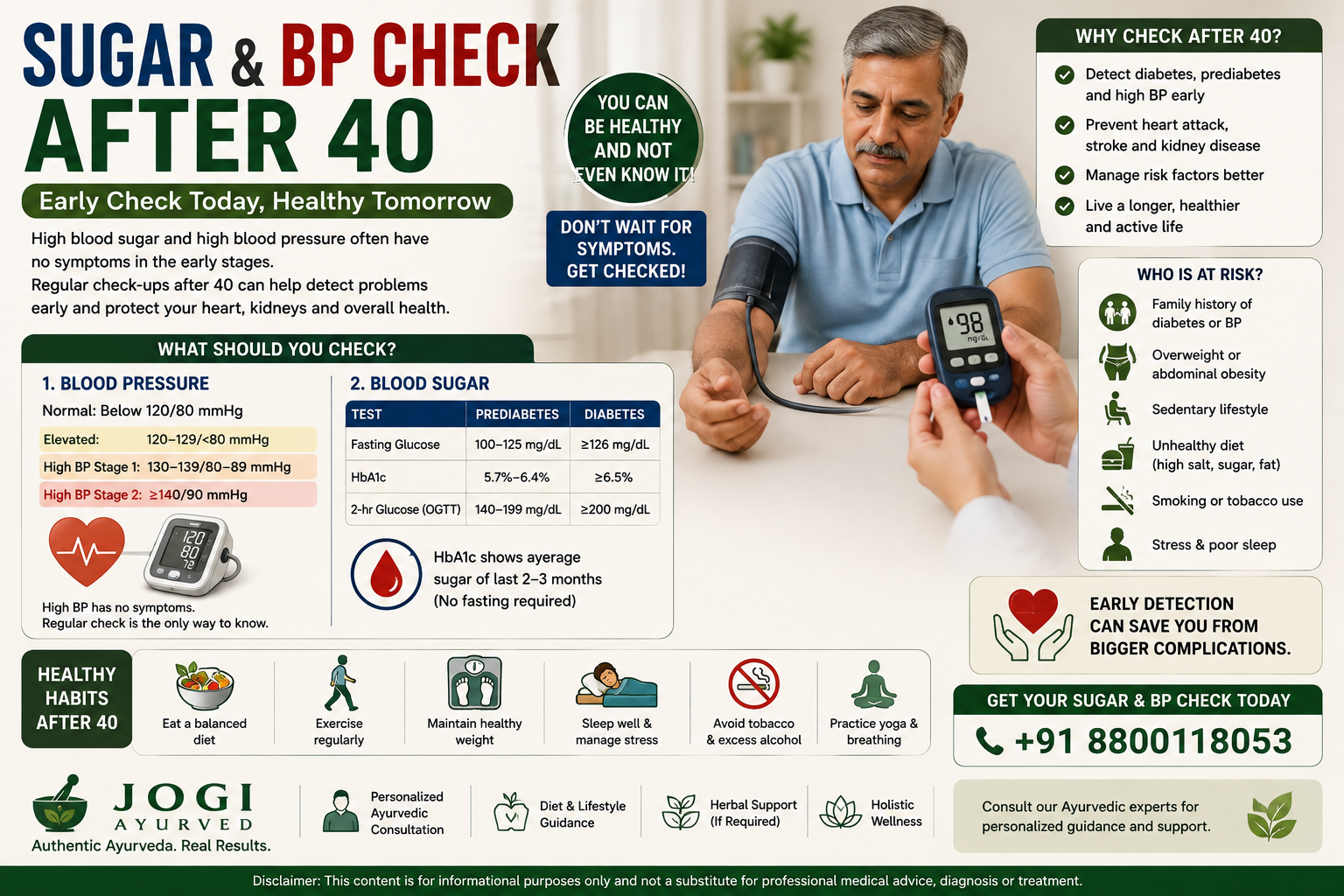
Sugar & BP Check After 40: Why Regular Screening Matters
Turning 40 is an important time to pay more attention to your health.
Many people feel completely healthy while having high blood pressure or elevated blood sugar. These conditions can develop gradually and may not cause obvious symptoms in the early stages.
That is why regular health screening can be valuable—especially when you have risk factors such as excess weight, family history, physical inactivity, unhealthy diet, or previous abnormal test results.
The World Health Organization notes that most people with raised blood pressure have no symptoms, making blood-pressure measurement an important way to identify hypertension.
Why Check Sugar and BP After 40?
Age itself is not a diagnosis.
However, the risk of metabolic and cardiovascular conditions can increase as people get older, particularly when combined with lifestyle and family-history risk factors.
Regular screening can help identify:
- Prediabetes
- Type 2 diabetes
- High blood pressure
- Cardiovascular risk factors
- Metabolic health problems
Finding a problem early gives you an opportunity to discuss lifestyle changes, monitoring, and treatment with a healthcare professional.
1. Blood Pressure: Why You Should Check It
High blood pressure is often called a “silent” condition because many people do not notice symptoms.
The only reliable way to know your blood pressure is to measure it.
The USPSTF recommends screening adults for hypertension and suggests annual screening for adults aged 40 years or older, although the appropriate interval can vary according to individual risk.
In India, WHO guidance also emphasizes regular blood-pressure measurement because hypertension may occur without symptoms.
What Is a Healthy BP Reading?
Blood pressure is recorded using two numbers:
Systolic / Diastolic
For example:
120/80 mmHg
The exact interpretation depends on the guideline being used and the individual’s clinical situation.
Importantly, one high reading does not automatically mean you have hypertension.
WHO India guidance states that hypertension is diagnosed when blood pressure is ≥140/90 mmHg on measurements taken on two different days.
The USPSTF similarly recommends confirming an elevated office reading with measurements outside the clinical setting before starting treatment.
2. Blood Sugar: Why Testing Matters
Type 2 diabetes can also develop without obvious symptoms.
A person may have prediabetes or diabetes without knowing it until a blood test identifies the problem.
Common tests include:
Fasting Blood Glucose
Measures blood glucose after fasting.
HbA1c
Shows an estimate of average blood glucose over approximately the previous 2–3 months and does not require fasting.
Oral Glucose Tolerance Test
Measures how your body handles glucose after consuming a measured glucose drink.
The appropriate test depends on your health situation and your healthcare professional’s recommendation.
What Blood Sugar Numbers Mean
For adults, commonly used diagnostic thresholds include:
| Test | Prediabetes | Diabetes |
|---|---|---|
| HbA1c | 5.7–6.4% | ≥6.5% |
| Fasting glucose | 100–125 mg/dL | ≥126 mg/dL |
| 2-hour glucose during OGTT | 140–199 mg/dL | ≥200 mg/dL |
These values are diagnostic criteria used by the USPSTF evidence review; a diagnosis generally requires appropriate confirmation rather than relying on a single abnormal result.
Is Diabetes Screening Necessary for Everyone After 40?
Screening recommendations vary by country, guideline, age, body weight, and risk factors.
For example, the USPSTF recommends screening adults aged 35–70 years who have overweight or obesity for prediabetes and type 2 diabetes.
WHO materials also identify adults aged 40 or older who are overweight or obese as a group for diabetes testing, alongside people with symptoms or other risk factors.
Therefore, instead of assuming that everyone needs exactly the same test at exactly the same interval, discuss your personal risk profile with a healthcare professional.
8 Reasons You May Need Earlier or More Frequent Testing
You may need closer monitoring if you have:
1. Family History
Diabetes and hypertension can run in families.
2. Overweight or Obesity
Excess body weight can increase the risk of metabolic disease.
3. Abdominal Fat
A larger waist circumference can be associated with metabolic risk.
4. Physical Inactivity
Low physical activity can contribute to metabolic and cardiovascular risk.
5. Previous High Readings
A previous abnormal blood sugar or BP result deserves follow-up.
6. Unhealthy Diet
A diet consistently high in excess calories, added sugars, sodium, or highly processed foods can contribute to metabolic risk.
7. Smoking or Tobacco Use
Tobacco use increases cardiovascular risk.
8. Other Medical Conditions
Certain conditions and medicines can affect blood pressure or glucose levels.
What Tests Should You Discuss After 40?
A healthcare professional may consider several assessments based on your age and individual risk.
Basic Checks
- Blood pressure
- Weight
- BMI
- Waist circumference
Blood Tests
Depending on your situation:
- Fasting blood glucose
- HbA1c
- Lipid profile
- Liver function tests
- Kidney function tests
Other Tests
Depending on symptoms and risk:
- ECG
- Urine tests
- Additional cardiovascular assessment
You do not necessarily need every test every year.
A personalized preventive-health plan is usually more useful than ordering every possible test.
Why Early Detection Matters
High blood pressure and diabetes can affect the body over time.
Uncontrolled hypertension is associated with increased risk of conditions such as:
- Heart disease
- Stroke
- Heart failure
- Kidney disease
The USPSTF notes that screening and treatment of hypertension can reduce important cardiovascular events.
Diabetes can also affect the heart, kidneys, eyes, nerves, and blood vessels when blood glucose remains elevated over time.
Early identification allows you and your healthcare team to address the problem before complications develop.
Don’t Wait for Symptoms
One of the biggest mistakes people make is:
“I feel healthy, so I don’t need a check-up.”
Unfortunately, high BP and elevated blood sugar may exist without obvious symptoms.
You do not have to wait until you experience:
- Excessive thirst
- Frequent urination
- Unusual fatigue
- Headaches
- Dizziness
- Blurred vision
to discuss screening.
Some people with hypertension or diabetes have few or no noticeable symptoms.
Simple Lifestyle Habits After 40
Screening is only one part of preventive health.
You can also focus on everyday habits.
Eat a Balanced Diet
Include:
- Vegetables
- Whole grains
- Pulses
- Appropriate protein
- Nuts and seeds
- Fruits in suitable portions
Limit excessive:
- Added sugar
- Salt
- Fried foods
- Highly processed foods
- Sugary beverages
Stay Physically Active
Regular movement can support cardiovascular and metabolic health.
Depending on your fitness and health status, consider:
- Walking
- Yoga
- Cycling
- Swimming
- Strength training
If you have a medical condition or are beginning an exercise program after a long period of inactivity, ask a healthcare professional about an appropriate level of activity.
Maintain a Healthy Weight
If you are overweight, even modest, sustainable improvements in diet and physical activity can be beneficial for metabolic health.
Avoid extreme crash diets.
Focus on habits that you can maintain for months and years.
Sleep and Stress Also Matter
Poor sleep and chronic stress can affect overall health and may make healthy lifestyle habits more difficult to maintain.
Try to:
- Maintain a regular sleep schedule
- Get adequate sleep
- Practice relaxation
- Take regular breaks from prolonged sitting
- Spend time outdoors when practical
Ayurvedic Perspective on Healthy Aging After 40
Ayurveda traditionally places importance on maintaining balance through:
- Appropriate diet
- Daily routine
- Digestion
- Physical activity
- Sleep
- Stress management
- Individualized lifestyle practices
An Ayurvedic practitioner may provide personalized dietary and lifestyle guidance based on your health status and daily routine.
However, Ayurvedic wellness practices should complement—not replace—blood pressure measurements, blood glucose testing, medical diagnosis, or prescribed treatment.
Can Ayurveda Help With Blood Sugar and BP Management?
Ayurvedic lifestyle guidance may support healthy habits such as balanced eating, physical activity, stress management, and regular routines.
However, there should be no promise that Ayurveda alone can cure diabetes or hypertension.
If you already take medication for blood pressure or diabetes, do not stop or change your medicine without discussing it with your doctor.
Regular monitoring remains important.
A Simple Health Checklist After 40
Keep this checklist handy:
- Check your blood pressure regularly
- Discuss blood sugar screening with your doctor
- Monitor your weight and waist
- Check cholesterol when appropriate
- Stay physically active
- Eat a balanced diet
- Limit excess salt and added sugar
- Avoid tobacco
- Limit alcohol if you drink
- Maintain good sleep habits
- Attend recommended preventive health checks
When Should You See a Doctor?
Make an appointment if:
- Your BP readings are repeatedly high.
- Your blood sugar is above the normal range.
- You have a strong family history of diabetes or hypertension.
- You have unexplained weight changes.
- You experience excessive thirst or frequent urination.
- You have persistent headaches or dizziness.
- You have chest discomfort or breathlessness.
Seek urgent medical care for severe chest pain, severe difficulty breathing, sudden weakness, confusion, fainting, or other serious symptoms.
Frequently Asked Questions
Should everyone get sugar and BP tests after 40?
Blood pressure screening is recommended for adults, with annual screening suggested by the USPSTF for people aged 40 and older. Diabetes screening depends on factors such as age, body weight, risk factors, and local guidelines.
Can I have high BP without symptoms?
Yes. Many people with high blood pressure have no symptoms, which is why measurement is important.
Is one high BP reading enough to diagnose hypertension?
Usually, no. Elevated readings generally need appropriate confirmation, often using repeat or out-of-office measurements.
Which is better for diabetes screening: fasting sugar or HbA1c?
Both fasting plasma glucose and HbA1c can be used to identify prediabetes and diabetes. HbA1c has the advantage of not requiring fasting, while the appropriate test depends on the individual situation.
Can lifestyle changes prevent diabetes?
Healthy eating, regular physical activity, and weight management can help reduce the risk of developing type 2 diabetes, particularly in people at increased risk.
Can Ayurveda replace diabetes or BP medicine?
No. Ayurvedic lifestyle support should not replace prescribed treatment. Any change to medication should be made with your healthcare professional.
Conclusion
After 40, checking your blood pressure and discussing appropriate blood-sugar screening is a smart part of preventive healthcare.
You may feel perfectly healthy while having early high blood pressure, prediabetes, or diabetes. Regular screening can help identify these problems earlier and give you an opportunity to make appropriate lifestyle changes and receive treatment when necessary.
At JOGI Ayurved, personalized Ayurvedic diet and lifestyle guidance can be used as complementary wellness support alongside appropriate medical screening and treatment.
Don’t wait for symptoms—know your numbers and take care of your health proactively.
Important Links
- Sugar BP Diagnosis After 40
- Blood Sugar Test After 40
- BP Check After 40
- Diabetes Screening After 40
- Blood Pressure Screening After 40
- Health Checkup After 40
- Sugar Test for Adults
- High BP Without Symptoms
- Prediabetes Screening
- Type 2 Diabetes Screening
- Preventive Health After 40
- Ayurvedic Health After 40
- Ayurveda for Healthy Aging
- JOGI Ayurved
- Ayurvedic Consultation
References:
- Diabetes in Older People | National Institute on Aging
- Treatment of Low Blood Sugar (Hypoglycemia) | Diabetes | CDC
- US guidelines say blood pressure of 120/80 mm Hg is not “normal” – PMC
- High Blood Pressure–Understanding the Silent Killer | FDA
- Understanding hypertension in the light of Ayurveda – PMC
- View of Hypertension – An Ayurvedic approach | Journal of Ayurveda and Integrated Medical Sciences
- Use of Ayurveda in the Treatment of Type 2 Diabetes Mellitus – PMC
- Ayurveda approach in the treatment of type 2 diabetes mellitus – A case report – ScienceDirect