
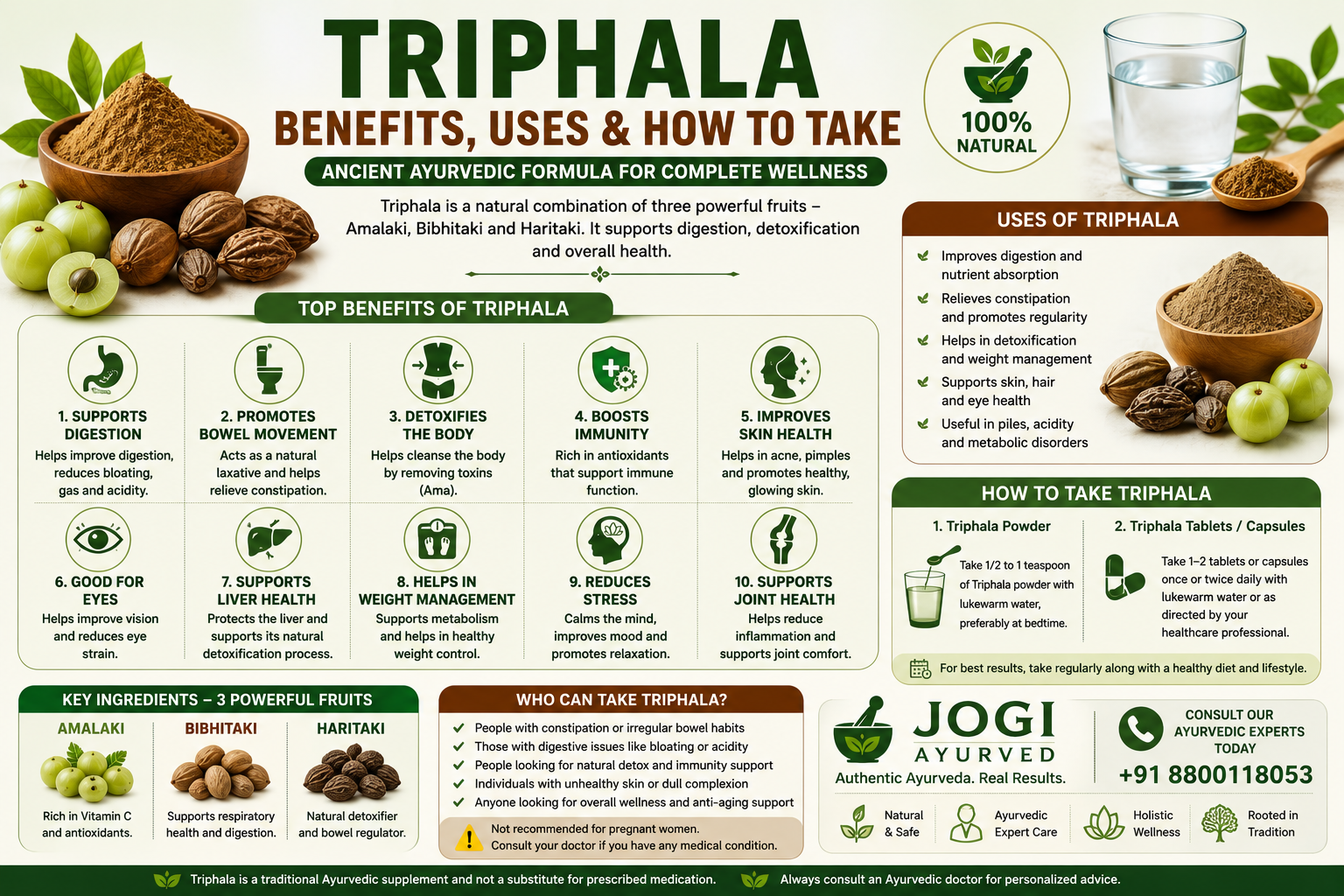
Triphala: Benefits, Uses, How to Take It & Who Should Avoid It
Triphala is one of the most well-known traditional Ayurvedic formulations. The word Triphala means “three fruits” and refers to a combination of Haritaki, Bibhitaki and Amalaki.
Each of these three fruits has an important place in Ayurveda. When combined, they are traditionally used for a variety of health purposes, particularly digestive health and overall wellness.
In this article, we will explain what Triphala is, how it is prepared, its traditional Ayurvedic uses, different forms of Triphala, and who should avoid taking it without professional guidance.
Important: This article explains the traditional Ayurvedic use of Triphala. It is not a substitute for medical diagnosis or treatment. If you have a health condition, take regular medicines, or are unsure whether Triphala is suitable for you, consult a qualified Ayurvedic physician.
What Is Triphala?
Triphala is a traditional Ayurvedic herbal formulation made from three fruits:
- Haritaki
- Bibhitaki
- Amalaki
These three fruits can also be used individually, but Ayurveda traditionally combines them to prepare Triphala.
The source script describes Triphala as an important Ayurvedic formulation and discusses its traditional use in several areas of health.
The Three Fruits in Triphala
1. Haritaki
Haritaki is one of the principal ingredients of Triphala and is traditionally regarded as an important Ayurvedic fruit.
The source also describes Haritaki using the traditional Ayurvedic comparison that it can be considered like a mother because of its beneficial qualities.
2. Bibhitaki
Bibhitaki is the second fruit used in Triphala. Like Haritaki, it has traditionally been used both independently and as part of Triphala.
3. Amalaki
Amalaki, commonly known as Indian gooseberry, is the third ingredient. It is widely used in Ayurveda and forms an important part of the Triphala combination.
According to the source, all three fruits are considered valuable individually, while their combination forms Triphala.
How Is Triphala Prepared?
The proportion of the three fruits is an important aspect of traditional Triphala preparation.
According to the script, Acharya Charaka described a ratio of 1:2:4, meaning:
- 1 part Haritaki
- 2 parts Bibhitaki
- 4 parts Amalaki
The source also states that Sushruta and Bhavaprakasha described equal proportions of all three fruits.
The fruits can be cleaned, dried and processed into powder before being combined according to the chosen traditional formulation.
Triphala is commercially available in several forms, including:
- Triphala powder
- Triphala tablets
- Triphala capsules
- Triphala decoction or Kwath
- Triphala Guggulu
The source particularly discusses Triphala powder as a traditional form.
Triphala Powder vs Tablets and Capsules
Triphala is commonly available as a powder, tablet or capsule.
The source suggests that powder is traditionally preferred when possible. If a person cannot comfortably consume the powder, tablets or capsules may be considered as alternatives.
However, the appropriate form and quantity can vary from person to person. It is better to seek professional Ayurvedic advice when using Triphala regularly.
Traditional Ayurvedic Benefits of Triphala
Triphala has traditionally been used for several purposes in Ayurveda.
1. Digestive Health
One of the most common traditional uses of Triphala is supporting digestive health.
The source discusses its traditional use for:
- Constipation
- Indigestion
- Gas
- Bloating
- Poor digestion
- Acidity
Triphala is particularly well known in traditional Ayurvedic practice for supporting regular bowel movements.
2. Triphala for Constipation
Triphala is traditionally used as a mild digestive and bowel-supporting preparation.
The source describes taking Triphala powder with warm water at night for constipation and suggests that the quantity may need to be adjusted according to the individual response.
However, persistent or severe constipation should not simply be managed with self-medication. It is important to identify the underlying cause.
3. Triphala and Eye Health
In Ayurveda, Triphala is traditionally described as Chakshushya, meaning beneficial for the eyes.
The source discusses its traditional use in relation to different eye complaints and also describes the use of Triphala water for eye washing.
However, eye problems require particular care. Anyone experiencing eye pain, infection, sudden vision changes or persistent eye symptoms should consult an eye-care professional rather than relying on home remedies.
4. Triphala for Skin
Triphala is also traditionally used in Ayurvedic practice for supporting skin health.
The source discusses the internal use of Triphala powder in relation to skin-related problems.
Because skin conditions can have many different causes, persistent skin problems should be properly assessed rather than treated only with Triphala.
5. Triphala for Hair Health
The source describes Triphala as Keshya, meaning traditionally beneficial for hair.
It discusses regular Triphala use in relation to hair fall and premature greying.
However, hair loss can have many causes, including nutritional deficiencies, hormonal changes, stress and other health conditions. If hair loss is persistent or severe, professional evaluation is recommended.
Triphala as an Ayurvedic Rasayana
One of the important concepts discussed in the source is the Ayurvedic concept of Rasayana.
The script describes Triphala as an excellent Rasayana and connects the traditional Rasayana concept with longevity, memory, intellect, health, youthful vitality, complexion, voice and strength of the body and senses.
In traditional Ayurvedic terminology, Rasayana is associated with maintaining and supporting the body’s overall vitality.
These descriptions represent traditional Ayurvedic concepts and should not be interpreted as guaranteed medical outcomes.
Triphala and the Seven Dhatus
The source describes Triphala as supportive of the seven Dhatus in Ayurveda:
- Rasa
- Rakta
- Mamsa
- Meda
- Asthi
- Majja
- Shukra
The script presents Triphala as a nourishing Ayurvedic preparation in relation to these seven Dhatus.
How Is Triphala Traditionally Taken?
Triphala can be consumed in different forms depending on the preparation.
Triphala Powder
Triphala powder is one of the most traditional forms.
The exact quantity should not be assumed to be the same for everyone. Individual constitution, digestive strength, age, health condition and other factors should be considered.
Triphala Kwath
The source describes preparing Triphala Kwath by soaking Triphala powder in water and subsequently boiling it until the volume is reduced, followed by straining before consumption.
Triphala Tablets and Capsules
Triphala is also available in tablet and capsule form. These may be convenient for people who do not prefer the taste or texture of powder.
Triphala for Oral Health
The source also discusses Triphala water for traditional oral care.
It mentions its use as a gargle or mouth rinse in relation to problems such as bad breath, gum problems, bleeding gums and recurring dental issues.
Good oral hygiene and regular dental check-ups remain important, particularly when there is persistent bleeding, pain, swelling or infection.
Who Should Avoid Triphala Without Professional Advice?
Triphala may not be appropriate for everyone.
According to the source, people who are:
- Very thin
- Weak
- Easily fatigued
- Physically exhausted
- Regularly engaged in significant physical exertion
should not take Triphala on their own without consulting an Ayurvedic physician.
Professional guidance is especially important if you have a chronic disease, take prescription medicines, are pregnant or breastfeeding, or are considering Triphala for a child.
How Long Can Triphala Powder Be Stored?
The source states that the potency of Triphala powder is traditionally considered to remain suitable for approximately three to six months, particularly when stored in an airtight container.
For best quality, Triphala powder should be stored in a clean, dry and airtight container away from moisture and excessive heat.
Frequently Asked Questions About Triphala
Is Triphala made from three fruits?
Yes. Triphala is traditionally prepared from Haritaki, Bibhitaki and Amalaki.
What are the main uses of Triphala?
Traditionally, Triphala is used for digestive support, constipation, and as part of Ayurvedic approaches to eye, skin and hair health.
Can Triphala help with constipation?
Triphala is traditionally used for constipation and bowel regularity. However, persistent constipation should be evaluated by a healthcare professional.
Is Triphala available as a powder?
Yes. Triphala is available as powder, tablets, capsules and other Ayurvedic preparations.
Can everyone take Triphala?
No. Individual suitability varies. People who are weak, very thin or easily fatigued should consult an Ayurvedic physician before using Triphala, according to the source.
Can Triphala be used for eye health?
Triphala has a traditional Ayurvedic association with eye health. However, people with an eye disease or persistent eye symptoms should seek professional eye care.
Is Triphala useful for hair?
Triphala is traditionally described as Keshya and is used in Ayurvedic practice for hair health. Persistent hair loss should be medically evaluated.
What is the best form of Triphala?
Triphala is available as powder, tablets, capsules and Kwath. The appropriate form depends on individual preference and health requirements.
Can Triphala be taken every day?
Regular use should ideally be guided by a qualified Ayurvedic physician, particularly if you have an existing health condition or take other medicines.
Final Thoughts
Triphala is a traditional Ayurvedic formulation made from Haritaki, Bibhitaki and Amalaki. Its long history of Ayurvedic use has made it one of the most recognized herbal formulations for digestive and general wellness purposes.
From traditional digestive support and bowel regularity to its Ayurvedic association with eye, skin and hair health, Triphala has a wide range of traditional applications.
However, natural does not automatically mean suitable for everyone. The right preparation, quantity and duration depend on the individual’s health, constitution and needs.
If you are considering Triphala as part of your wellness routine, consulting a qualified Ayurvedic physician can help you determine whether it is appropriate for you.
Jogi Ayurved is committed to making traditional Ayurvedic knowledge easier to understand while encouraging responsible, individualized healthcare.
Important Links
- Thyroid Medicine
- Thyroid Diet
- Thyroid Medicine and Diet
- Thyroid Routine Tips
- Foods for Thyroid Health
- Thyroid Lifestyle
- Thyroid Medicine Timing
- Hypothyroidism Diet
- Hyperthyroidism Diet
- Ayurvedic Treatment for Thyroid
- Thyroid Health Tips
- JOGI Ayurved
- Panchakarma for Thyroid
- Online Ayurvedic Consultation
- Natural Thyroid Support
Our Important Services
- Ayurvedic Treatment for Thyroid Disorders
- Normal Thyroid Report But Weight Gain
- Thyroid Medicine Diet Tips
- Panchakarma Therapy
- Online Ayurvedic Consultation