Heavy Period Bleeding: When Should You Not Ignore It?
Heavy menstrual bleeding is a common problem affecting millions of women worldwide. While many women assume that heavy periods are normal, excessive menstrual bleeding (Menorrhagia) can sometimes indicate an underlying health issue that should not be ignored.
If you are changing sanitary pads every hour, passing large blood clots, or feeling weak during your periods, it’s important to understand what your body is trying to tell you.
At JOGI Ayurved, we believe that menstrual health reflects a woman’s overall hormonal and reproductive wellness. Ayurveda offers safe, natural, and personalized treatments to manage heavy menstrual bleeding by addressing its root cause rather than simply controlling symptoms.
What Is Heavy Period Bleeding?
A normal menstrual period generally lasts 3 to 7 days with moderate blood flow.
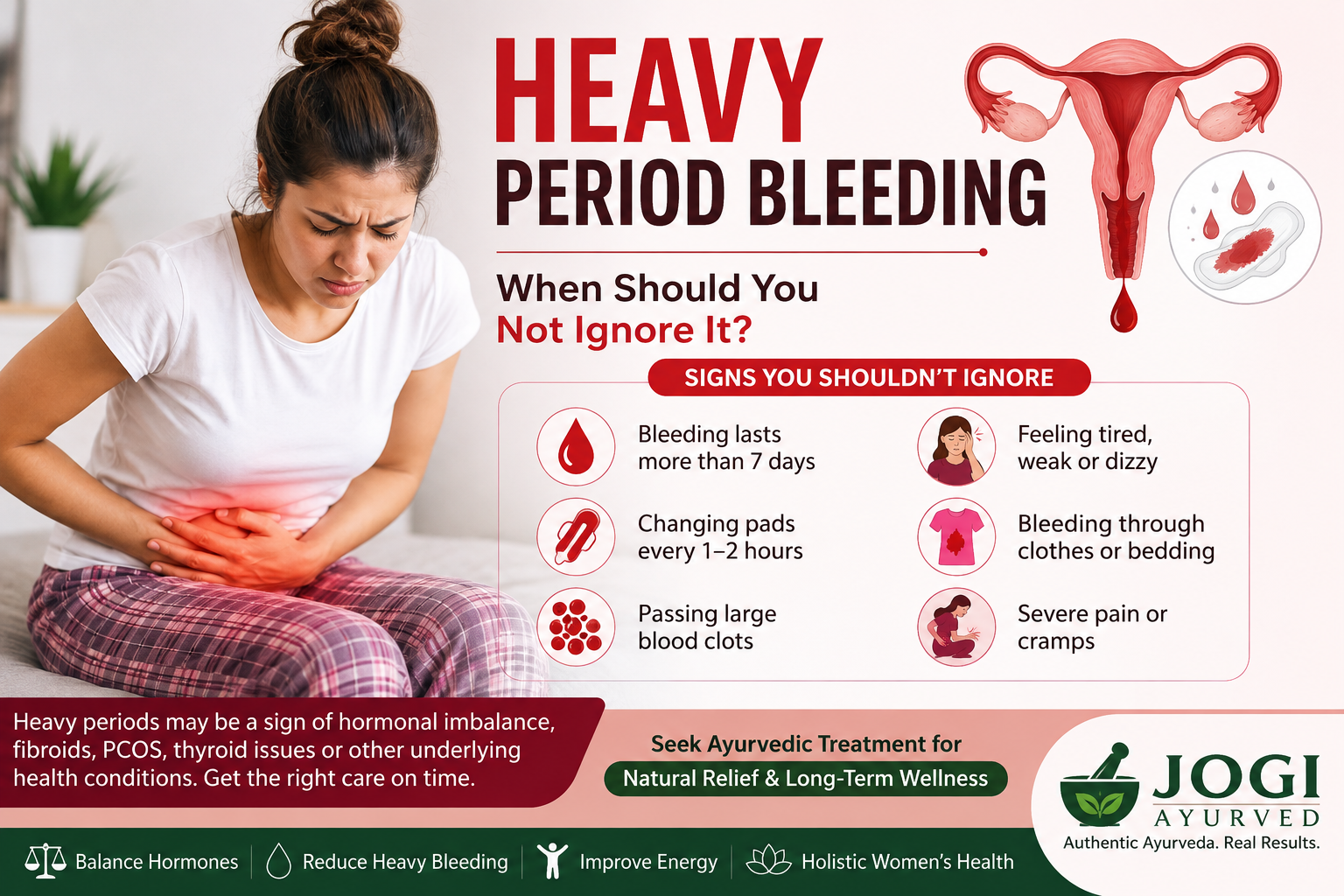
Heavy menstrual bleeding may be suspected if you experience:
- Bleeding lasting more than 7 days
- Needing to change pads or tampons every 1–2 hours
- Passing blood clots larger than a coin
- Bleeding through clothes or bedding
- Feeling tired, weak, or dizzy during periods
- Interference with daily activities
If these symptoms occur regularly, medical evaluation is recommended.
Common Causes of Heavy Period Bleeding
Heavy periods may occur due to several reasons.
1. Hormonal Imbalance
An imbalance between estrogen and progesterone can cause excessive thickening of the uterine lining, leading to heavy bleeding.
2. Uterine Fibroids
Non-cancerous growths inside the uterus often cause:
- Heavy periods
- Pelvic pressure
- Frequent urination
- Painful menstruation
3. Adenomyosis
This condition occurs when the uterine lining grows into the muscular wall of the uterus, causing:
- Heavy bleeding
- Severe menstrual cramps
- Enlarged uterus
4. Polycystic Ovary Syndrome (PCOS)
Irregular ovulation caused by PCOS may result in:
- Delayed periods
- Very heavy bleeding
- Hormonal imbalance
5. Thyroid Disorders
Both hypothyroidism and hyperthyroidism may disturb menstrual cycles.
6. Endometriosis
Women with endometriosis often experience:
- Heavy bleeding
- Severe pelvic pain
- Pain during intercourse
- Infertility
7. Pregnancy-Related Problems
Heavy bleeding during pregnancy should always be evaluated immediately as it may indicate miscarriage or ectopic pregnancy.
8. Blood Clotting Disorders
Certain bleeding disorders reduce the body’s ability to clot blood properly.
9. Copper Intrauterine Device (IUD)
Some women experience heavier menstrual bleeding after insertion of a copper IUD.
Symptoms You Should Never Ignore
Seek medical attention if you notice:
- Bleeding lasting more than 7 days
- Changing sanitary pads every hour
- Passing large blood clots repeatedly
- Severe pelvic pain
- Extreme fatigue
- Dizziness or fainting
- Shortness of breath
- Bleeding between periods
- Bleeding after menopause
- Bleeding during pregnancy
These symptoms may indicate serious medical conditions requiring prompt diagnosis.
Can Heavy Periods Cause Anemia?
Yes.
Excessive menstrual bleeding is one of the leading causes of iron deficiency anemia in women.
Signs include:
- Constant tiredness
- Weakness
- Pale skin
- Hair fall
- Headaches
- Breathlessness
- Reduced concentration
If untreated, anemia can significantly affect quality of life.
Ayurvedic View of Heavy Menstrual Bleeding
In Ayurveda, heavy menstrual bleeding is commonly associated with Rakta Pradara, primarily involving an aggravation of Pitta Dosha and disturbance of Vata Dosha.
Possible contributing factors include:
- Excessive spicy foods
- Chronic stress
- Poor digestion
- Hormonal imbalance
- Disturbed lifestyle
- Lack of sleep
Ayurveda aims to restore the balance of the doshas and improve overall reproductive health.
Ayurvedic Treatment for Heavy Period Bleeding
At JOGI Ayurved, treatment is personalized according to each individual’s constitution (Prakriti), symptoms, and underlying causes.
Treatment may include:
Herbal Medicines
Traditional Ayurvedic herbs may support:
- Hormonal balance
- Healthy menstrual cycles
- Uterine strength
- Reduction in excessive bleeding
Panchakarma Therapy
Selected Panchakarma procedures may help:
- Detoxify the body
- Balance aggravated doshas
- Improve hormonal regulation
- Support reproductive health
Diet Recommendations
Women with heavy bleeding are often advised to consume:
- Iron-rich foods
- Fresh fruits
- Green leafy vegetables
- Pomegranate
- Dates
- Raisins
- Warm, freshly prepared meals
Avoid:
- Very spicy foods
- Excess caffeine
- Alcohol
- Processed foods
Lifestyle Advice
Helpful habits include:
- Adequate sleep
- Stress management
- Gentle yoga
- Meditation
- Regular walking
- Staying hydrated
When Should You Visit a Doctor Immediately?
Consult a healthcare professional urgently if:
- Bleeding soaks one pad every hour for several consecutive hours
- Heavy bleeding occurs during pregnancy
- You feel faint or collapse
- Severe abdominal pain accompanies heavy bleeding
- Fever develops with abnormal bleeding
- Menstrual bleeding suddenly becomes much heavier than usual
Can Heavy Menstrual Bleeding Affect Fertility?
Depending on the underlying cause, yes.
Conditions such as:
- PCOS
- Fibroids
- Endometriosis
- Hormonal disorders
may interfere with ovulation or implantation.
Early diagnosis and treatment improve reproductive outcomes.
Prevention Tips
While not all causes are preventable, these habits support menstrual health:
- Maintain a healthy body weight
- Exercise regularly
- Eat a balanced diet
- Manage stress effectively
- Treat thyroid disorders promptly
- Schedule regular gynecological check-ups
- Avoid self-medicating with hormones
Frequently Asked Questions (FAQs)
Is heavy menstrual bleeding normal?
Occasional heavy periods may occur, but consistently heavy bleeding should be evaluated by a healthcare professional.
How many pads per day are considered normal?
Most women use about 3–6 pads or tampons per day during normal menstrual flow. Needing to change a fully soaked pad every hour may indicate heavy bleeding.
Can stress cause heavy periods?
Yes. Stress may disrupt hormonal balance and contribute to changes in menstrual flow in some women.
Does Ayurveda help with heavy menstrual bleeding?
Ayurveda focuses on addressing the underlying imbalance through personalized herbal medicines, dietary guidance, lifestyle changes, and supportive therapies. Treatment should be guided by a qualified Ayurvedic physician.
When should I seek emergency medical care?
Seek urgent medical attention if you experience very heavy bleeding, severe pain, dizziness, fainting, or bleeding during pregnancy.
Conclusion
Heavy period bleeding should never be ignored, especially when it affects your daily life or is accompanied by pain, weakness, or other concerning symptoms. Early evaluation can help identify the underlying cause and prevent complications such as anemia.
Ayurveda offers a holistic approach that emphasizes restoring balance, supporting hormonal health, and promoting long-term menstrual wellness through personalized care.
If you are experiencing persistent heavy menstrual bleeding, consult an experienced healthcare provider for an accurate diagnosis and appropriate treatment.
Important Links
- Heavy Period Bleeding
- Menorrhagia
- Heavy Menstrual Bleeding Treatment
- Ayurvedic Treatment for Heavy Periods
- Natural Treatment for Heavy Menstrual Bleeding
- Causes of Heavy Period Bleeding
- Heavy Bleeding During Period
- Hormonal Imbalance Treatment
- PCOS Heavy Periods
- Fibroids Heavy Bleeding
- Menstrual Health
- Women’s Health Ayurveda
- JOGI Ayurved
- Ayurvedic Gynecology
- Online Ayurvedic Consultation
Suggested Internal Links
- Ayurvedic Treatment for PCOS
- Ayurvedic Treatment for Irregular Periods
- Ayurvedic Treatment for Hormonal Imbalance
- Online Ayurvedic Consultation
- Panchakarma for Women’s Health