Ayurvedic Treatment for High Blood Pressure (Hypertension): Natural & Holistic Heart Health Care
High blood pressure (hypertension) is one of the most common chronic health conditions worldwide. Often called the “silent killer,” it may not cause noticeable symptoms for years while increasing the risk of heart disease, stroke, kidney disease, and other serious complications.
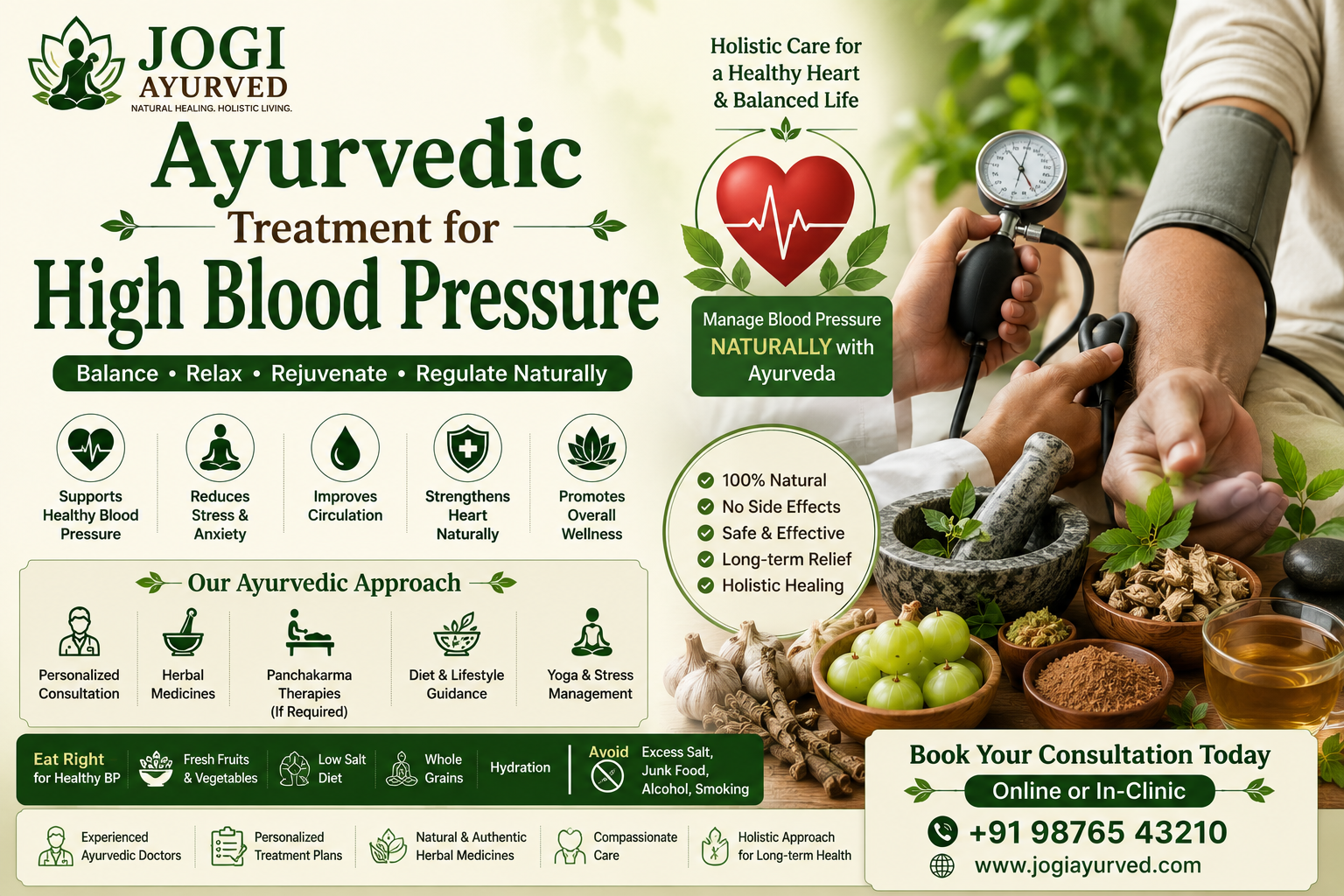
Ayurveda approaches hypertension by focusing on balancing the body’s doshas, improving circulation, supporting heart health, reducing stress, and promoting healthy lifestyle habits. Personalized Ayurvedic care may include herbal medicines, Panchakarma therapies (when appropriate), dietary counseling, yoga, and lifestyle modifications.
At JOGI Ayurved, our experienced Ayurvedic physicians provide individualized treatment plans designed to support cardiovascular health alongside appropriate medical care.
What is High Blood Pressure?
Blood pressure is the force exerted by blood against the walls of the arteries.
High blood pressure occurs when this pressure remains consistently elevated over time.
According to current medical guidelines, hypertension is diagnosed based on repeated blood pressure measurements rather than a single reading. Your healthcare provider will determine whether your readings are within the normal, elevated, or hypertensive range.
Symptoms of High Blood Pressure
Many people with hypertension have no symptoms.
When symptoms occur, they may include:
- Headache
- Dizziness
- Fatigue
- Blurred vision
- Nosebleeds (occasionally)
- Shortness of breath
- Chest discomfort
- Palpitations
- Anxiety
- Difficulty concentrating
Seek immediate medical attention if you experience severe chest pain, difficulty breathing, weakness on one side of the body, confusion, or sudden vision changes.
Causes of High Blood Pressure
High blood pressure often develops gradually.
Common contributing factors include:
- Family history
- Aging
- Obesity
- High salt intake
- Lack of exercise
- Chronic stress
- Smoking
- Excess alcohol
- Diabetes
- Kidney disease
- Hormonal disorders
- Sleep apnea
Risk Factors
The risk of hypertension increases with:
- Older age
- Overweight or obesity
- Sedentary lifestyle
- Unhealthy diet
- Smoking
- High sodium intake
- Family history
- Diabetes
- Chronic kidney disease
- High cholesterol
- Chronic stress
Diagnosis
Diagnosis typically includes:
- Repeated blood pressure measurements
- Medical history
- Physical examination
- Blood tests
- Urine tests
- Electrocardiogram (ECG)
- Echocardiography (when indicated)
- Kidney function tests
- Lipid profile
- Home or ambulatory blood pressure monitoring (in selected cases)
Proper diagnosis helps identify underlying causes and associated health risks.
High Blood Pressure in Ayurveda
Hypertension is not described as a single disease entity in classical Ayurvedic texts. However, its clinical features are understood through concepts involving:
- Vata Dosha imbalance
- Pitta Dosha aggravation
- Rakta Dhatu imbalance
- Manovaha Srotas disturbances
- Agnimandya (impaired digestion)
- Stress-related dosha imbalance
Ayurveda emphasizes understanding the individual’s constitution and the underlying causes contributing to elevated blood pressure.
Ayurvedic Perspective
According to Ayurveda, unhealthy diet, emotional stress, inadequate sleep, poor digestion, and sedentary habits may disturb the body’s natural balance.
These disturbances may contribute to:
- Dosha imbalance
- Circulatory disturbances
- Mental stress
- Impaired metabolism
- Reduced cardiovascular wellness
Treatment focuses on restoring balance while supporting overall heart health.
Ayurvedic Treatment Approach
Every patient undergoes a comprehensive Ayurvedic consultation.
Assessment includes:
- Prakriti (Body Constitution)
- Vikriti (Current Imbalance)
- Dosha assessment
- Medical history
- Blood pressure records
- Lifestyle evaluation
- Stress assessment
- Digestive health
- Associated medical conditions
Treatment is always personalized.
Panchakarma (If Appropriate)
Selected patients may benefit from Panchakarma therapies after thorough evaluation.
Depending on the individual’s condition, therapies may include:
- Abhyanga
- Shirodhara
- Swedana
- Basti
- Virechana
- Nasya (selected cases)
Potential benefits may include:
- Relaxation
- Stress reduction
- Improved circulation
- Better overall wellness
- Support for healthy lifestyle changes
Panchakarma should only be performed under qualified Ayurvedic supervision.
Herbal Medicines (General Information)
Depending on individual assessment, Ayurvedic physicians may recommend formulations containing herbs such as:
- Arjuna
- Ashwagandha
- Brahmi
- Sarpagandha
- Jatamansi
- Guduchi (Giloy)
- Punarnava
- Amla
- Garlic
- Tulsi
These herbs are prescribed based on individual needs. Do not self-medicate, especially if you are taking blood pressure medicines.
Diet Recommendations
A heart-healthy diet is essential.
Recommended foods include:
- Fresh vegetables
- Seasonal fruits
- Whole grains
- Millets
- Lentils
- Low-fat dairy (if appropriate)
- Nuts and seeds in moderation
- Healthy oils in limited quantities
- Adequate water
Dietary recommendations should be individualized.
Foods to Avoid
Limit or avoid:
- Excess salt
- Processed foods
- Packaged snacks
- Deep-fried foods
- Excess sugar
- Sugary beverages
- Excess caffeine (if advised)
- Alcohol
- Smoking
- Highly processed meats
Lifestyle Modifications
Healthy habits are an important part of hypertension management.
Recommendations include:
- Monitor blood pressure regularly.
- Maintain a healthy weight.
- Exercise most days of the week.
- Reduce stress.
- Sleep 7–8 hours daily.
- Avoid smoking.
- Limit alcohol intake.
- Follow prescribed medications consistently.
- Attend regular medical check-ups.
Yoga & Exercise
Yoga and relaxation practices may support stress management and overall well-being.
Recommended practices include:
- Walking
- Tadasana
- Vrikshasana
- Shavasana
- Anulom Vilom
- Bhramari Pranayama
- Meditation
- Gentle stretching
Exercise should be individualized based on your health status and medical advice.
Prevention Tips
Healthy habits may help reduce the risk of hypertension.
Tips include:
- Maintain healthy body weight.
- Eat a balanced diet.
- Reduce salt intake.
- Exercise regularly.
- Avoid smoking.
- Limit alcohol.
- Manage stress.
- Get adequate sleep.
- Monitor blood pressure periodically.
- Follow your doctor’s advice.
Frequently Asked Questions (FAQs)
Can Ayurveda cure high blood pressure permanently?
High blood pressure is generally a chronic condition. Ayurveda focuses on supporting cardiovascular health, promoting healthy lifestyle changes, and improving overall well-being. Individual outcomes vary.
Can Ayurveda replace blood pressure medicines?
No. Never stop prescribed blood pressure medication without consulting your treating physician. Ayurvedic treatment may complement conventional care under professional supervision.
Is Panchakarma useful for hypertension?
Selected Panchakarma therapies may be recommended for appropriate patients after careful Ayurvedic evaluation.
Which diet is recommended for hypertension?
A balanced diet emphasizing vegetables, fruits, whole grains, and reduced sodium intake is generally recommended. Dietary advice should be personalized.
Can stress increase blood pressure?
Yes. Chronic stress may contribute to elevated blood pressure in many individuals. Stress management is an important part of overall care.
How long does Ayurvedic treatment take?
Treatment duration depends on:
- Blood pressure control
- Associated medical conditions
- Lifestyle
- Stress levels
- Treatment adherence
- Overall health
Regular follow-up is important.
Why Choose JOGI Ayurved?
At JOGI Ayurved, we provide personalized Ayurvedic care focused on long-term wellness.
Our strengths include:
- Experienced Ayurvedic doctors
- Individualized treatment plans
- Authentic Ayurvedic medicines
- Panchakarma therapies
- Personalized diet counseling
- Lifestyle modification guidance
- Stress management support
- Holistic cardiovascular wellness approach
Book an Online or In-Clinic Consultation
If you have high blood pressure or are looking for a holistic approach to support your cardiovascular health, consult our experienced Ayurvedic doctors.
At JOGI Ayurved, we carefully assess your body constitution, medical history, lifestyle, blood pressure records, and health goals before preparing a personalized treatment plan. Your care may include Ayurvedic medicines, Panchakarma therapies (where appropriate), dietary guidance, yoga recommendations, and lifestyle counseling.
Book your online or in-clinic consultation today and take the first step toward better heart health with personalized Ayurvedic care. Call +91 8800118053.
Medical Disclaimer
The information provided on this page is for educational purposes only and should not replace professional medical advice, diagnosis, or treatment. High blood pressure requires proper medical evaluation and regular monitoring. Never stop or change prescribed medications without consulting your healthcare provider.